
Linux in Government: Linux Desktop Reviews, Part 2 - Novell Linux Desktop
When you look into the Novell Linux Desktop (NLD), you find a product that fits an analyst's picture of a mature open-source model. Last week, we asked some hard questions about that model with regards to Xandros and were left wondering. When you ask the same questions of Novell, the answers come out positive:
What kind of support organization does Novell offer related to users? If you run into a problem, can you contact someone for help? How, over the phone or by e-mail?
How big is Novell's support organization? Does the company out-source its support?
Does Novell have a professional services organization? If someone wants to buy a large number of desktops, how would Novell handle a big order?
Novell offers documentation for the user. How about technical documentation, is there anything for the administrator?
What kind of solution/provider ecosystem exists? Does Novell have resellers? How robust is that reseller organization?
What is Novell's server strategy? Does the company provide back-office functionality and identity management?
What tools exist for rolling out and managing the desktops? Does the company offer on-site training?
How can administrators and help-desk people learn to provide desk-side support in their own companies? Does curriculum exist?
In the event you have little experience with Novell, you should find that the company covers all the bases, from top to bottom. From the desktop point of view, we are left to wonder who has an open-source model that approaches Novell? A quick visit to the Novell Web site leads to a case study of Jefferson County that answers many of the above questions for you.
Novell has a long history of providing support, training, back-office functionality, innovation in managing desktops and networks and a significant partner ecosystem. Since the company embraced the open-source model with the purchase of SUSE and Ximian, it has transformed the open-source model into one of maturity.
In sum, the Novell Linux Desktop represents the product the company has chosen for its own use. In an article in Computer Business Review Online, we learn that "Novell has entered phase two of its Open Desktop Initiative to roll out Linux as the desktop operating system for its 6,000 internal employees, with plans to get 100% of them using Linux by the end of May."
In the same article, we learn:
The Waltham, Massachusetts-based software vendor's Linux desktop migration began in 2004 and overachieved on its phase-one goals, (according to CIO Debra Anderson.)
"This year we're moving more aggressively," Anderson said. "We want to get 100% of Novell on a Linux desktop, including dual-boot, and the second part is to drive a single Linux image and have 80% by the end of the year turn off Windows."
The company has already made the open source OpenOffice.org productivity suite its default office suite ahead of schedule, and now has 83% of employees actively using it on a daily basis. A voluntary migration also saw the company beat its goal to get 50% of users onto Linux by the end of October 2004.
Under the Novell scenario, Microsoft becomes a small niche player in the desktop space. Looking at functionality and feature lists, most serious analysts actually would place Microsoft in such a niche role. When less than 10% of an enterprise uses the features included in a Microsoft desktop, why would the remaining 90% be required to use the same platform?
I wrote my first review on NLD9 on November 15, 2004, shortly after the release of the evaluation version became available on Novell's Web site. Our group then began to pilot the product, using it in comparison to another Linux desktop offering that was built similarly. In short, we lived with NLD for approximately five months, and we found NLD to be suitable for desktop use in the home as well as in the office.
Of the desktop offerings we have piloted, NLD offered the broadest range of functionality in what we designated as the desktop and mobility space. From the desktop point of view, the system provides a user-friendly environment, ease of administration and an excellent enhancement of the OpenOffice.org productivity suite.
We also found NLD to provide a superior laptop experience. For example, Novell calls one of its premiere laptop features netapplet. For mobile users, netapplet allows for rapid transfer from numerous wireless access points, a feature that compelled one of my colleagues to stay with NLD on his IBM Thinkpad. In addition, we found that we could utilize VoIP with Skype on NLD effectively. We utilized the Linux SUSE9 download and immediately began reaping benefits on our Internet phones.
In Figure 1, you can get an idea of the functionality available on the Novell Linux desktop. In this figure we accessed the accessories menu. You can see the availability of many applications and tools, including the Microsoft Terminal Server Client and the Novell iFolder.

Figure 1. The Novell Linux Desktop Launch Menu
The Terminal Server Client is shown in Figure 2.
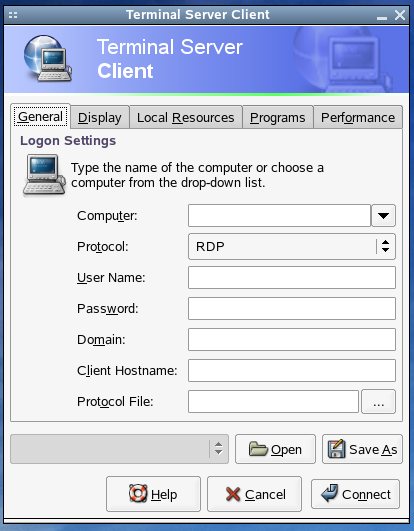
Figure 2. NLD Bundled Microsoft Terminal Server Client
For users requiring Microsoft or Win-32 applications, Novell has provided a simple way to utilize those applications through a Microsoft Terminal Server. Again, if you believe such applications play a niche role in your enterprise rather than a dominant one, using a terminal server can save your organization significant funds. MS Terminal Server client, for example, uses the Remote Desktop Protocol (RDP).
A second solution bundled with NLD includes the Citrix ICA Client, whose splash screen is represented in Figure 3. NLD also includes the popular Evolution Workgroup client, version 2.0, which can connect to Microsoft exchange as well as to Novell GroupWise.

Figure 3. Citrix ICA Client for Linux
Finally, NLD also provides extensive interoperability with existing Microsoft infrastructures by including Samba, the SMB CIFS client/server solution. We have noted in previous articles (see Resources) how Samba allows Linux to work with Windows clients in peer-to-peer, Primary Domain and Active Directory environments.
Novell has made a major contribution to the Open Source community by enhancing the ubiquitous OpenOffice.org Productivity Suite. In the past, we have tested and used Sun's StarOffice7 version of OpenOffice.org and considered it to be the best of class. After using Novell's version of OpenOffice.org, shown in Figures 4 and 5, we have another opinion.

Figure 4. Novell's OpenOffice.org Office Productivity Suite

Figure 5. Novell's Star Writer Word Processing Application
Novell has enhanced the major applications in the OpenOffice.org suite--StarWriter, StarCalc and Impress--such that they perform with exceptional stability and ease of use. If you have utilized Microsoft's Office Productivity suite, you may find the Novell suite to be easier to use and compatible with more versions of the Microsoft file format than any other product.
Also, we anticipate that Novell will offer OpenOffice.org version 2 within the near future. You can find information about it on the OpenOffice.org Web site. In the meantime, you can discover how the newest version, now in beta, looks and feels like Microsoft Office. In short, your users should have no problem in migrating to the latest version of OpenOffice.org.
Although we could continue to discus NLD far past our allotted space here, we suggest that you take a close look at the Novell offering yourself. As pointed out earlier, you can download a fully functional version from the Novell Web site. Although you can experience the desktop and try it in standalone mode, you perhaps might find a much richer experience if you set up a pilot project to use the various tools available from Novell.
As a side note, please understand that although I may have written enthusiastically about NLD, I remain an objective third party. Perhaps you can take my enthusiasm as evidence of how impressed I am with both the product and the company.
Tom Adelstein lives in Dallas, Texas, with his wife, Yvonne, and works as a Distinguished Analyst and open-source software consultant with Hiser+Adelstein, headquartered in New York City. He's the co-author of the book Exploring the JDS Linux Desktop and author of an upcoming book on Linux system administration, to be published by O'Reilly and Associates. Tom has been consulting and writing articles and books about Linux since early 1999.

