
Quantcast
Username/Email:  Password: 

Linux in Government: Linux Desktop Reviews, Part 3 - Red Hat Enterprise Linux

 in
Red Hat Linux Desktop is in a class of its own.


Unless you qualify as an enterprise class customer, you might find it
difficult to obtain a copy of the Red Hat Enterprise Linux (RHEL) desktop. Red Hat requires a minimum
purchase of 10 units, and the 10 unit starter pack costs $2,500. Individuals
might find this to be a steep price, especially when you can download most
Linux distributions for free, including Red Hat's own Fedora Core product.

However, enterprises find the Red Hat service model to be especially
helpful when they want to manage large numbers of desktop computers.
Even small- to medium-sized businesses find the Red Hat cost structure
to be comparatively inexpensive. In addition, the bundled services surpass
any other offering for enterprise class desktops, regardless of the platform.

In this article, we discuss how the RHEL desktop meets and exceeds
a maturity model for open source. We also discuss the design and
usability of the desktop product itself.
Business Model
When you log in to the RHEL desktop, you immediately notice a difference
in look and feel from other Linux desktops. Some might characterize the
difference as that between a stripped-down Chevy and a Jaguar. Figure 1
provides a look at the default login screen.
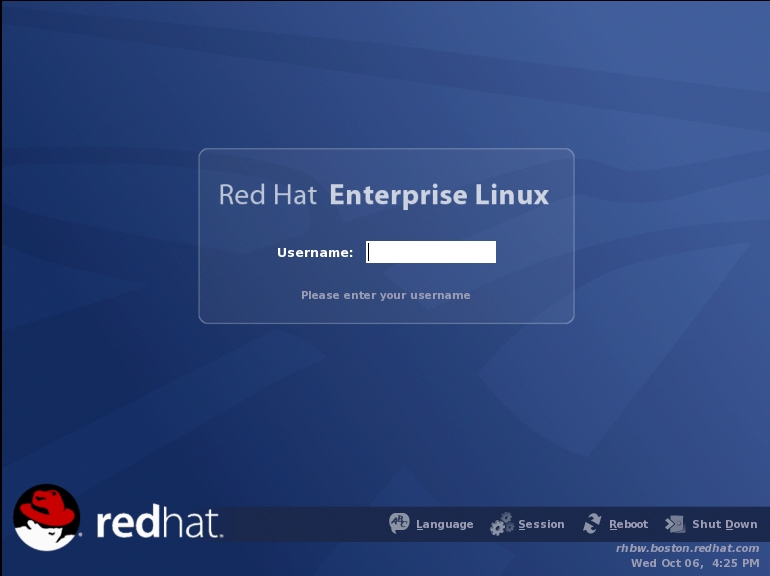
Figure 1. Red Hat Enterprise Linux Default Login
Screen
In 2002, Red Hat chose to change its business model to one focused on
the enterprise model. In an article titled
"Defining
the Linux Enterprise"
, I wrote, "The enterprise market consists of software applications used by
corporations, government agencies, schools, not-for-profits, or other
organizations, regardless of size. The software differs from that used by
consumers. You will not likely find an integrated judicial case management
system on the shelves of your local computer store next to the games,
for example."

I also wrote:

You may recall the uproar that occurred when Red Hat discontinued its
retail product in favor of Red Hat Enterprise Linux. Many of us,
as consumers, felt cheated. We wanted everything Microsoft offered on
[its] desktops and we wanted an alternative.

Red Hat probably made a reasonable decision, even though it displeased
many Linux advocates. Consider that the enterprise market represents
approximately $200 billion per year in potential revenue compared to
half of that for the consumer market. Additionally, enterprises provide
a plethora of revenue opportunities, ranging from service offerings and
consulting to intricate application and infrastructure products with
higher profit margins. Red Hat needed to position itself where it had
smaller competitors and more ways to make money.

Give Red Hat credit for tackling a tough market and winning. The company
has constructed an organization that creates high customer satisfaction,
furthers Linux acceptance and encourages many hardware OEMs to
provide support for open-source platforms. That OEM hardware support
probably would not have occurred from the Linux community alone.
Hard Questions
We are asking some difficult questions about enterprise support in this
series. In fairness, we asked each company the same ones (see Resources). Let's look at
how Red Hat answers those questions.

  • What kind of support organization does Red Hat offer related to users? If
    you run into a problem, can you contact someone for help? How, over the
    phone or by e-mail?

    Red Hat has a global services organization comprised of support,
    professional and learning services. It bundles support and maintenance
    with the purchase price of the technology. Phone and e-mail support are
    available around the globe, 24 hours a day, seven days a week.

  • How big is Red Hat's support organization? Does the company out-source
    its support?

    Red Hat has more than 100 people on hand globally in its support
    organization. Red Hat does not outsource support.

  • Does Red Hat have a professional services organization? If someone wants
    to buy a large number of desktops, how would Red Hat handle a big order?

    Red Hat offers professional services globally. For large or complex
    deployments, Red Hat offers assessment and deployment services to match
    varying architectures. For a large desktop implementation, Red Hat assigns
    a technical account manager to manage the deployment and to handle post-deployment support.

  • Red Hat historically has offered documentation for the user. How about
    technical documentation, is there anything for the administrator?

    Red Hat offers documentation to the administrator or person responsible
    for managing the systems. Also, Red Hat offers an on-line knowledge base
    that provides additional documentation, troubleshooting tips and support.

  • What kind of solution/provider ecosystem exists? Does Red Hat have
    resellers? How robust is that reseller organization?

    Red Hat has a robust ecosystem. Top resellers include IBM, HP, Fujitsu
    and Dell. These companies offer tier-1 support for minor issues. More
    complex issues are transferred back to Red Hat.

  • What is Red Hat's server strategy? Does the company provide back-office
    functionality and identity management?

    Red Hat Enterprise Linux began in the back-office datacenter. The
    company has experienced notable success powering some of the most computer intensive
    workloads in the financial and government sectors. As of October of 2004,
    Red Hat added identity management to its solution portfolio.

  • What tools exist for rolling out and managing the desktops? Does the
    company offer on-site training?

    Red Hat sells its desktop as a bundle, with provisioning to aid in the
    deployment of consistent corporate desktops. Red Hat offers on-site
    training as well as learning services in 150 global locations.

  • How can administrators and help-desk people learn to provide desk-side
    support in their own companies? Does curriculum exist?

    The Red Hat offers Certified Engineer and Certified Architect curricula
    designed for administering, maintaining and securing systems. Users
    have reported high levels of satisfaction.

The Product
Prior to using Red Hat's Enterprise Linux desktop, I gave Sun's Java Desktop System my
highest rating for look and feel, ease of use and administration. As of
this writing, Red Hat has pulled ahead as the "best of class" desktop.
One example of why RHEL took the lead can be seen in Figure 2; here, you can see
that Red Hat greatly simplified its launch menu and improved its desktop rendering.
Even compared with Fedora's design and the last RH public version, RH 9, the menu system
has become easier to use and the graphical presentation has improved.

Additionally, the default desktop install reduces the number of unnecessary
applications and options often found in less professionally designed
distributions. When a customer buys a RHEL desktop, Red Hat's deployment
team configures it to the specifications the buyer wants. Thus, the
functionality can become even tighter.
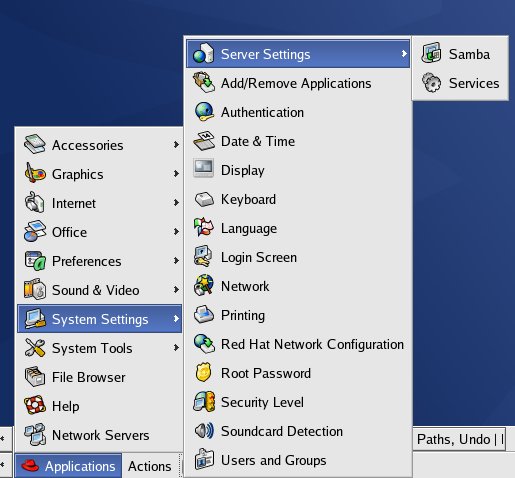
Figure 2. Launch MenuEase of Administration
Red Hat has integrated the Red Hat Network (RHN) into its RHEL desktop
products. For those who used RHN in the past, you may find the new
functionality surprising. For example, you now can utilize RHN's Web services
to provide a number of tightly controlled management functions.
Figure 3 allows you to see a portion of the management section of the
RHN Web site. Although this view provides only a small section of the tools
available, you can see that administrators remotely can manage
individual desktops or groups of desktops.
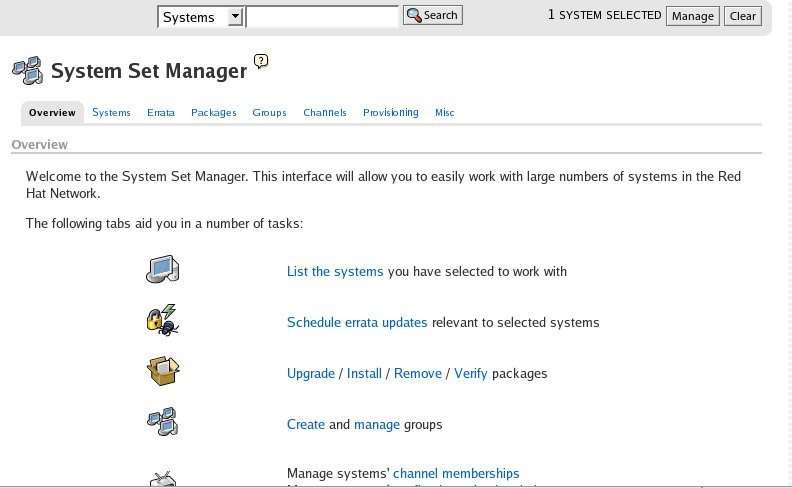
Figure 3. Section of Red Hat Network's Management Page
Depending on the service offering an enterprise customer selects, one can utilize
the RHN from Red Hat's facilities or bring the support infrastructure
in house. Red Hat also offers hosting services for desktops.
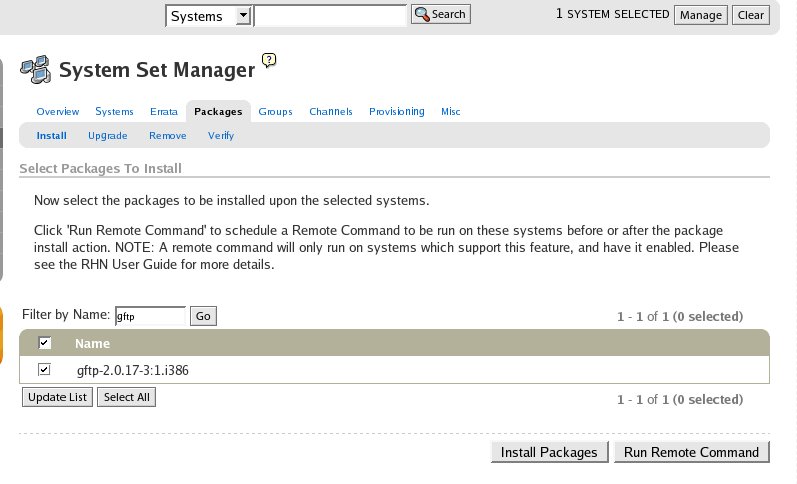
Figure 4. Installing an Application with RHN
As show in Figure 4, I used RHN to install a graphical secure copy tool
to the desktop. Red Hat provided an application called gftp in the packages
available for the desktop. This version of gftp provides for visual
secure shell access (SSH). I found it useful for moving files between two computers.

Interestingly, I logged in from a separate computer to manage my RHEL
desktop. I could install software, change system preferences, schedule
updates and perform a variety of other tasks. The management functions
allow one to administer a large number of desktops from a single
desktop, without having to visit each workstation physically.

Obviously, the services Red Hat provides for deployment and administration
of enterprise desktops do not come free. Consider the infrastructure
required, number of trained professionals involved and continuous monitoring and
testing of applications needed. For large desktop infrastructures,
Red Hat removes a significant amount of overhead from the enterprise
and provides an extra layer of security, reliability and continuity.
Interoperability
Enterprises have started embracing the notion that they have overbought
IT functionality in the past. Most organizations utilize 10% of the available
features they purchase. This realization has allowed enterprises to
shuffle resources and reduce overhead dramatically.

Red Hat has provided enterprises with the ability to maintain the 10%
of usable functionality while reducing unused and redundant functionality.
The Red Had desktop provides several ways to interoperate with Microsoft
desktops, servers and applications.

Let's first discuss how Red Hat's desktop can work with Active
Directories. Gerry Riveros, Product Marketing Manager - Client
Solutions, explained the process to me as follows:

Red Hat has made it easy to plug a Red Hat Desktop into an Active
Directory environment. It's a one-time setup that a system administrator
would perform. After that, the user would be able to log in to his system
and automatically authenticate with Active Directory.

The system administrator uses a Red Hat tool called
Authconfig. Authconfig is used to configure winbindd. Next, the
administrator creates user home directories and restarts the GNOME
display manager. Now, Active Directory authentication works. To add
Kerberos authentication for single sign-on to network services, the
administrator uses Authconfig again and modifies a config file setting.

Red Hat provided us with a detailed process for setting up Active
Directory configuration. Unfortunately, we do not have the space in
this week's column to provide that information. Suffice it to say,
enterprises wanting desktop interoperability with Microsoft can have it.
Other Interoperability Options
In addition to authentication in Microsoft networks, the RHEL desktop
easily can browse and share folders with SMB/CIFS clients, such
as Windows NT/2000/XP. Figure 5 illustrates a small workgroup as seen
from the desktop's network browser window.
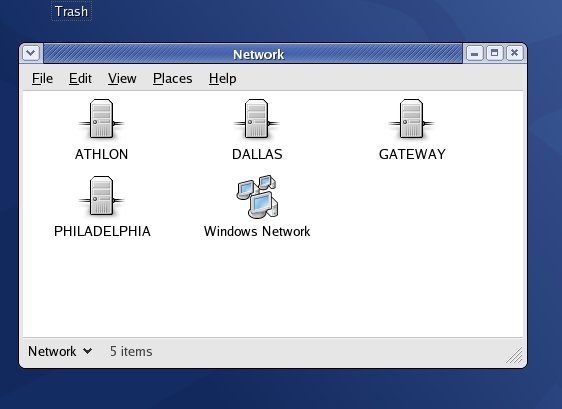
Figure 5. RHEL Network Browser Window
As a footnote, Linux desktops represent two of the desktops in this
workgroup.

The RHEL desktop also provides support for the Windows Terminal Server
and Citrix. In addition, you can run Win32 applications from an individual
PC. For example, we installed several Windows applications during our
pilot. Figure 6 shows us installing a Win32 application using CrossOver
Office.
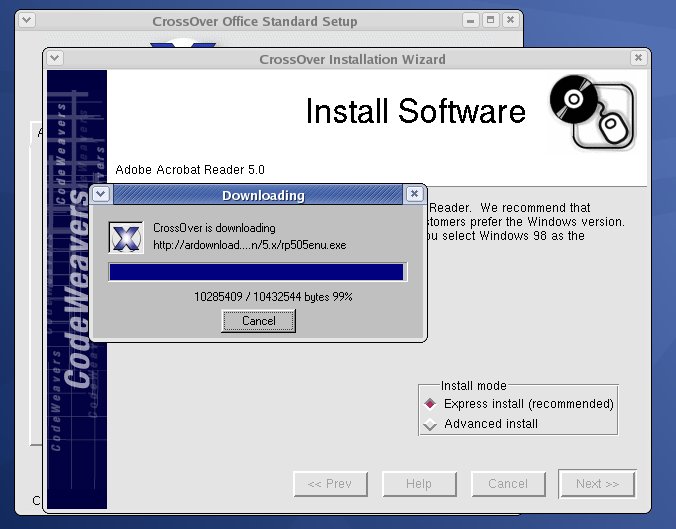
Figure 6. Installing a Windows Application
In Figure 7, we installed a popular Windows application using CrossOver
Office.
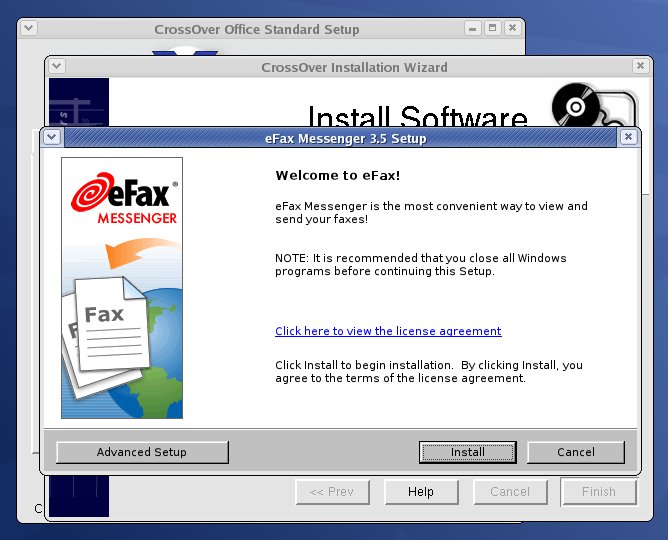
Figure 7. Installed eFax Messenger for Windows on RHEL
DesktopOther Considerations
CIOs may want to begin rethinking their options when it comes to
deploying desktops now and in the future. Although some say that Linux
isn't ready for the desktop, you might discover that it's ready for your
organization. You can maintain your current infrastructure and provide
seamless integration. In the meantime, you can provide your users with
outstanding applications, including productivity suites, groupware, Web
browsers, graphics and multimedia. If you still need Windows in some
areas, then use it where it's needed. Meanwhile, you can cut costs and
provide a safer environment for your enterprise.
Resources
"Linux in
Government: Linux Desktop Reviews, Part 2 - Novell Linux Desktop"

"Linux in
Government: Linux Desktop Reviews, Part 1 - Xandros Business Desktop"

Tom Adelstein works as a Distinguished Analyst and open-source
software consultant with Hiser+Adelstein, headquartered in New York City.
He's the co-author of the book Exploring the JDS Linux
Desktop
and author of an upcoming book on Linux system
administration, to be published by O'Reilly and Associates. Tom has
been consulting and writing articles and books about Linux since early
1999.

______________________

Comments

Comment viewing options

Select your preferred way to display the comments and click "Save settings" to activate your changes.

PNG correctness

Anonymous's picture

A little off-subject, but since the experience is fresh on my mind...

The Figure 1 image above has a size of apx. 196KB. I took the image and saved in as a JPEG with a compression quality level of 75 (best = 100) and got the size down to 11KB

So, your comparing a loss-les

Anonymous's picture

So, your comparing a loss-less format to a lossy format, and are "surprised" that the lossy format is smaller?

PNG losses no information at all, the image you get out is exactly the one you put in. It's kinda the point. PNG isn't meant to replace JPEG, it's meant to replace GIF.

It gets used in these situations, because JPEG does poorly with large blocks of colour and text, its meant to be used with photo and similar. Images will of course always look better in PNG.

The FOSS crowd has no problems with JPEG. just GIF ( patent stuff ).

Another reply to 'PNG correctness'

totedati's picture

I'm also manage to strip down PNG images from 290 KB, first image (8191f1.png), to aprox. 32 KB, but only using more careful PNG settins ( imho. from 'True color' to 16 paleted colors). No magic here :-). So is not PNG fault why image is so big ....

Sun's pricing is better than RH

10ksnooker's picture

I find nothing compelling about RH AS 4. I downloaded and setup a net server using their AS4 trial version, put up some blogs and a wiki for testing, and AS had several flaws and rough spots. It's response is also poor when compared to other distros -- not sure why this is.

IMHO -- A better bet is Gentoo. You can craft what you need and it is stable. My guess -- if someone is seriously deploying Linux, they have the expertise and really don't need RH support. Building minimum Gentoo systems makes for the smallest target. I know I don't recommend RH to my SMB clients -- the OS would cost more than the base box.

If you want RH AS4 on the cheap, download centos.

I am finding Sun's Solaris and JDS far cheaper and more compelling that RH. I am running several realworld tests to determine Solaris 10s place in my toolbax.

Just my 2 cents.

Sun's pricing is better than RH (sic)

tadelste's picture

You might consider reading the article. This wasn't even about RH AS. It's about the Red Hat desktop. We'll do an article about Sun's desktop in the next week or so.

stop expecting so much from us!

Anonymous's picture

You might consider reading the article.

Read the article? Read the article? How can you possibly expect us to do that? It's more than a paragraph long!

-> Shakes head and walks away.

Not a very professional comme

Finalzone's picture

Not a very professional comment especially for someone who does not want to be identified. Gentoo is not made to be used in entreprise environment. Should you try to install a non certified OS in a corporation environment, you will end up being fired.

You might try re-reading his

Anonymous's picture

You might try re-reading his comments. The subject matter is moot. He's doing a Gentoo commercial on pure reflex.

Well, this certification thing.

Taran's picture

By closing off the enterprise version, and making certifications for it - isn't Red Hat promoting a lock-in business model?

I'm not altogether pleased with that. But I suppose that they don't care. :-)

Closing off the enterprise version

Anonymous's picture

What RedHat is attempting to do is a very good thing IMO.
They are 'building up' the enterprise model, and all the necessary components to support such a model.

Third party developers need a 'standard' that they can rely on. Gentoo? Debian? Who's to say feature X will be present when every Sam and Sally roll their own OS? Many enterprise-class applications that run on top of Linux do NOT come with source code, so those vendors have to choose one or two distributions to release for.

VAR's and ISV's need a 'standard' that the hardware manufacturers will support. Sure, they can tinker with (insert favorite *nix here) and get it to work, but RedHat has a formal Hardware Certification process. Known, working, supported configurations.

Well, this certification thing. Reply

tadelste's picture

If Red Hat had a monopoly on Linux, that would make sense. But, for enterprises, they are catering to a maturity model. Large organizations need trained people, management tools and they are willing to pay for that.

Technically, that would be a closed model, but as others have stated - Red Hat still provides its source code and others have built and distributed they equivalent of the distribuion. The others don't bundle services and that's the difference.

This is an alternative business model in a cottage industry called open source Linux. It gives Linux a perspective for others to accept it.

I'm talking about the Red Hat certification.

Taran's picture

I don't know why people are thinking that I am talking about the source code. That would be completely stupid.

What I am talking about is Red Hat ***certification***.

Certification.

This could create a Human Resource Department requirement for Red Hat Certification if Red Hat is successful in becoming dominant in the Enterprise.

That's one hell of a business model, but it also creates a self-sustaining need to run Red Hat. It's brilliant business, but it may not be good for Linux in the long run.

RedHat Certification

Anonymous's picture

Before making such comment about RHCE, please understand the value of
RedHAt certification.

First of all

RHCE is not a multiple choice exam ( like MSCE, .. for example)
There are 2 labs.

1. Troubleshooting

2. Installation and Configuration

it is NOT easy.

RedHat made the certification for people with experience with the O/S , and need to prove that they know how to troubleshoot, install configure and manage it!

these people may be consultants, Sys Admin ..etc.

Closing off?

dmarti's picture

Closing off? All the source is available under GPL or another free software/open source license, even the source for software that originated at Red Hat and that they don't have to free. CentOS is a full rebuild from source, minus the Red Hat trademarked logos. It couldn't exist if any of the actual software were closed off.

Yes, closing off.

Taran's picture

While what you say is true about the source code, Don, I'm talking about the certifications and subsequent use of a specific distribution.

ALT Linux certification paths to Red Hat

Anonymous's picture

I agree that the Red Hat certification model seems to offer only another version of vendor lock in but do also very much appreciate the point that structure is needed for business to feel secure about Linux. Are you aware of the Linux Professional Institute certifications? They're getting really popular and offer generic 'version neutral' qualifications which both candidates and employers seem very happy with as it offers them alot of flexibility.

Real-world effect, though?

dmarti's picture

SCO and Netware had vendor-specific certification programs, and lost market share like market share was going out of style. Employers recognized that if you can get certified in one OS, you can pick up another on the job.

What about Novell's entry int

Anonymous's picture

What about Novell's entry into the market with Novell Linux Desktop?

http://www.novell.com/products/desktop/

What about Novell's entry int

tadelste's picture

I see a huge difference in the two products. Also, if you consider JDS in the same class as NLD you have a clearer picture.

Red Hat offers a bundled product offering even with the desktop. Call the bundle an enterprise offering in every sense of what an enterprise represents. The Novell Linux Desktop remains as a stand-alone distribution similar to Micosoft Windows. You buy the media and then you install it, then set up back office services, etc.

With Red Hat, a team defines the enterprise needs and delivers the whole bundle. The relationship of the media to the machine differs. Once Red Hat provides an enterprise scope, they tie the hardware profiles into their provisioning tools and from that point onward the deployment or conversion runs at about 1 desktop per minute.

So the preparation goes into the frontend with RH. Once the provisioning completes, the entire desktop infrastructure belongs to the administrator. This cuts down on time to deploy, administer and manage.

Novell appears to be heading in that direction. Sun wants to get there too, but their Management Console isn't close. Additionally, the SUSE 9 + Gnome combination Sun uses has mostly been targeted at SunRay thin clients which requires an infrastrcuture change. Red Hat can fit nicely into whatever infrastructure already exists. You still need a Novell Netware infrastructure to deploy NLD properly.

If you think of a Linux desktop in terms of a home computer rather than an enterprise platform, you'll never get what we're attempting to explain in this treatise.

Re: What about Novell's entry int

Anonymous's picture

Red Hat can fit nicely into whatever infrastructure already exists. You still need a Novell Netware infrastructure to deploy NLD properly.

I think that when you start working with Novell's Linux products, you will find that this is not correct. Novell's products can work in any environment, just like you claim for Rad Hat. Yes, it will work best in a Novell environment but, that is not a requirement. Furthermore, it is now entirely possible to have a "Novell environment" with no Netware at all, if you so choose.

What's more, I think that you will find that Novell's offerings actually scale much better than Red Hat's. Novell has ZenWorks(formerly Red Carpet plus much more) and its integration with eDirectory allows enterprise management that Red Hat has great difficulty matching, even in a "Red Hat" environment. The scalable management isn't restricted to Novell either, Novell's tools manage Red Hat's offerings just as well as their own.

Re: What about Novell's entry int

tadelste's picture

In this series, we have used the same criteria on each distribution. We developed the criteria from the Open Source Maturity Model and other enterprise tests gathered from research and real world experience.

We want our approach to provide an objetive model so that we can have a comparison matrix at the end. In the comments section people can say what they want about their favorite distributions. That doesn't take away from the enterprise readiness of a distribution.

That said, your comments appear biased: An opt-ed for Novell. You're entitled to that. Just know that the loss of objectivity takes away from the value. All one will ever get from such a comment is that this person has a Novell bias.

In answering the questions related to enterprise readiness, Novell requires "Novell Tools". Red Hat also requires Red Hat tools but not to the degree of having a Novell infrastructure.

Finally, regarding scalability, you used the term "Novel's offerings" scale better. That generalizes too much. Novell SUSE does not scale better than Red Hat - no way no how. That leaves the infrastructure piece. RHN outscales Novell there also.

I do like Novell and have great hopes for them. But, today they know that they have a long way to go before they are ready for the enterprise. Does that mean they don't fit in many markets - no. They fit in many markets and have a very good fit where they are relevant.

So they can make money and provide value in many mid-sized businesses.

Do a Competitive Landscape Analysis and a SWOT analysis and you will see the white space Novell has to fill.

One of my friends works in ap

Anonymous's picture

One of my friends works in application programming for a mutual funds company and their entire system is Novell (desktop, security, directory and web services, application deployment, system management, XML data authentication and verification, DB interface and transaction management, etc.) with Oracle backend DB's.

He gave me the full tour...more or less.

That system is beyond belief sweet...so user friendly, so easy to manage, and so incredibly powerful. No other grouping of software I have since seen [or imagined to that point] even comes close in terms of ease of deployment and use, and power/capability...and this was 8-10 months ago.

This RH thing is cool for RH and a few customers, but, IMO, Novell's solutions are in another league all by themselves.

Thats right! Try the Novell S

Anonymous's picture

Thats right! Try the Novell Solution and you will forget what is Red Hat. Managing Identity on Linux and Open standards is Novell's best technology - yeah they can even manage RedHat. Try and look it yourself, I have no vendor favorites, It happened Novell has the best technology so far - open source with Identity.

Vertical integration is inher

Anonymous's picture

Vertical integration is inherently smoother than cobbling together bits and pieces from disparate sources. Single-source products are also generally going to be more efficient, too. You could say the same about monopolies.

Efficiency, however, isn't always the point. The PC revolution was led by people who turned their energies away from the enterprise, and toward the personal. The rejected the culture of the computer, and produced a computer for a different culture.

We're all impressed by tall skyscrapers, but, the average person gets more satisfaction from building a small shack, or fixing their home, than from going to work in the well maintained glass tower.

Such is the ongoing story of techonological progress, its advocates, and its discontents.

One of my friends works in ap

tadelste's picture

I agree, they are in another league - but it's like the American Leaque and the National Leaque - in major league baseball.

It's an apples to oranges comparison but even the folks at Novell admit they have a way to go.

Everybody has long way to go.

Anonymous's picture

Everybody has long way to go.. but many independent analysts says Novell is among the leader driving Linux..so many briliant engineers there. Well they just have difficulties on marketing - anyway they now starting to notice again.

See the previous article.

dmarti's picture

Give credit where credit is due...

jonas larson's picture

Why the "my xxxx is longer then yours..."?

RedHat has brought linux to corporations that would never use a "non-supported" linux version.

So has SUSE/Novell.

They both offer good desktops that would work for almost all normal users. (key word = users)

In order to be a good Linux advocat one must have basic understaning of company needs.

/jonas

Give credit where credit is due...

tadelste's picture

The previous weeks article received criticism for being too favorable to Novell.

If you keep up with Novell's press releases they just announced a mid-level, SMB bundle which fits their sweet spot.

As Don Marti wrote above: read last week's article. It might help balance your perspective.

Post new comment

  • Allowed HTML tags: <a> <em> <strong> <cite> <code> <pre> <ul> <ol> <li> <dl> <dt> <dd> <i> <b>
  • Lines and paragraphs break automatically.
  • Use to create page breaks.

More information about formatting options