
Hidden Camera Detector

If you've ever been suspicious that someone has planted a wireless spy camera in your office or home, this small gadget can help you conduct your own investigation. Not that you'd be paranoid or anything, but hey - you never know, right? Besides, having the peace of mind knowing that you've checked for such hidden devices is a pretty nice benefit of having this device.

The Hidden Camera Detector -- which we bought from our friends at ThinkGeek -- is so small you can take it anywhere. When a wireless camera is detected, an LED light flickers and an audible alarm sounds. Advanced circuitry reduces false alarms from background interference and a sensitive tuner allows you to automatically scan variable distances and channels. The unit detects frequencies from 50MHz to 3GHz.
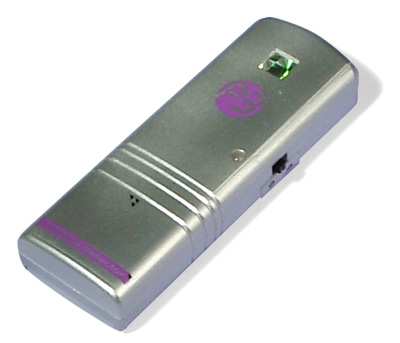
  • Auto sensitivity tuner
  • Multi-channel scanning
  • Size is similar to a lighter
  • Background noise elimination
  • Audio and LED alarm
  • Takes 2 CR2032 lithium batteries (included)

One randomly drawn winner will receive today's prize.

Webcast
How to Build an Optimal Hadoop Cluster to Store and Maintain Unlimited Amounts of Data Using Microservers

Realizing the promise of Apache® Hadoop® requires the effective deployment of compute, memory, storage and networking to achieve optimal results. With its flexibility and multitude of options, it is easy to over or under provision the server infrastructure, resulting in poor performance and high TCO. Join us for an in depth, technical discussion with industry experts from leading Hadoop and server companies who will provide insights into the key considerations for designing and deploying an optimal Hadoop cluster.

Learn More

Sponsored by AMD

White Paper
Red Hat White Paper: Using an Open Source Framework to Catch the Bad Guy

Built-in forensics, incident response, and security with Red Hat Enterprise Linux 6

Every security policy provides guidance and requirements for ensuring adequate protection of information and data, as well as high-level technical and administrative security requirements for a system in a given environment. Traditionally, providing security for a system focuses on the confidentiality of the information on it. However, protecting the data integrity and system and data availability is just as important. For example, when processing United States intelligence information, there are three attributes that require protection: confidentiality, integrity, and availability.

Learn more about catching the bad guy in this free white paper.

Learn More

Sponsored by DLT Solutions