New Products
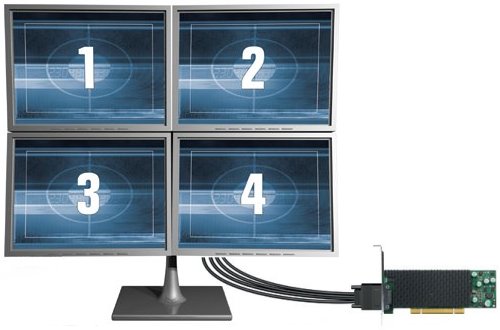
The team at Matrox Graphics recently released its EpicA series of dual- and quad-display PCI graphics cards intended for thin clients and other mission-critical systems. According to Matrox, the products offer “innovative, new, server-based software...to manage multi-display configurations in remote sessions”. Supported protocols include Linux desktop remote connection software, Microsoft RDP and Citrix ICA for Windows. Other features include passive cooling, small form factor, support for digital and analog monitors, low power consumption and independent and “stretched” modes. The TC-2 and TC-2 Lite models support two monitors concurrently, while the TC-4 model supports four.
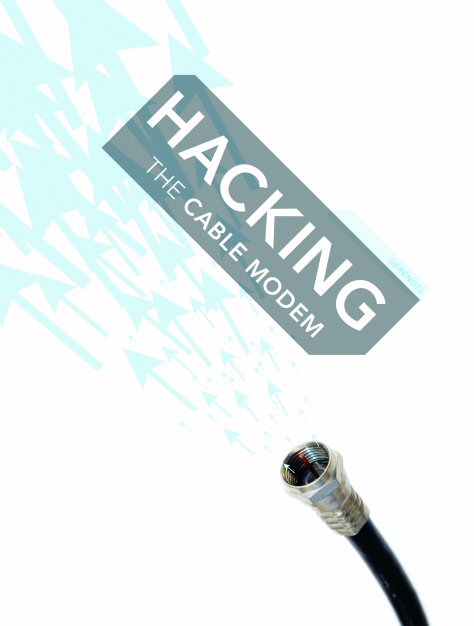
No Starch Press is a publisher with a penchant for finding geeky niches that other publishers won't touch, and DerEngel's Hacking the Cable Modem is a fine case in point. This book “reveals secrets of many popular cable modems, including products from Motorola, RCA, WebSTAR, D-Link and more”, sayeth the No Starchers. It is also a guide to hacking a cable modem, installing new firmware, unblocking ports and unlocking hidden features. One net benefit of these efforts, besides pure hacking enjoyment of course, is an increase in bandwidth up to 20-fold. In addition, who wouldn't be curious to know what the author, whose alias is DerEngel (“the angel” in German) and has been tagged as “the underground Prometheus of super-broadband”, has lurking in his brain. The product will be on real and virtual bookshelves in August 2006.
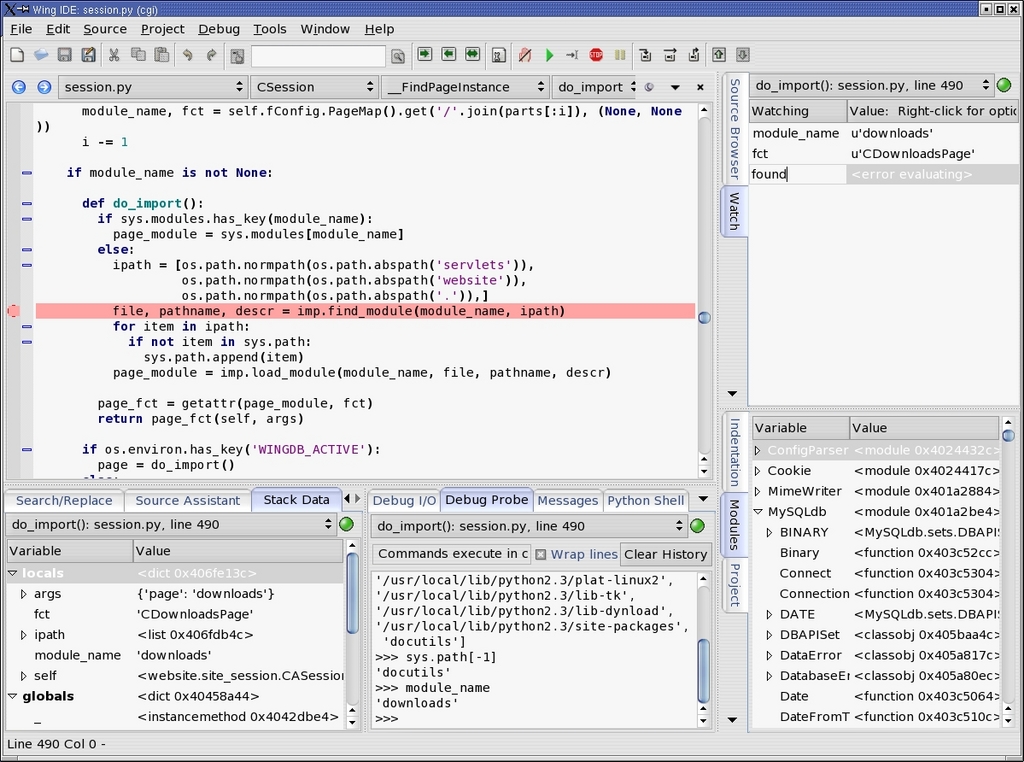
Wingware is now shipping release 2.1 of WingIDE, its development environment for Guido van Rossum's masterpiece, the Python programming language. WingIDE's purpose is to provide “powerful debugging, editing, code intelligence and search capabilities that reduce development and debugging time, cut down on coding errors, and make it easier to understand and navigate Python code”. New features in version 2.1 include Visual Studio, VI/Vim and brief key bindings, Subversion and Perforce support, improved Windows performance, named bookmarks, breakpoint manager and call stack as list, file evaluation or selection in the Python Shell and support for Macs on Intel. Supported platforms include recent Intel Linux systems, Windows 2000 and later and OS X 10.3.9 or later (with X11 installed). Solaris, *BSD and other Posix platforms are supported for those willing to compile from source code. A free trial is available on Wingware's Web site.
First there was toast on a stick (vintage David Letterman reference), and now Novell offers training on a stick too! SUSE Linux Enterprise 10 First Class is a new, self-contained course on a USB drive that allows users to test the new server and desktop products on their own. Included on the multiplatform (Linux, Windows) device are both the learning content and an installed example of the server and desktop on a virtual machine. Novell states that this approach “gives the student a unique environment to study the lecture and then gain hands-on experience using the virtual machine to do exercises”. Students can utilize the course themselves or use it as part of an instructor-led two-day course at various training centers. The course/device hybrid is available for purchase at Novell's Web site.

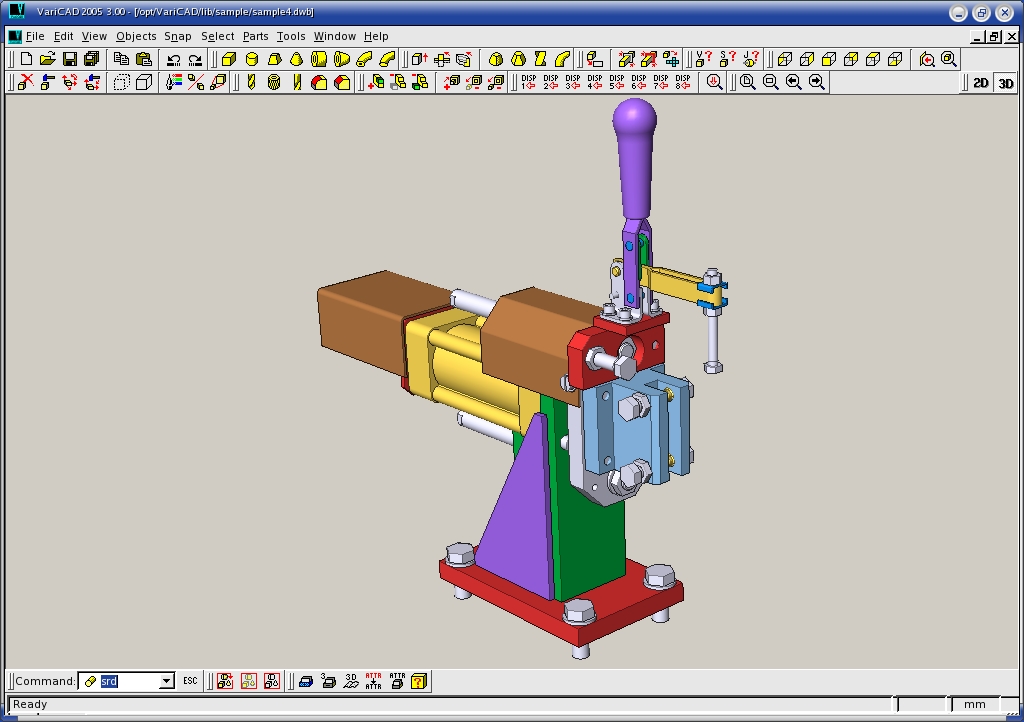
VariCAD has significantly rebuilt its eponymous 3-D/2-D mechanical CAD system—which is no stranger to the Linux platform—with release 3.0. At its heart, says VariCAD, the multiplatform (Linux, Windows) product is a fully loaded package that offers not only “powerful tools for 3-D modeling and 2-D drafting and dimensioning”, but also “libraries of standard mechanical parts (ANSI, DIN), calculations of standard mechanical components and tools for working with bills of materials and blocks”. Innovations in the new version include “improvements in the STEP interface allowing input and output of 3-D objects, new high-resolution bitmap output from 3-D, new user-defined default settings, improved file opening and dimensioning” and others. A Linux-specific improvement is reduced dependence on system files, allowing the software to run on more distros. A free trial version (Debian or RPM) is available for download from VariCAD's Web site.
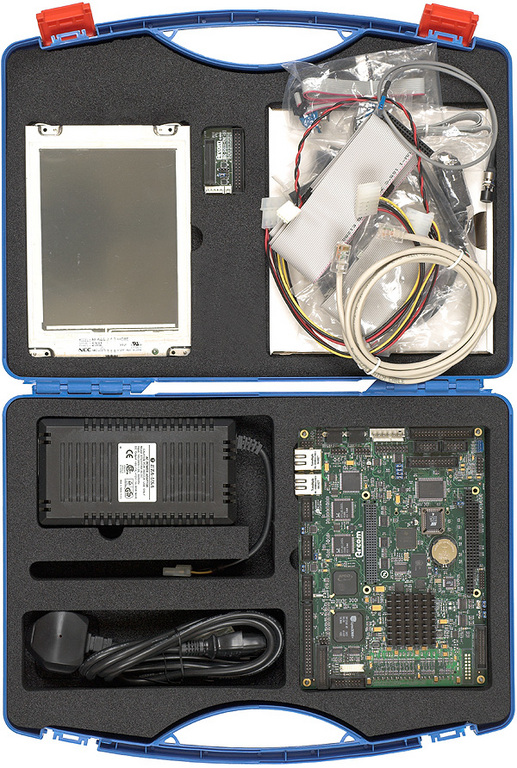
Arcom recently released its SBC-GX533 Development Kit for developing embedded devices in a Linux environment. The target applications, says Arcom, are “deeply embedded, remote or unattended installations demanding reasonable processing power”, typically industrial RTUs and data acquisition modules, as well as networking and communications devices. The SBC-GX533 is a low-profile, fanless, RoHS-compliant, EBX-form-factor board with a 400MHz AMD Geode GX533 1.1W processor, 512MB of DDR DRAM and 32MB of Flash, of which only 13MB are occupied by the preloaded Linux image. The Linux OS is kernel 2.6 with a Compressed Journaled Flash File System (JFFS2) for reliability and recovery from power interruptions. One of the SBC-GX533's key advantages is the preconfiguration of the Linux image, which preempts the need to build it from scratch. A few of the optional features are TFT, analog touchscreen and Java Technology.
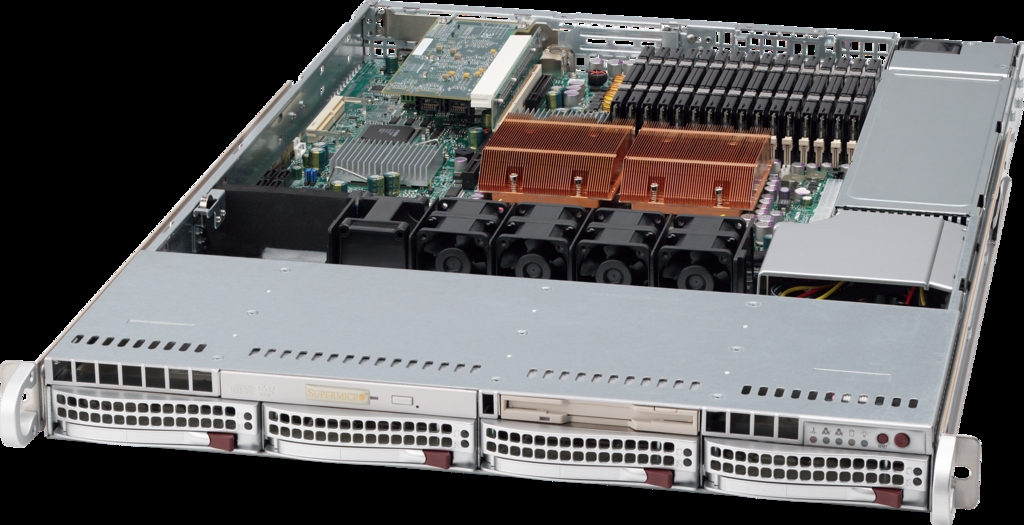
Like other vendors in the diverse hardware arena, Supermicro has upgraded its product line to take advantage of Intel's new Dual-Core Xeon 5100 series processors, aka Woodcrest. The new platform is slated to improve system performance and memory capacity, as well as reduce energy consumption and operating temperatures. Supermicro has leveraged Intel's advances to improve its own systems, or SuperServers, that are based on its X7 series of motherboards. Supermicro claims that the combination of its high-efficiency power supplies and the Woodcrest processors result in “5% or greater efficiency than competitors' systems”, providing energy savings of “up to $200 per server over three years”.