New Products
Okay, friends, admit it. Like your humble editor, you've closeted a secret wish to work at Pixar ever since Toy Story first came out. Should you ever beat me to that dream job creating animated films or special effects, you'll feel right at home with the omnipresent Linux applications that bring everything to life. A case in point is Autodesk's new Linux port of Discreet Inferno 6.5, an interactive design system for high-resolution visual effects. Discreet Inferno has been used for high-speed compositing and advanced graphics applications in films and television shows, such as Charlie & the Chocolate Factory, Hitchhiker's Guide to the Galaxy, CSI New York, Stargate: Atlantis and many others. Interestingly (but not surprisingly), Autodesk first created a Linux version of Discreet Inferno just for Japan, which was such a blockbuster that it was released worldwide. In addition, according to a VP at Autodesk, the Discreet Inferno system on the Linux workstation “can offer up to five times the performance (per CPU) of previous SGI platforms such as the Onyx 2.” So, good people of Autodesk, now that Linux has handily rocked your world, there's this little program called AutoCAD....
Just say “ippimail”—the name of a new and free e-mail service—five times fast and you'll be hooked too. If the name alone doesn't grab you, the ippimail gang hopes that saving the world will. Here's how it works. ippimail's mission is to get as many people as possible to join its free, Hotmail-esque e-mail service, which utilizes 100% open-source technology. The more eyeballs it gets, the more banner advertising it can support. The firm then donates 45% of its profits to worthy charities and an additional 10% to the Open Source Development community. Though most of the charities are on its home turf in the United Kingdom, many work globally, and ippimail pledges to support charities wherever its users are. In addition, ippimail sees this project as a clever way to evangelize about the benefits of open source to the broader public. It's motto “feelgood email” seems to hit the nail right on the head.

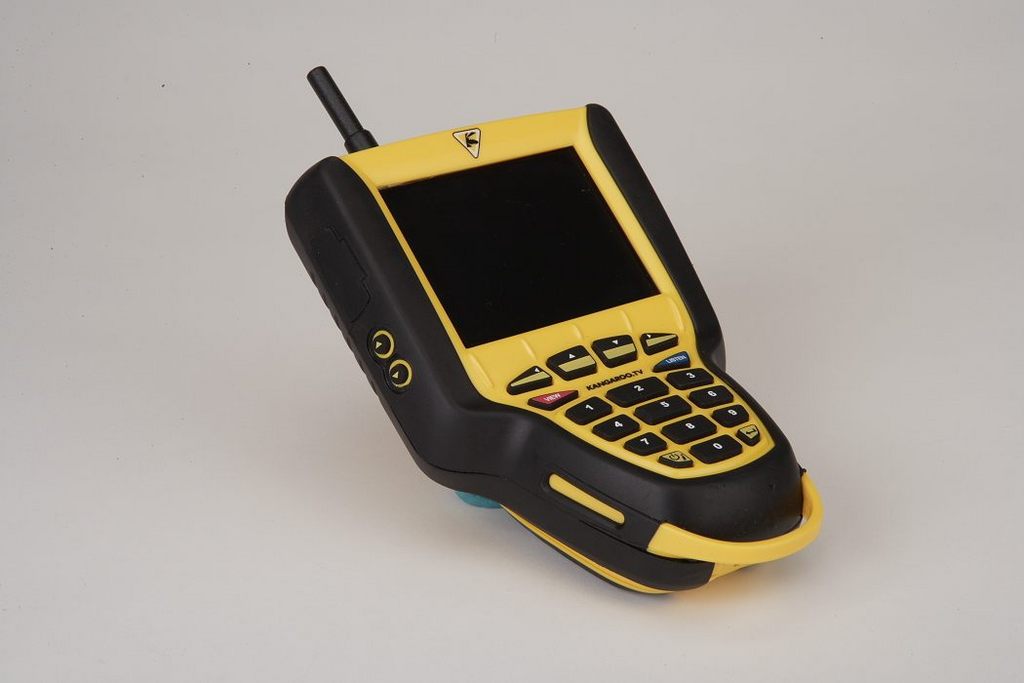
It's official, folks—Linux has gone Joe Sixpack. That's because our beloved OS has infiltrated the world of NASCAR autoracing. Embedded Linux is the horsepower under the hood of Kangaroo.TV, a new device available for rental at NASCAR events that gives spectators a more entertaining autoracing experience. Marketed as NASCAR NEXTEL FanView, this wireless, handheld gadget provides racing fans a slew of event information, including ten live MPEG-4 video feeds (replays, highlights and in-car views), 64 AC3 audio feeds (driver-to-pit conversations and commentary) and a plethora of real-time stats. Kangaroo.TV utilized Trolltech's Qtopia as its application platform and GUI. You can give Kangaroo.TV a whirl for $50 US a day, coming to a racetrack near you.
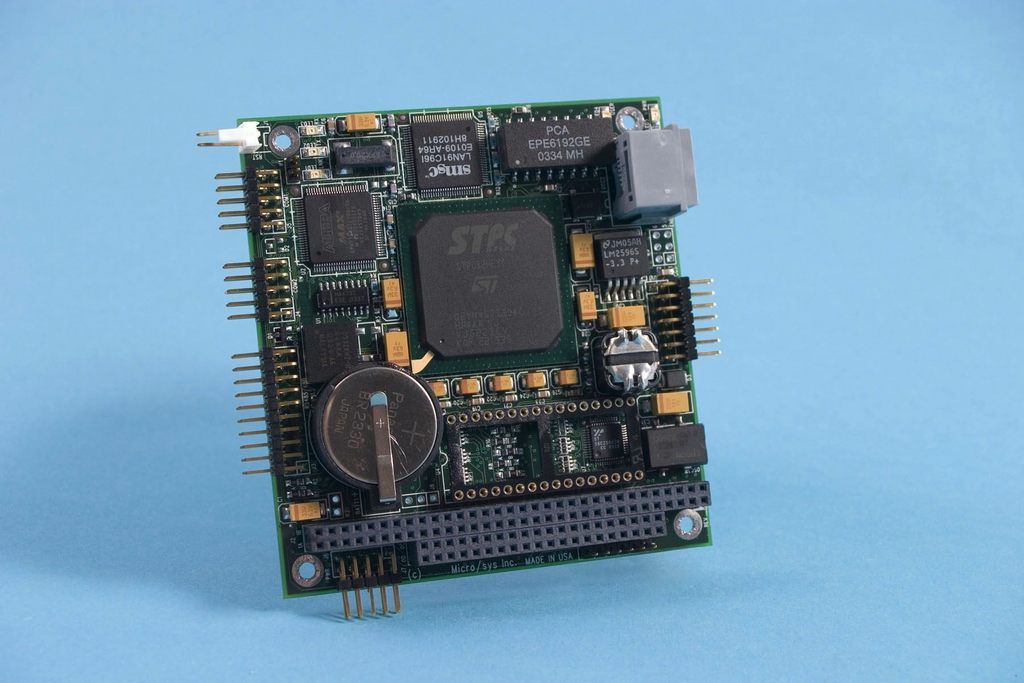
If your itch involves PC/104 single-board computers that boot quickly and can handle extreme heat and cold, Micro/sys' new SBC1491-ET might be the scratch. This mid-range, full-featured PC/104 (3.55 x 3.775) computer has a sub-five-second boot-up time and will operate in the temperature range of –40°C to +85°C. The SBC1491-ET offers standard PC features such as SVGA, dual serial ports and 10BASE-T Ethernet support, as well as 64MB of RAM, up to 576MB solid-state Flash and full AT-compatibility. Micro/sys claims that this product is ideal “for applications not requiring Pentium speed” and offers PC compatibility while generating less heat, using less power and costing less. The processor is an STPC Atlas with operating speeds of 120MHz to 133MHz. Software development packages for the SBC1491-ET include Linux, Windows CE, VxWorks and DOS. Ahoy, Antarctica or bust!
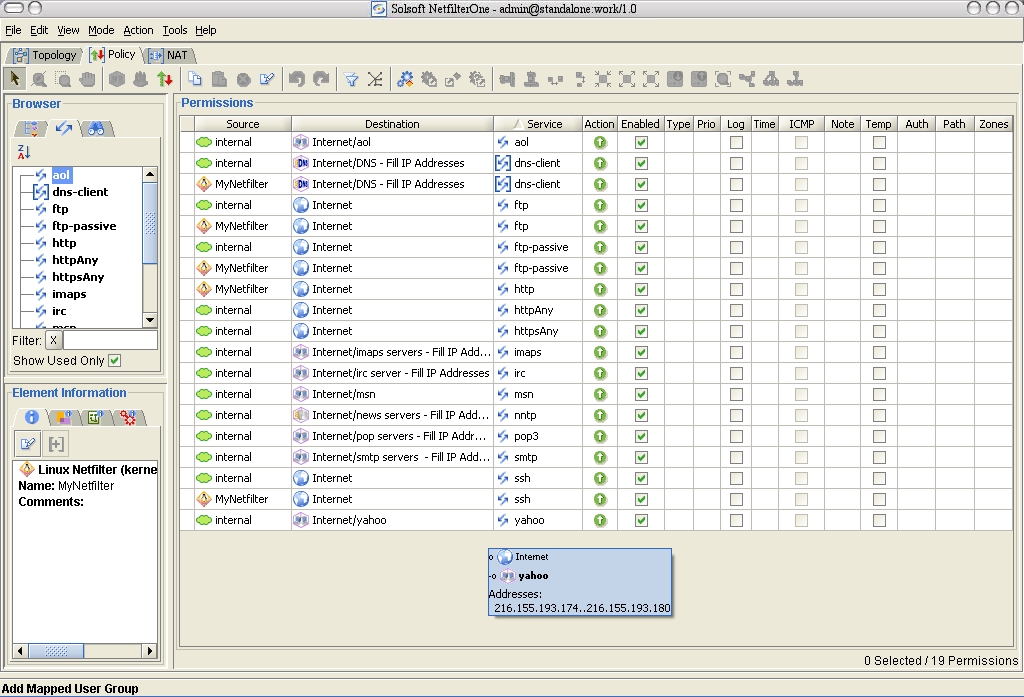
Linux Journal's security czar, Mick Bauer, has opined numerous times that a good Netfilter firewall GUI is not just a crutch for the less technical among us, but rather a tool that makes all of us IT administrators work more intelligently. Solsoft recently upgraded its own Netfilter GUI, NetFilterOne. The application is a centralized interface from which one can configure, deploy, enforce and audit rules and policies among Netfilter firewalls. The shiny new Version 1.2 offers the following three key new features: a new Tabular Policy Editor that allows users to manage all permissions in a unified view; bridge mode, also called transparent mode by other providers; and support for Linux Netfilter iptables-1.3.x. A free trial of NetFilterOne is available at Solsoft's Web site.
If your backup duties include files and directories named with non-Latin characters, you're in luck. Arkeia Software's newly released Network Backup Version 5.5 adds full support for Unicode/UTF-8 characters in the backup index. Unicode supports characters from all the world's major languages and is most commonly applied to languages such as Japanese, Chinese and Arabic.
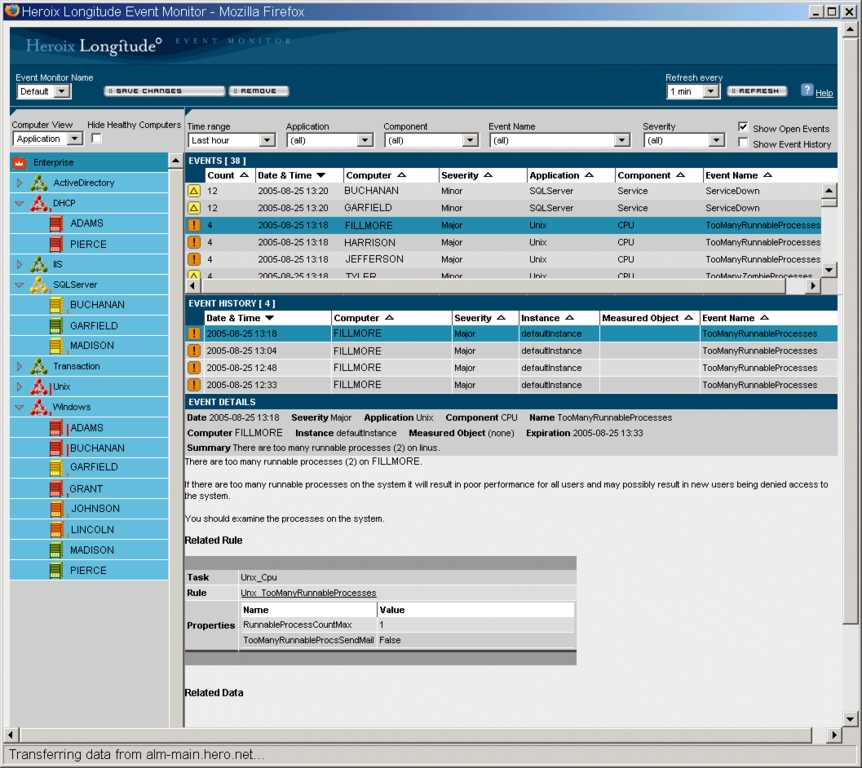
Heroix has upgraded its Longitude agentless performance monitoring and reporting software. The application is intended to monitor an enterprise's entire IT infrastructure, including OS, Web, database, J2EE, messaging, infrastructure, and user and business metrics, all right out of the box and without agent software on monitored computers. Innovations in Version 3 are event correlation across the entire infrastructure, enhanced SLA management via a new graphical event monitor, adjustable workload threshold settings to eliminate false alarms and a range of added monitoring coverage (Cisco devices, Dell OpenManage, HP Systems Insight Manager and SNMP device checking). Platforms monitored are Red Hat and SUSE Linux, Solaris, HP-UX, AIX and Windows. A 14-day free trial is available at Heroix's Web site.