
New Products
The Slovakian company Thinstuff recently released Touch Rdpserver, a Linux-based Remote Desktop Protocol (RDP) terminal server solution for RDP 5.0, 5.1, 5.2, Windows CE and rdesktop clients. Thinstuff claims that the product provides virtual X servers for highly optimized X11 to RDP translation, a server management framework for operating large-scale terminal server clusters and low-bandwidth consumption. Thinstuff offers a free, downloadable demo on its Web site.
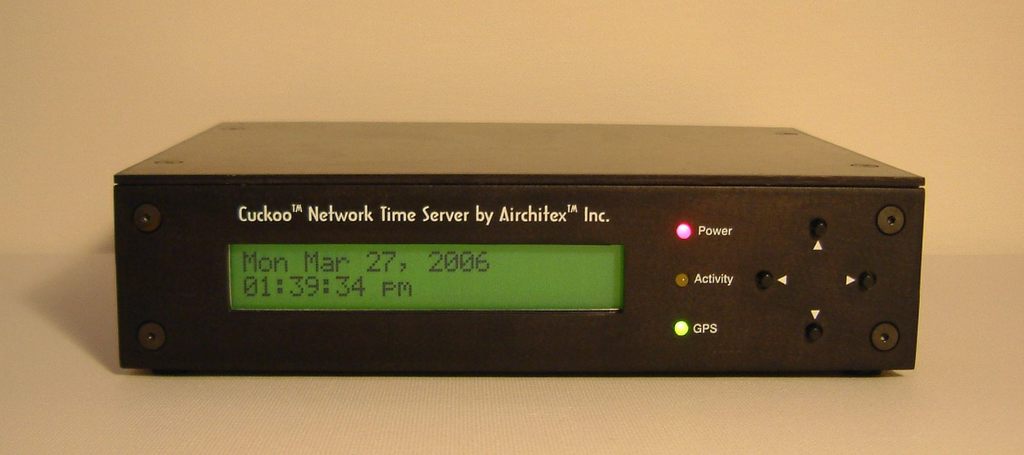
Airchitex's Cuckoo is a network appliance for those who want the peace of mind that comes with having one's own SNTP time server. Cuckoo is designed to supply accurate and precise time to every machine in your network, sans loud bird. The device receives its time information from global positioning system (GPS) satellites, making it accurate to +/– 1 millisecond. Network protocols include NTP, TIME and DAYTIME; autosets for time zones and daylight-savings time work in the US. Airchitex claims that Cuckoo avoids common time errors stemming from PC clock drift and Internet routing latency, among other issues.
If your mission is to code in different operating systems, SlickEdit v11 might be your editor. This latest update, from its eponymous mother company, adds a range of new features, such as code templates, comment wrapping, comment autogeneration for Javadoc and XMLdoc, regex evaluator, Xft font support, Vim emulation, universal binary support for Macintosh and more. These build on legacy features such as the Context Tagging engine and the DIFFzilla tool for comparing files and directories. SlickEdit supports more than 40 languages on seven platforms, including Linux kernel 2.4 and later. A free trial edition is available for download on the company's Web site.

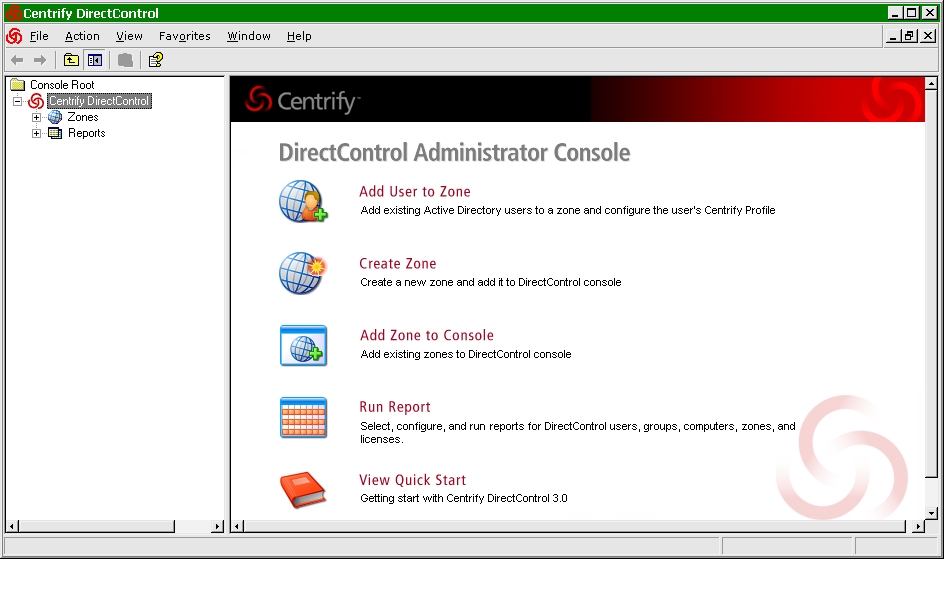
Grudgingly or not, many of us use Microsoft's Active Directory for user authentication and system access. Against this backdrop, we are gleefully adding desktops of various flavors. The detriment to this variety comes in the form of cross-platform identity and access management issues. Centrify's DirectControl Suite attempts to eliminate these issues by delivering secure access control and centralized identity management by seamlessly integrating UNIX, Linux, Mac OS, J2EE and Web platforms with Microsoft Active Directory. Admins can control who has access to what systems and applications while centrally managing a consistent, global security policy. End users can access all systems with a single password and can get access in minutes rather than days.
Realizing the promise of Apache® Hadoop® requires the effective deployment of compute, memory, storage and networking to achieve optimal results. With its flexibility and multitude of options, it is easy to over or under provision the server infrastructure, resulting in poor performance and high TCO. Join us for an in depth, technical discussion with industry experts from leading Hadoop and server companies who will provide insights into the key considerations for designing and deploying an optimal Hadoop cluster.
Sponsored by AMD
Built-in forensics, incident response, and security with Red Hat Enterprise Linux 6
Every security policy provides guidance and requirements for ensuring adequate protection of information and data, as well as high-level technical and administrative security requirements for a system in a given environment. Traditionally, providing security for a system focuses on the confidentiality of the information on it. However, protecting the data integrity and system and data availability is just as important. For example, when processing United States intelligence information, there are three attributes that require protection: confidentiality, integrity, and availability.
Learn more about catching the bad guy in this free white paper.
Sponsored by DLT Solutions
| Designing Electronics with Linux | May 22, 2013 |
| Dynamic DNS—an Object Lesson in Problem Solving | May 21, 2013 |
| Using Salt Stack and Vagrant for Drupal Development | May 20, 2013 |
| Making Linux and Android Get Along (It's Not as Hard as It Sounds) | May 16, 2013 |
| Drupal Is a Framework: Why Everyone Needs to Understand This | May 15, 2013 |
| Home, My Backup Data Center | May 13, 2013 |
- Linux Systems Administrator
- New Products
- Senior Perl Developer
- Technical Support Rep
- UX Designer
- Web & UI Developer (JavaScript & j Query)
- Designing Electronics with Linux
- Dynamic DNS—an Object Lesson in Problem Solving
- Using Salt Stack and Vagrant for Drupal Development
- Making Linux and Android Get Along (It's Not as Hard as It Sounds)
Enter to Win an Adafruit Pi Cobbler Breakout Kit for Raspberry Pi

It's Raspberry Pi month at Linux Journal. Each week in May, Adafruit will be giving away a Pi-related prize to a lucky, randomly drawn LJ reader. Winners will be announced weekly.
Fill out the fields below to enter to win this week's prize-- a Pi Cobbler Breakout Kit for Raspberry Pi.
Congratulations to our winners so far:
- 5-8-13, Pi Starter Pack: Jack Davis
- 5-15-13, Pi Model B 512MB RAM: Patrick Dunn
- 5-21-13, Prototyping Pi Plate Kit: Philip Kirby
- Next winner announced on 5-27-13!
Featured Jobs
| Linux Systems Administrator | Houston and Austin, Texas | Host Gator |
| Senior Perl Developer | Austin, Texas | Host Gator |
| Technical Support Rep | Houston and Austin, Texas | Host Gator |
| UX Designer | Austin, Texas | Host Gator |
| Web & UI Developer (JavaScript & j Query) | Austin, Texas | Host Gator |
Free Webinar: Hadoop
How to Build an Optimal Hadoop Cluster to Store and Maintain Unlimited Amounts of Data Using Microservers
Realizing the promise of Apache® Hadoop® requires the effective deployment of compute, memory, storage and networking to achieve optimal results. With its flexibility and multitude of options, it is easy to over or under provision the server infrastructure, resulting in poor performance and high TCO. Join us for an in depth, technical discussion with industry experts from leading Hadoop and server companies who will provide insights into the key considerations for designing and deploying an optimal Hadoop cluster.
Some of key questions to be discussed are:
- What is the “typical” Hadoop cluster and what should be installed on the different machine types?
- Why should you consider the typical workload patterns when making your hardware decisions?
- Are all microservers created equal for Hadoop deployments?
- How do I plan for expansion if I require more compute, memory, storage or networking?


59 min 47 sec ago
5 hours 31 min ago
5 hours 32 min ago
7 hours 32 min ago
16 hours 17 min ago
16 hours 51 min ago
17 hours 50 min ago
18 hours 40 min ago
22 hours 42 min ago
1 day 2 hours ago