
Linux in Government: Essential IT Knowledge for Third World and Developing Countries
Sometimes and usually in the rarest of instances, experience converges at the least-expected moment to form an important insight. Abraham Maslow would call this a peak experience or a moment in life that takes us beyond our ordinary perceptions, thoughts and feelings. I thought I had spotted such a moment in an article I read by Doc Searls. So, I called him and asked him about the following quote, which he said surfaced while on-stage giving a presentation:
Linux is a form of building material that grows in the wild and naturally is suited for making foundations and frameworks. The wild in this case is fertile human mentation, which is why it evolves and improves in the course of being put to use.
While preparing for a conference recently, Doc's quote began to resonate with me until I found a way to incorporate it into my presentation. I find the idea of Linux and open-source software identified as building material growing in the wild to be an idea that can rocket a technologically dependent nation into an independent one. In theoretical and practical terms, such changes in national and regional economies benefits all trading partners. Let's consider how.
I have found cases where nations have:
leveraged commodity hardware from the Pacific Rim to create their own national brands
utilized open-source software to build infrastructure and populate desktops and servers
exploited the trend before others
In an article titled "Linux brings hope to Spain's poorest region", Ingrid Marson discusses how "Extemadura has a population of around 1.1 million but (an) employment rate (of) only around 50 percent". She goes on to say:
The regional government was saying as far back as 1997 that information technology, and open source software in particular, was key to the region's economic and social development. "The time of the industrial era, when discoveries were abusively capitalised and unfairly monopolised, is over. A new model is necessary; a model which would allow the improvement of the lives of all citizens in Extremadura," it declared at the time.
Spain provides an excellent example of a country that understands purchasing power parity. The country recognized that Extemadura could pull itself out of an economic mire as long as it did not work with proprietary code, "since its raw material belongs to big multinational companies".
Originally, the Spanish government burned 80,000 CDs with the Debian Linux operating system and software ranging from text editors to an Internet browser. The disks were sent to the area's 670 schools and distributed to the public through newspaper inserts.
Some Spanish government systems and those belonging to the telecommunications company Telefonica shifted to Linux. Spanish supermarket Mercadona reported rolling out Red Hat Linux across 10,000 desktops.
Ingrid Marson compares the effort in Spain with those being made in Venezuela, China, Thailand and India. I also have discovered that many other countries are making such efforts. Using some of these examples, I wanted to put together a computer during a presentation to show how easily it can be done. So, for a conference held two weeks ago in Jordan, I shipped parts to INT@J in order to demonstrate how the country could assemble its own computers and create employment.
In Figure 1, you can see some of the activity that surrounded my attempt.
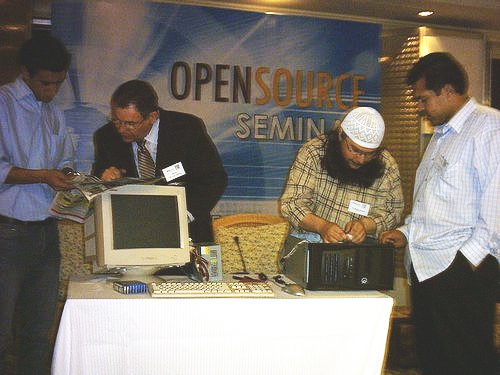
Figure 1. Participants during a coffee break wanted to help.
While arranging to ship parts to Jordan, I ran into several problems. First, the TSA in the US would not cooperate. Next, I ran into problems with American Airlines, which would allow me to take only a laptop. Next, Jordanian customs had concerns about bringing computer parts into the country. After talking to friends at the Department of Homeland Security even having a ranking member of the Homeland Security Committee in the House try to ease the way, I started to lose faith.
I found a solution at Fry's, however, where I purchased one of the store's Linux computers for $149. The system was made entirely in China and runs Linspire. I installed Ubuntu, and it worked perfectly. So, I contacted DHL, which guaranteed delivery to Amman, Jordan, in three business days--including time to deal with customs and so on.
Shipping by DHL actually cost less than paying the extra baggage charge on American and Royal Jordanian airlines. I would disassemble the parts, lay them on a table and then reassemble them when the session started. I timed the assembly at about 17 minutes.
In Jordan, before I could get started, one of the sponsors unboxed the computer and plugged it into a standard non-US 220 volt plug without checking the power supply. It blew out the system. I thought, so much for that effort. Still, I was surprised by the number of people who came up to the podium at the break and began working to fix the computer. Jordan has some great technical people, and they certainly could assemble their own systems. I would surmise that this is true in many regions of the world.
When I give presentations, I like to present an example from history in which people used materials growing in the wild to establish an industry. Texas from 1866 to 1881 provides a good example of using such materials.
After the Civil War, millions of cattle roamed freely in Texas and northern Mexico. A market existed in the east for beef and beef-related products. The only issue was transporting them there.
In the early days, some men, such as Charles Goodnight (see Figure 2), began to round up free cattle and drive them north. Ranchers found that harvesting cattle could prove extremely profitable and participated in these cattle drives. For example, a free range steer worth $4.00 in Texas would escalate in value to $40.00 in Kansas City.
The number of cows trailed out of Texas during the big years was remarkable. You can run your own multiplications to get an idea of the revenue generated during this period of time, and remember those numbers should be translated to 150-year-old dollar values. If you wish, look up the inflation rate and the amounts become awesome:
1867..........35,000
1868..........75,000
1869.........350,000
1870.........300,000
1871.........600,000
1872.........350,000
1873.........405,000
1874.........166,000
1875.........151,618
1876.........321,998
1877.........201,159
1878.........265,646
1879.........257,927
1880.........394,784
1881.........250,000

Figure 2. Picture of a Young Charles Goodnight, Courtesy of the Texas Passport Repository
Many people credit Charles Goodnight as inventing technology to make transporting cattle easier. For example, he converted an army surplus Studebaker wagon into the first chuckwagon. One might consider that an early innovation pre-dating Lockheed's skunk works projects. But recognize that technology evolves and improves in the course of being used.
Because many people around the world have seen Western movies, the idea of rounding up free-roaming cattle provides a metaphor for the idea of free software. Although some people may not like the imagery of killing cattle, one cannot deny that the concept exists around the planet.
I also like to explain how raw material from the Internet has given rise to technological advances globally. Many people who use the Internet do not have an understanding of its history. Also, many people have formed negative notions of how the Internet wound up in the hands of the public.
Presidential candidate Al Gore actually sponsored the High Performance Computing and Communications Act in 1991. That act gave birth to the National Research and Education Network (NREN) initiative that became one of the major vehicles for the spread of the Internet beyond the field of computer science. The act helped establish NSFnet.
Note: Despite references that continue today, Al Gore did not claim he "invented" the Internet. The distortion originated in an interview with Wolf Blitzer on CNN's "Late Edition" program on March 9, 1999. Gore actually said, "During my service in the United States Congress, I took the initiative in creating the Internet. I took the initiative in moving forward a whole range of initiatives that have proved to be important to our country's economic growth and environmental protection, improvements in our educational system."
The US government oversaw the transition from NSFnet to commercial backbone infrastructure, which in time became the Internet. Formerly, the Internet mostly was a backup communication system for the US in the event of nuclear war. We moved it first to education and then to the public to rid the US government of the expense of running the network.
Once the US government released the Internet to the public, it also released a vast amount of technology that many companies used to build various offerings. The primary beneficiaries of Internet technology include Sun Microsystems, Netscape and Microsoft. The release of the technology initiated widespread use of open standards and what we now know as open-source software.
Toward the end of my building material presentation, I ask a simple question: "How can [the host country] emerge as the technological leader of the region?"
With participation from the audience, I have found numerous and some remarkable answers. For example, educators say they need curriculum for open-source courses. Business people say they need more people knowledgeable in open-source technologies. Government workers say they need help from the government to mandate the use of Linux and open-source software.
As one person wrote to me, "many people here have a high degree of interest in open-source software. Many people could use jobs and have the skills. Unfortunately, the government did not invite such people to the conference. Instead, they invited people who wanted a free lunch and a chance to get off work."
Until a country embraces free software and commits to becoming its own producer, it will continue in the cycle that creates two worlds--an industrial one and an impoverished one. I have read estimates that four billion people live in poverty on this planet, in spite of our many technological advances.
In the 21st century, the time has arrived for that cycle should end. As stated earlier in Ingrid Marson's article, "The time of the Industrial era, when discoveries were abusively capitalised and unfairly monopolised, is over. A new model is necessary; a model which would allow the improvement of the lives of all citizens in Extremadura". Extend that notion out and move it beyond Extemadura to the developing nations of the world. If that requires a peak experience, then so be it.
Author's Note: I have found examples of different spelling of Extremadura. In quotes and text above you can see examples of both.
Tom Adelstein is a Principal of Hiser + Adelstein, a consulting and operating company specializing in free and open-source software solutions and support. Tom is the co-author of the book Exploring the JDS Linux Desktop, author of an upcoming book on Linux system administration and has written prolifically since 1985. Tom's business career began in public accounting where he first learned to program and develop software and later progressed to Wall Street, where he became the designated principal of a NYSE firm. He later returned to technology and has consulted and worked with start-ups as well leaders of the Fortune 500.
