
EOF - Inside the Ultimate Linux Box 2005

The RME sound card uses this handy Multiface box to offer standard connections for digital and analog audio, along with MIDI. Because RME uses the same interface for its PCMCIA cards, you can take the same Multiface along to use with your laptop for remote sessions (photo: Don Cameron).

The Ultimate Linux Box has three separate cooling loops: one for the power supply and two that each handle two CPUs. We carefully monitored CPU temperatures with lm_sensors. CPU temperature rises a little before the water in the “up” tube warms up enough to start convection (photo: Don Cameron).
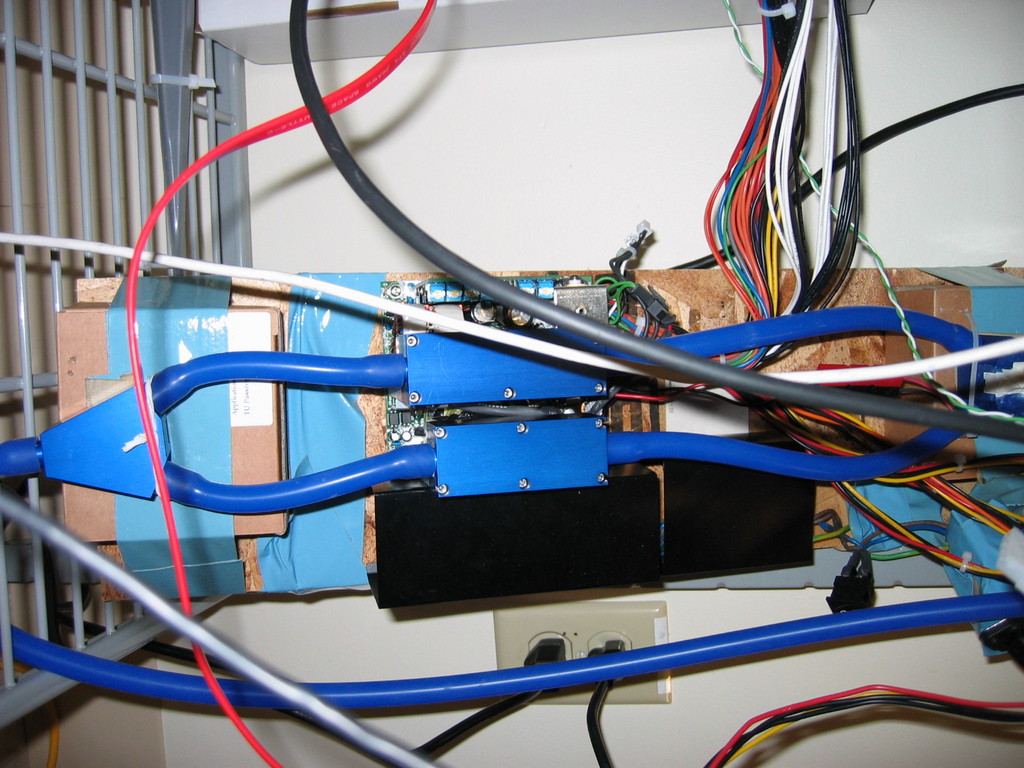
With the heatsink fins milled flat, we were able to attach custom waterblocks for fanless cooling of the modified power supply, shown here mounted on a temporary rack for testing. The waterblocks and the custom Y-connectors are anodized blue to match the Zalman parts (photo: Don Marti).

The Ultimate Linux Box boots from a CompactFlash card with an ATA adapter. Pull the card out to make an easy backup. 256MB is plenty of space for /boot, and the rest of the storage is at the other end of a long fiber optic cable. Going back to a noisy PC after using this machine was sure hard on the ears (photo: Don Cameron).
Don Marti is editor in chief of Linux Journal.
