
Belly Dance and Free Software
The San Francisco Bay Area is a hotbed of innovative technological development and a crucible for the growth of performance arts. One art that thrives in the progressive creative environment of the region is the belly dance. From elegant performers draped in bead-encrusted costumes dancing in upscale restaurants to the colorful, turban-bedecked entertainers at Renaissance festivals and street fairs, for more than 100 years belly dancers have shimmied their way into every strata of contemporary pop culture.
Middle Eastern dance arrived in the United States in the last quarter of the 19th century, appearing in cultural exhibits at various World's Fairs. Little Egypt was the first dancer to garner fame and prestige while performing at the 1893 World's Columbian Exhibition in Chicago. Her amazing performances were so popular that the entertainment director of the fair, impresario Sol Bloom, hyped her in advertising with his newly coined term, belly dance.
Although more formally known as Middle Eastern dance, the slang term belly dance persists, encompassing a range of styles from traditional ethnic forms, including the Egyptian Raks Sharki, Arabic for “dance of the east”, to the highly stylized American Tribal Style and experimental Raks Gothique techniques. Each method is defined by its own unique blend of music, costume and movement vocabulary.
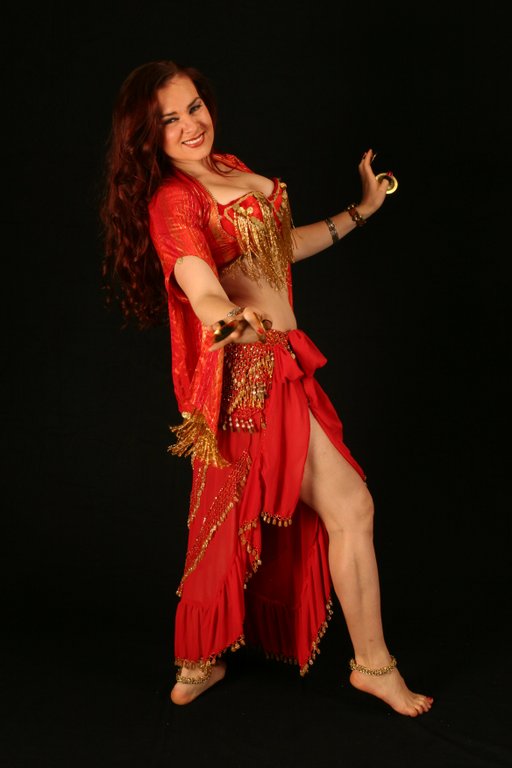
The Gypsy look takes a number of forms from traditional or historically flavored looks to more glamorous costumes, such as Hannah's stylish beaded version. Gypsy dancers ring the Mediterranean Sea and take many forms from the stylized Flamenco to the flirty belly dances performed in Turkey and Egypt.
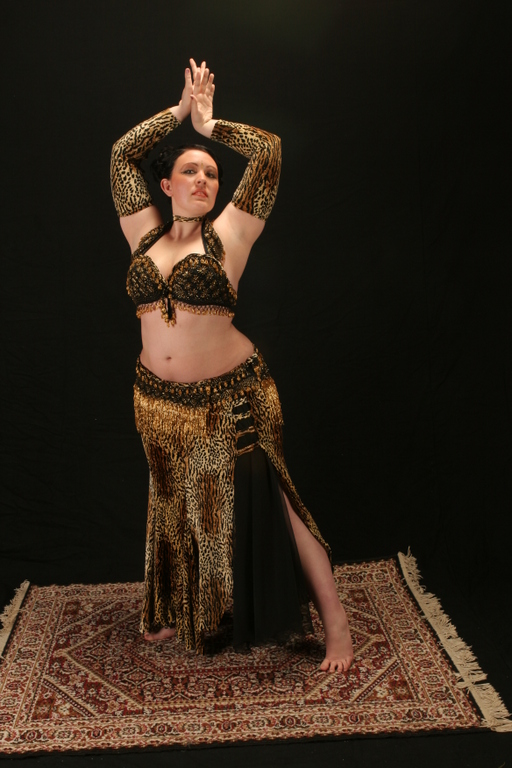
Belly dance appears in a variety of venues. Dancers assemble a wardrobe of costumes to suit different performance needs. Simone wears her modern wild animal costume to performances where she can demonstrate her wit and vivacious style.
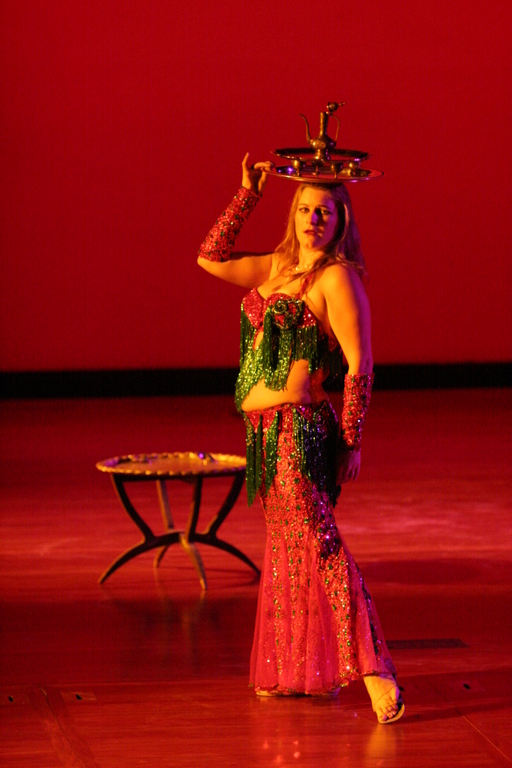
Belly dance is most often seen in intimate venues. However, there are the occasional gala shows where dancers pull out all the stops with high-style Egyptian costumes, such as the one Setareh wore on a large stage at a formal dance concert.
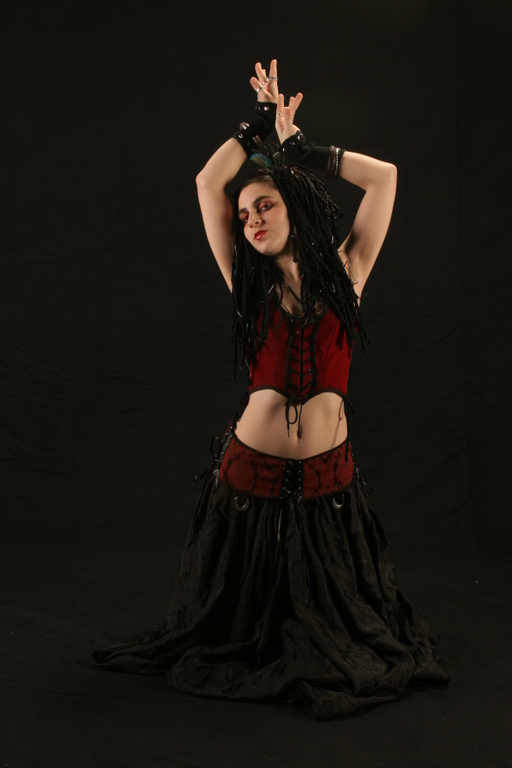
Tempest embodies the look and attitude of the new generation of dancers who infuse traditional belly dance style with a modern edge. Her signature style and Goth sensibilities are reflected in her highly personal costume style, which easily could be worn in a variety of venues from nightclubs to Renaissance fairs to belly dance festivals.
From motion pictures to MTV videos, on television sitcoms and even at local ethnic restaurants, belly dancers are highly sought-after entertainers. Therefore, working belly dancers require professional-grade IT tools to meet their publicity needs with style and panache. Audiences and potential clients have become more sophisticated, demanding a higher degree of polish and professionalism.
Gone are the days when a simple 8" x 10" black-and-white glossy photo served as a dancer's complete marketing package. Teachers need a way to get the word out about classes and performances. Professional dancers have to advertise their skills, services and show times. With the right tools, dancers can develop their own marketing packages. Today's advertising needs include business cards, flyers and Web sites.
Dancers now use computers for their own unique set of needs in marketing, music and sometimes also video. Like emergent innovation in dance in the Bay Area, GNU/Linux and other free software truly invite exploration.
This article is based on our collaborations with several Bay Area belly dancers and a digital photography workflow that is done entirely with GNU/Linux software. We describe two example successes using free software tools for belly dance marketing applications. In addition, we explore some really interesting intersections of free software and belly dance, both as an art and as a business. The sense of community, as in GNU/Linux community, has apparent parallels with the dance community. To contextualize this topic further, we talked with several professional dancers to get their take on the role of technology in their art and in their woman-owned businesses. One example was Michell Joyce, who says, “I really believe that my Web site is responsible for my professional dance career.”
Challenges also are present in dance business promotion, where content also needs to educate. Amy Luna Manderino says of her dance group Shuvani, “Although our talents are diverse, they are all connected through Shuvani, in which we perform Romani music and dance from India, Turkey, Egypt and Spain. The biggest challenge is educating the public about the Roma (Gypsy) Trail. Many people are unaware that Gypsies are an ethnic community with a rich cultural heritage....That's always the challenge when you produce something in an artistic medium that hasn't been seen before, you have to educate people on the concept.”
We use free software for everything from professional photography to document generation, as we discuss here. We have held several belly dance photo shoots at the Creative Camera professional photo studio in Santa Clara, California. This photography was conducted with a digital workflow that uses 100% free software tools. For example, we use The GIMP, gthumb and gtkam (see the on-line Resources).
Free software definitely addresses several concerns mentioned by belly dancers. For example, in talking about Web content development for her business, Tempest says “Thumbnailing, sizing and finishing images is very time consuming and can be especially tedious if the quality of the images is less than ideal.” Having spent a lot of time recently batch-processing photos with gthumb, we find this gPhoto2 utility indispensable for Web and print work.
Now we turn to some creative uses of free software in belly dance with two key examples of creating belly dance concert posters. Each example is a little different. In the first, we intentionally wanted to create a new document from scratch for an upcoming event and needed documents suitable for both print and electronic media. In the second example, an event already was being promoted on the Web, but we needed a print version right away, so some novel repurposing was done with free software tools.
To create a new poster for a Spring-themed belly dance event, we held a photo shoot and then edited the studio photos with gthumb and The GIMP. These resulting images were combined with other text and photo elements to create the poster. The poster itself was done on Linux using a desktop publishing (DTP) application called Scribus. Refer to Clay Dowling's article “Linux as a Publishing Platform” on the Linux Journal Web site for more details on using Scribus and The GIMP to publish on Linux. Although we describe only some of the big steps we used with The GIMP and Scribus, we were surprised at how easy it was to use this powerful application to position graphic elements precisely and ultimately obtain a professional result.
The first task was to select a suitable main photo of Michelle Paloma-Hudkins, who was promoting a belly dance event held in Sunnyvale, California, in March 2005. We start with gthumb, as shown in Figure 1. After looking over several photos in the series that we did, we selected one. But rather than insert a photo decorated only with a simple color border, it seemed more Spring-like to use a fuzzy edge to the photo. This was managed by using The GIMP's Script-Fu decor menu in Figure 2. The output after edge manipulation is shown in Figure 3.

Figure 1. Viewing a photo collection with gthumb to find exactly the right photo.

Figure 2. Using a Script-Fu menu in The GIMP, we created a fuzzy border for the chosen image.
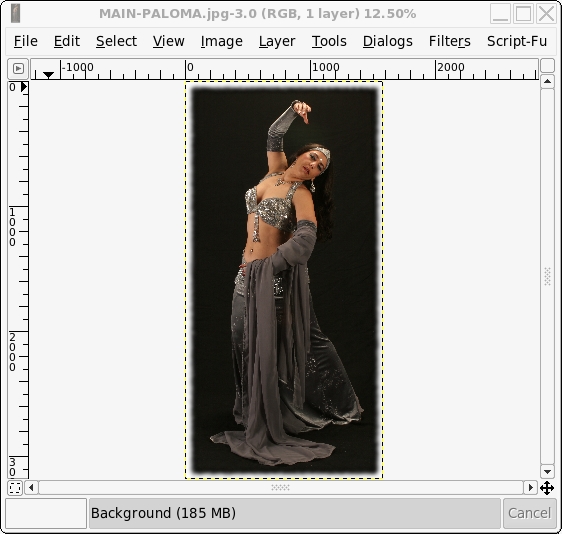
Figure 3. The result nicely details a glamorous photo of Paloma, with the fuzzy border effect.
To sell the idea of Spring, we wanted to composite into the poster a photo of daffodils from a separate photo shoot. One photo was a field of flowers, over which we intended to lay out announcement copy text. Another photo was a bright closeup of a single daffodil.
The GIMP has powerful layer manipulation capabilities, and we needed only a few of them to accomplish a lot. In Figure 4 we added a layer filled with all-white color and merged this at 50% opacity to create the slightly faded flower field image. The resulting picture is shown in Figure 5.

Figure 4. Using layers in The GIMP, we added a white layer to make the background photo appear faded.
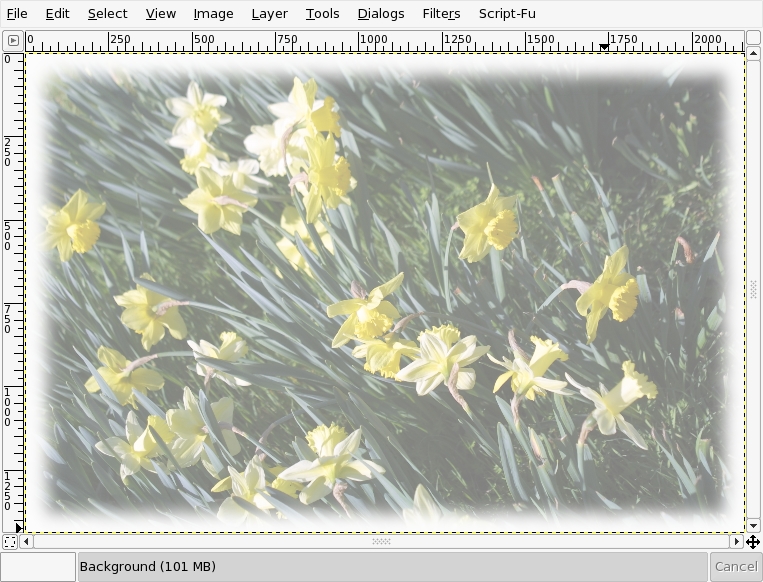
Figure 5. The faded photo is now ready to use as background art for a Spring-themed event.
To assemble all of the graphical elements, we started Scribus. The easiest thing to do was to place the text onto the letter-sized layout view in separate chunks, along with graphical items. These could be changed and placed using Scribus tools. An early version of the poster layout is shown in Figure 6. We used the Scribus editing panel for changing the original ASCII text, which imported with a default font, into something different and more appropriately sized for the poster (Figure 7). Other text bodies were handled similarly. This work included colorizing the text, changing the line layout and other typographic qualities.

Figure 6. Working on the poster in Scribus. The background photo has been added, but the text chunks still are in the default font.
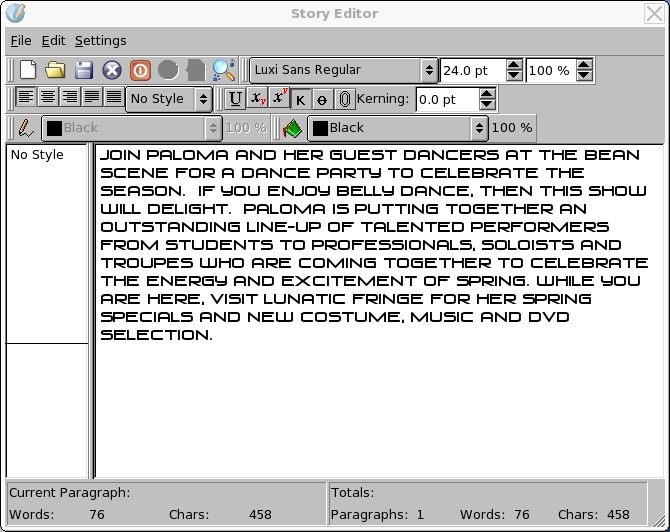
Figure 7. Working with copy in the Scribus editing panel.
After text placement and coloring, we added two additional photos from live belly dance events, with Simone and Tempest at the bottom. The photograph of the single daffodil was placed in the upper right, near the poster title. With the final edits complete, the bright and engaging poster is shown in Figure 8. Using Scribus, one source document could be used simultaneously for both print applications and as an on-line PDF file for Internet distribution to the public.
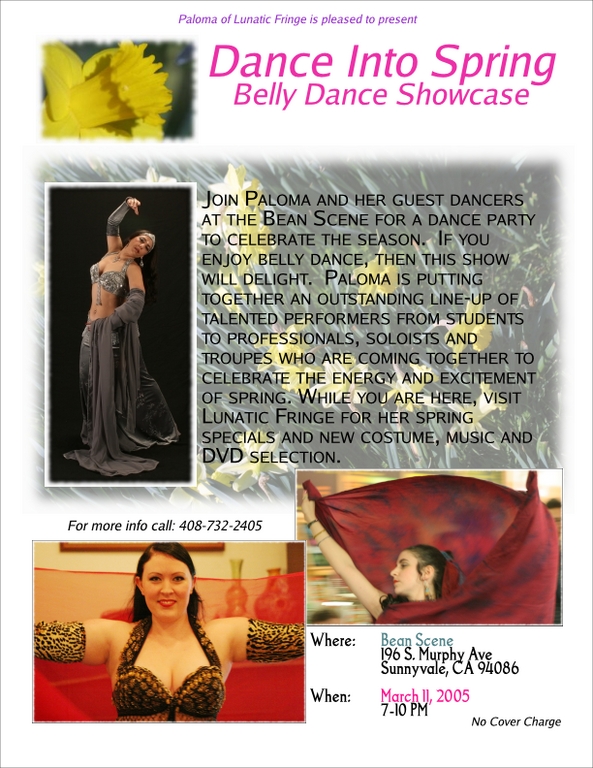
Figure 8. Final Result in Scribus: Dance into Spring
Our second example solved a problem in belly dance promotion where pre-existing marketing content had to be used. With photos we'd taken at an earlier photo shoot, Paloma created a Web poster for a belly dance event held in December 2004, called Jingle Bell Raks. We now needed to create a print poster plus a separate high-resolution electronic distribution format. Free software made it possible to support Paloma's marketing concerns where “...obstacles include venues to advertise at low cost. Finding the right bulletin boards to post on to be most effective. Also finding new avenues of distribution to reach outside the Belly Dance Community, to draw in the general public.”
A high-quality print-oriented conversion program called HTMLDOC (see Resources) came to the rescue here in an unusual application of free software. The robust HTMLDOC program can be compiled from source with ease. What is does is amazing: it reads in HTML, images and other data and then automatically turns that content into PDF files or PostScript as output. It also has powerful book-production and indexing features. Our case was pretty simple, we wanted to create a one-page print poster and PDF file automatically. It was really easy to do, as shown in Figure 9. We simply inserted the name of a single HTML file via the HTMLDOC GUI and then configured the program to make PDF files. The resulting poster as shown with xpdf is depicted in Figure 10.

Figure 9. HTMLDOC GUI menu box—adding one filename.
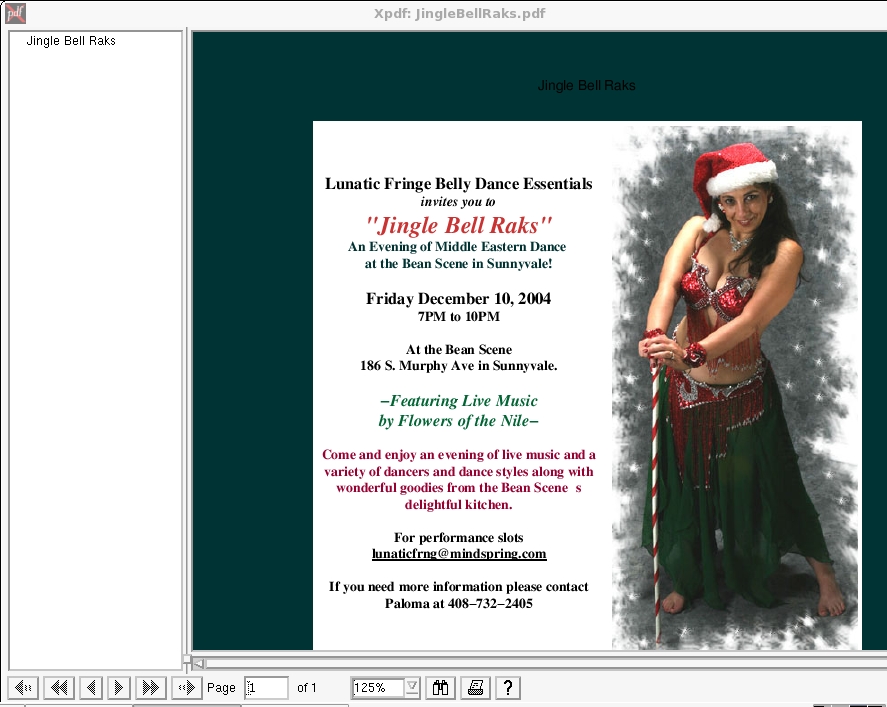
Figure 10. HTMLDOC rules! Jingle Bell Raks, as seen with xpdf.
We have only started an adventure in belly dance, using free software primarily for photography and image-oriented marketing projects. But more is clearly possible. Recalling Reuven M. Lerner's Linux Journal articles on Web syndication and content management systems (CMS), it would appear that free software exists to support solutions for Paloma and Tempest's comments about the complexity involved in a belly dancer trying to create and expand her Web presence. The free software tools for Linux and audio described in Dave Phillips' informative articles offer exemplary tools for the job of arranging belly dance music. The article by Olexiy Tykhomyrov and Denys Tonkonog on the Kino movie-making application (see December 2004's Linux Journal) points toward free software for editing digital video. Hence, it too is a potential tool for dancers to have for live belly dance events.
And still more is possible. At the time of this writing, we are preparing to do photography at a large annual belly dance event called Rakkasah West, which “is the largest Middle Eastern Folk Festival and Fantasy Bazaar in the world”. We expect to create 10,000–12,000 high-resolution digital photos covering this event over three days. We plan to assemble photo collections automatically using GNU/Linux tools such as gPhoto2 and the open-source language Python. These tools certainly will be used for actual photo file management. However, we also expect to use the Python scripting capability of Scribus to support automatic generation of CD-ROM disk labels and nearly full custom-photo books, indexed by belly dancer and/or troupe. Stay connected with Linux Journal for more details about this in the future.
Finally, Linux as a community-developed project has definite resonance with the belly dance community. Linux is a gift culture, where numerous programmers and maintainers contribute code for all to have. Belly dancers communicate and network with one another and with clients using the Internet, which is a large community substantially woven together with an infrastructure of free software and open standards. Advocacy for freedom and social consciousness wring no less true in belly dance. As Luna explains, her troupe Shuvani “donates several performances a year to the Voice of Roma, an advocacy group providing support for the Gypsies in war-torn Kosovo. For example, through their program 'The Threads That Connect Us' they provide material support for Romani women in the UN camps to embroider products that are then sold here in the US.”
Resources for this article: /article/8133.
Dawn Devine aka Davina is a freelance writer and author of more than nine titles on Middle Eastern belly dance costume design and construction. She currently is the president of SF/BA MECDA, the San Francisco/Bay Area Middle Eastern Dance Association, an organization that promotes dancers, creates performance opportunities and strives to educate the public. Davina teaches belly dance in the greater San Jose area and in workshops nationwide.
Michael Baxter is technical editor at Linux Journal and has been working in computer technology since he was nine, imprinted by a July 4, 1969, viewing of 2001: A Space Odyssey. He is also an experienced photographer. Michael was more recently imprinted by the Belly Dance Vortex, apparently also on July 4, this time in 2004.
