
EOF - Behind the Scenes at NASA's New Linux Site
With the arrival of the Fall 2004 TOP500 list, two Linux-based systems now top the rankings of the world's fastest computers: IBM's BlueGene/L, at 70.72TFlops, and SGI's Columbia at 51.87TFlops.

Columbia went from order to up and running in 120 days—in an already-full machine room. The project required custom power distribution units, rewiring, plumbing and plenty of scheduling finesse from NASA and SGI experts.
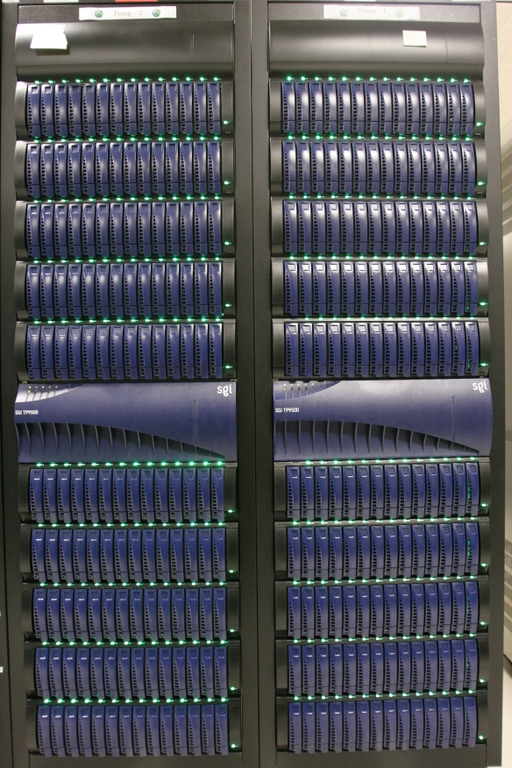
Columbia's storage is 440TB of disk, some Fibre Channel, some Serial ATA. The system already has 650 users at Ames and at cooperating universities and national labs.
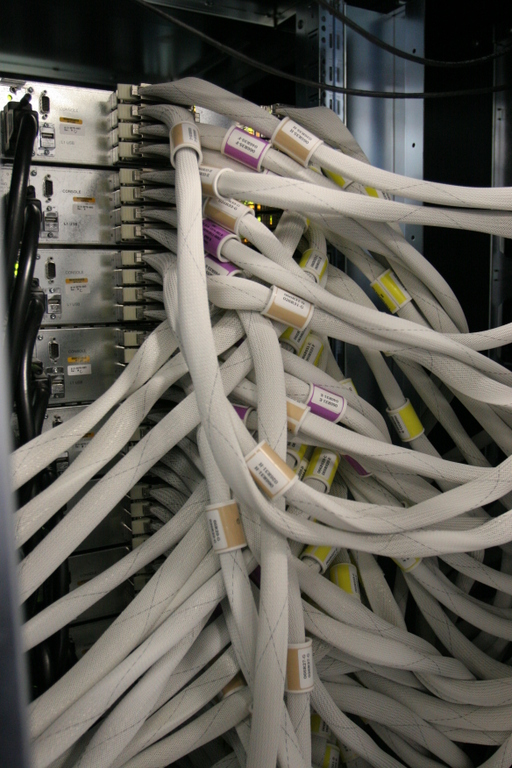
The 10,240 processors in Columbia make up 20 512-processor systems with 1TB of memory each. As shown in our February 2003 issue, the interconnect is SGI's low-latency NUMAlink.
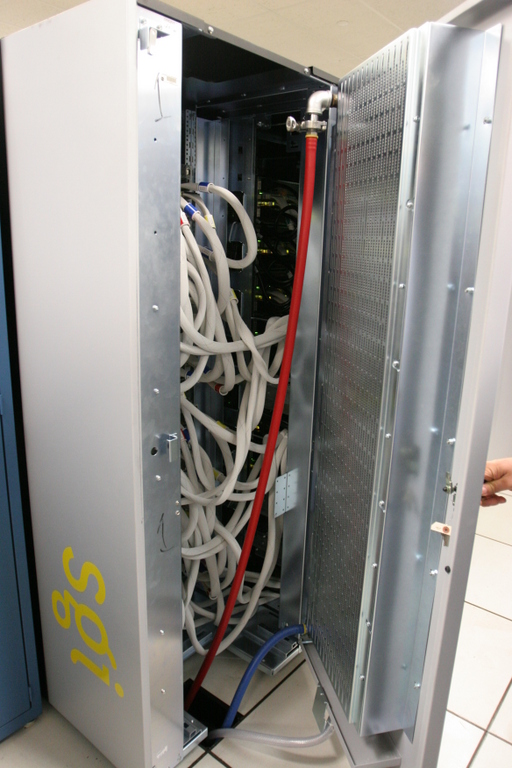
High density, at 88 Itanium 2 CPUs per rack, made a water cooling system necessary. The blue hose brings cold water into the radiator, the red hose brings warm water out and the clear hose is connected to a tray to drain any condensation.
Photos: Michael Baxter
Don Marti is Editor in Chief of Linux Journal.
Realizing the promise of Apache® Hadoop® requires the effective deployment of compute, memory, storage and networking to achieve optimal results. With its flexibility and multitude of options, it is easy to over or under provision the server infrastructure, resulting in poor performance and high TCO. Join us for an in depth, technical discussion with industry experts from leading Hadoop and server companies who will provide insights into the key considerations for designing and deploying an optimal Hadoop cluster.
Sponsored by AMD
If you already use virtualized infrastructure, you are well on your way to leveraging the power of the cloud. Virtualization offers the promise of limitless resources, but how do you manage that scalability when your DevOps team doesn’t scale? In today’s hypercompetitive markets, fast results can make a difference between leading the pack vs. obsolescence. Organizations need more benefits from cloud computing than just raw resources. They need agility, flexibility, convenience, ROI, and control.
Stackato private Platform-as-a-Service technology from ActiveState extends your private cloud infrastructure by creating a private PaaS to provide on-demand availability, flexibility, control, and ultimately, faster time-to-market for your enterprise.
Sponsored by ActiveState
| Non-Linux FOSS: libnotify, OS X Style | Jun 18, 2013 |
| Containers—Not Virtual Machines—Are the Future Cloud | Jun 17, 2013 |
| Lock-Free Multi-Producer Multi-Consumer Queue on Ring Buffer | Jun 12, 2013 |
| Weechat, Irssi's Little Brother | Jun 11, 2013 |
| One Tail Just Isn't Enough | Jun 07, 2013 |
| Introduction to MapReduce with Hadoop on Linux | Jun 05, 2013 |
- Containers—Not Virtual Machines—Are the Future Cloud
- Non-Linux FOSS: libnotify, OS X Style
- Lock-Free Multi-Producer Multi-Consumer Queue on Ring Buffer
- RSS Feeds
- Introduction to MapReduce with Hadoop on Linux
- Validate an E-Mail Address with PHP, the Right Way
- Tech Tip: Really Simple HTTP Server with Python
- Weechat, Irssi's Little Brother
- Linux Systems Administrator
- Help with Designing or Debugging CORBA Applications
Featured Jobs
| Linux Systems Administrator | Houston and Austin, Texas | Host Gator |
| Senior Perl Developer | Austin, Texas | Host Gator |
| Technical Support Rep | Houston and Austin, Texas | Host Gator |
| UX Designer | Austin, Texas | Host Gator |
| Web & UI Developer (JavaScript & j Query) | Austin, Texas | Host Gator |
Free Webinar: Hadoop
How to Build an Optimal Hadoop Cluster to Store and Maintain Unlimited Amounts of Data Using Microservers
Realizing the promise of Apache® Hadoop® requires the effective deployment of compute, memory, storage and networking to achieve optimal results. With its flexibility and multitude of options, it is easy to over or under provision the server infrastructure, resulting in poor performance and high TCO. Join us for an in depth, technical discussion with industry experts from leading Hadoop and server companies who will provide insights into the key considerations for designing and deploying an optimal Hadoop cluster.
Some of key questions to be discussed are:
- What is the “typical” Hadoop cluster and what should be installed on the different machine types?
- Why should you consider the typical workload patterns when making your hardware decisions?
- Are all microservers created equal for Hadoop deployments?
- How do I plan for expansion if I require more compute, memory, storage or networking?


7 min 23 sec ago
55 min 53 sec ago
1 hour 19 min ago
2 hours 56 min ago
2 hours 58 min ago
4 hours 51 min ago
7 hours 40 min ago
12 hours 53 min ago
12 hours 55 min ago
12 hours 57 min ago