
EOF - Behind the Scenes at NASA's New Linux Site

The two fastest computers on the planet are Linux systems. One of them is Columbia, built by SGI and located at NASA Ames Research Center in Mountain View, California.

With the arrival of the Fall 2004 TOP500 list, two Linux-based systems now top the rankings of the world's fastest computers: IBM's BlueGene/L, at 70.72TFlops, and SGI's Columbia at 51.87TFlops.
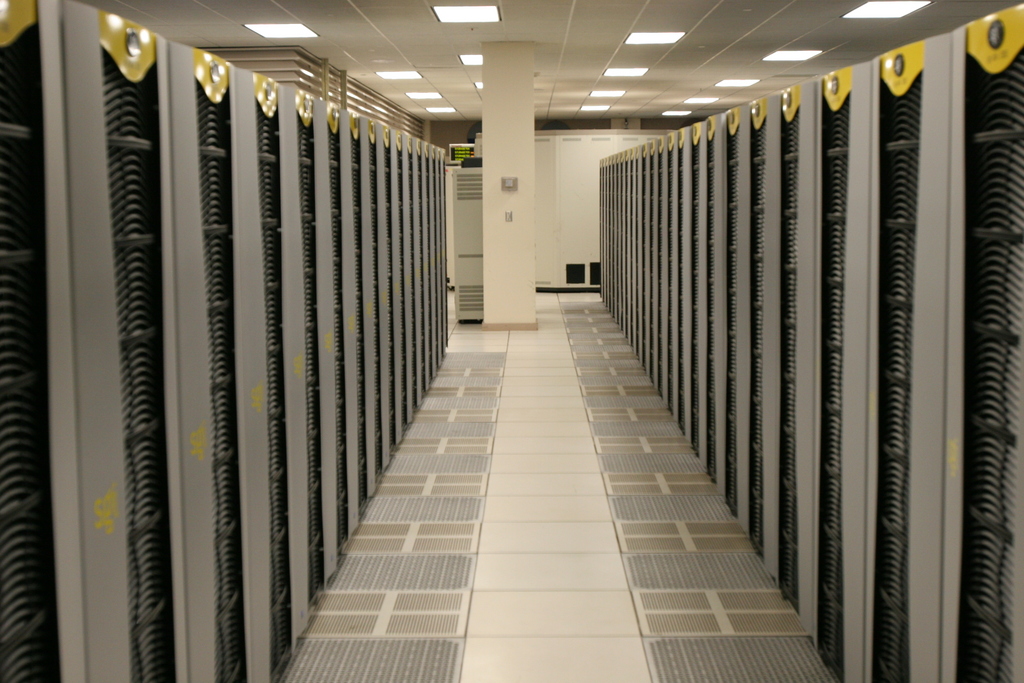
Columbia went from order to up and running in 120 days—in an already-full machine room. The project required custom power distribution units, rewiring, plumbing and plenty of scheduling finesse from NASA and SGI experts.
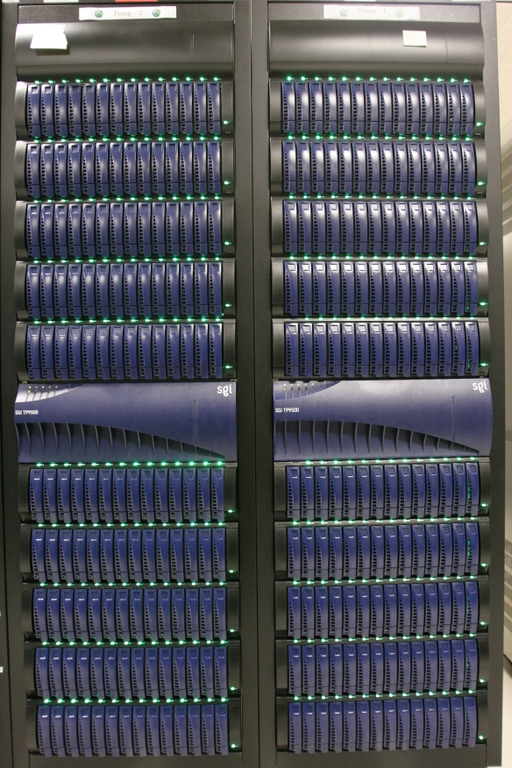
Columbia's storage is 440TB of disk, some Fibre Channel, some Serial ATA. The system already has 650 users at Ames and at cooperating universities and national labs.
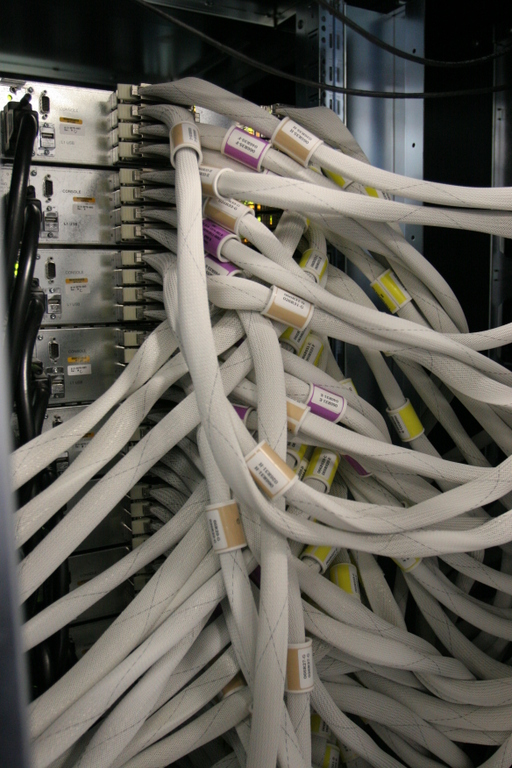
The 10,240 processors in Columbia make up 20 512-processor systems with 1TB of memory each. As shown in our February 2003 issue, the interconnect is SGI's low-latency NUMAlink.
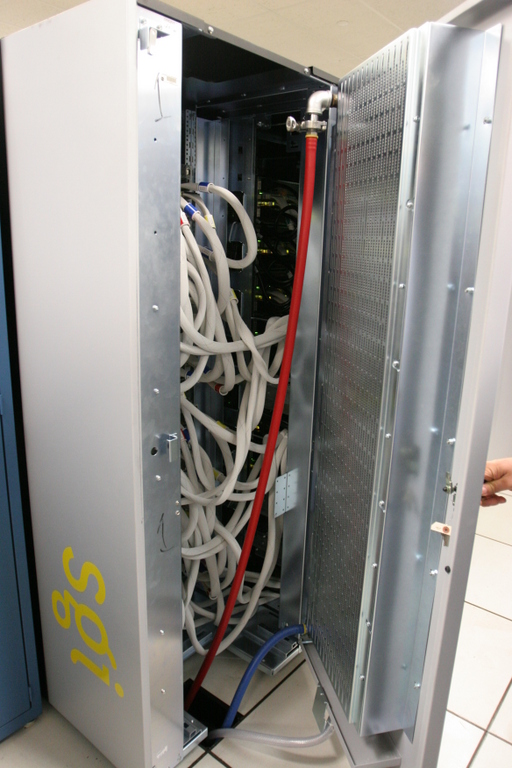
High density, at 88 Itanium 2 CPUs per rack, made a water cooling system necessary. The blue hose brings cold water into the radiator, the red hose brings warm water out and the clear hose is connected to a tray to drain any condensation.

Photos: Michael Baxter

Don Marti is Editor in Chief of Linux Journal.

______________________

Webcast
How to Build an Optimal Hadoop Cluster to Store and Maintain Unlimited Amounts of Data Using Microservers

Realizing the promise of Apache® Hadoop® requires the effective deployment of compute, memory, storage and networking to achieve optimal results. With its flexibility and multitude of options, it is easy to over or under provision the server infrastructure, resulting in poor performance and high TCO. Join us for an in depth, technical discussion with industry experts from leading Hadoop and server companies who will provide insights into the key considerations for designing and deploying an optimal Hadoop cluster.

Learn More

Sponsored by AMD

White Paper
Red Hat White Paper: Using an Open Source Framework to Catch the Bad Guy

Built-in forensics, incident response, and security with Red Hat Enterprise Linux 6

Every security policy provides guidance and requirements for ensuring adequate protection of information and data, as well as high-level technical and administrative security requirements for a system in a given environment. Traditionally, providing security for a system focuses on the confidentiality of the information on it. However, protecting the data integrity and system and data availability is just as important. For example, when processing United States intelligence information, there are three attributes that require protection: confidentiality, integrity, and availability.

Learn more about catching the bad guy in this free white paper.

Learn More

Sponsored by DLT Solutions