
With the arrival of the Fall 2004 TOP500 list, two Linux-based systems now top the rankings of the world's fastest computers: IBM's BlueGene/L, at 70.72TFlops, and SGI's Columbia at 51.87TFlops.

Columbia went from order to up and running in 120 days—in an already-full machine room. The project required custom power distribution units, rewiring, plumbing and plenty of scheduling finesse from NASA and SGI experts.
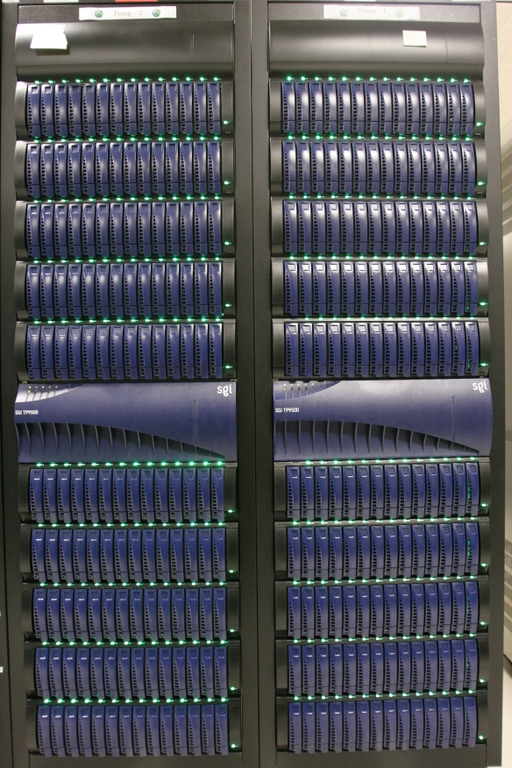
Columbia's storage is 440TB of disk, some Fibre Channel, some Serial ATA. The system already has 650 users at Ames and at cooperating universities and national labs.
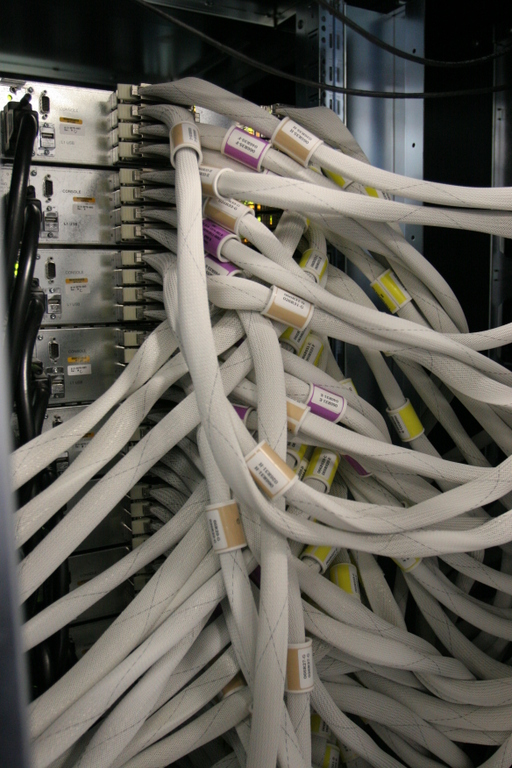
The 10,240 processors in Columbia make up 20 512-processor systems with 1TB of memory each. As shown in our February 2003 issue, the interconnect is SGI's low-latency NUMAlink.
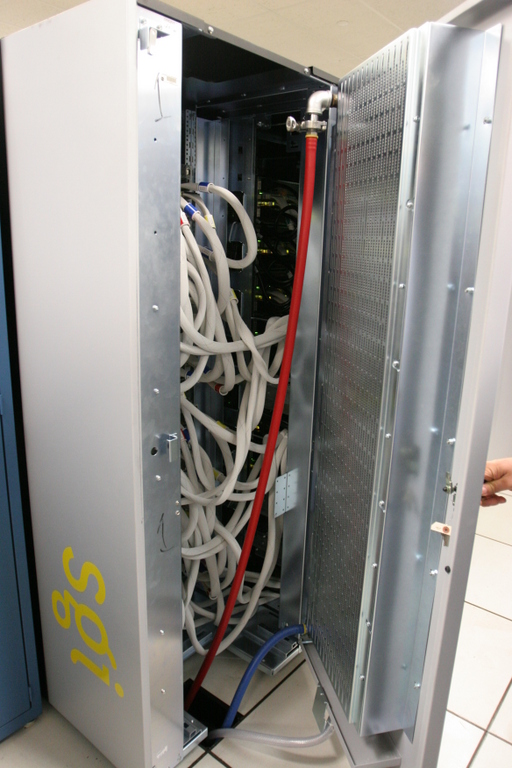
High density, at 88 Itanium 2 CPUs per rack, made a water cooling system necessary. The blue hose brings cold water into the radiator, the red hose brings warm water out and the clear hose is connected to a tray to drain any condensation.
Photos: Michael Baxter
Special Magazine Offer -- Free Gift with Subscription
Receive a free digital copy of Linux Journal's System Administration Special Edition as well as instant online access to current and past issues. CLICK HERE for offer
Linux Journal: delivering readers the advice and inspiration they need to get the most out of their Linux systems since 1994.
Subscribe now!
The Latest
Newsletter
Tech Tip Videos
- Jul-01-09
- Jun-29-09
Recently Popular
From the Magazine
July 2009, #183
News Flash: Linux Kernel 3.0 to include an on-the-go Expresso machine interface! Ok, maybe not, but Linux is definitely going mobile, from phones to e-readers. Find out more inside about Android, the Kindle 2, the Western Digital MyBook II, The Bug, and Indamixx (a portable recording studio). And if you've gone mobile and you been wanting more Emacs in your life then check out Conkeror.
To compliment the mobile we've got the stationary: parsing command line options with getopt, checking your Ruby code with metric_fu, and building a secure Squid proxy. How is this stationary you ask? What can we say? It's not. We just wanted to see if anybody actually read this part of the page :) .
All this and more, and all you have to do is get your hot sweaty hands on the latest copy of Linux Journal.
Delicious
Digg
StumbleUpon
Reddit
Facebook


Post new comment