
Building the Perfect PC by Robert Bruce Thompson & Barbara Fitchman Thompson
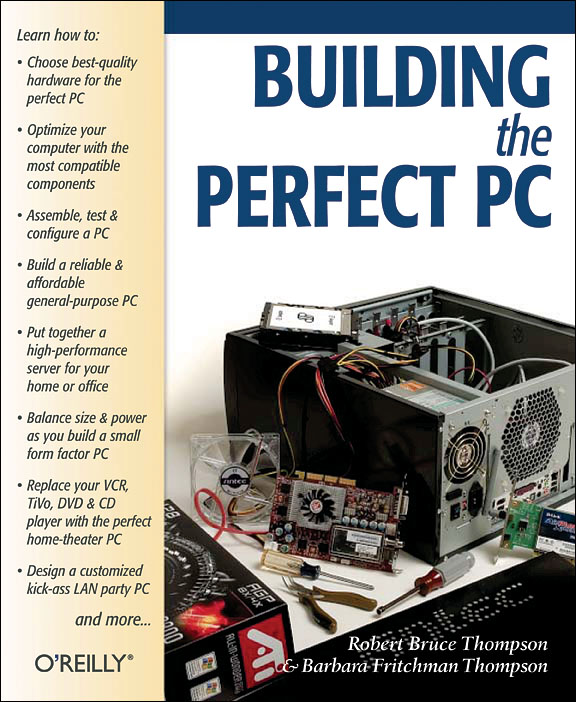
As Linux users, we're used to cracking open our cases to modify our computers, but as Building the Perfect PC shows, this practice is no longer merely for techies. In fact, many ordinary people are building PCs from scratch. A grandmother that one of the authors met at a big-box store was in the process of building her third PC—this time for her granddaughter.
You may be comfortable hacking together a device driver without having the specs available. But, if you are like me, you might feel tentative about plugging an expensive CPU in to a motherboard. If so, then this book is for you.
Building the Perfect PC has a larger-than-usual format than other O'Reilly books. The larger size is due to the margins being filled with photos illustrating the proper method for putting together various components. So that's how the thermal compound is applied!
The book cites many reasons why you would want to build your own PC, including lower cost, broader options, better component quality and no bundled software. Most interesting to me, though, is the ability to build PCs for specific purposes. Not only does this book teach readers how to build mainstream PCs and SOHO servers, but there are chapters on building “Kick-Ass LAN Party PCs” and home theater PCs.
Each project is contained in a chapter that starts with a section called “Determining Functional Requirements and Hardware Design Criteria”. When it comes to component considerations, the authors are not shy about recommending products by brand name. They don't claim that their recommendations are the only good choices, but they want you to benefit from their experience and research. After you're done designing your system, you're ready to build. The bulk of the chapter then guides you through building the system and offers many photographs and helpful explanations for doing so.
The book doesn't have too many technical details about configuring software, but that kind of information is available elsewhere. At times the chatty style of the authors seems a little more suited to a magazine article than a book. But if you're looking for a friendly guide to putting together hardware, I recommend this book. If you read it, you soon will be inspired to put together your own project, perhaps the home theater. The results will be better, more flexible and less expensive than any product you can buy ready made and off the shelf.
