New Products
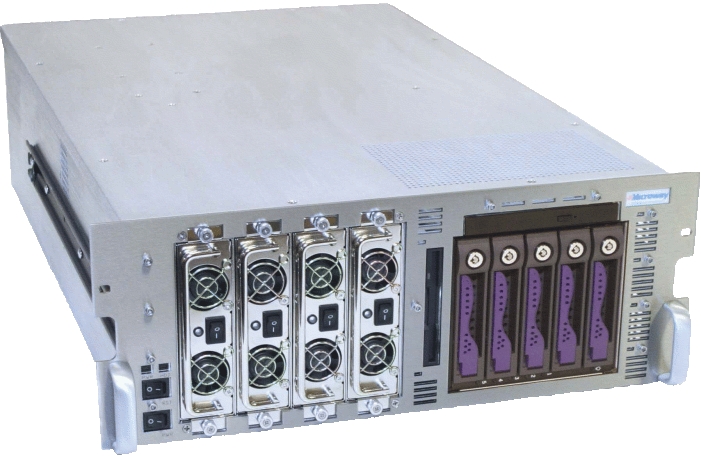
UniComp, a keyboard product and service company that offers customized keyboards based on classic IBM designs, announced the availability of the Linux 101 keyboard. The Linux 101 is a programmed keyboard that rearranges the Ctrl, Caps-Lock and Esc keys for a more convenient layout for Linux users. The Linux 101 keyboard is available with a buckling spring mechanism, like the IBM Model M keyboard from which it descends, or with a quieter rubber dome design. PDFs of each design layout are available on the Unicomp Web site.
UniComp, Inc., 510 Henry Clay Blvd., Lexington, KY, 40502, 800-777-4886, www.pckeyboard.com.
The NetDirector Linux Configuration Suite, from Emu Software, is a scalable, multiserver management tool designed to work in a heterogeneous Linux environment comprising a network of servers from different manufacturers running multiple computing services. The NetDirector Suite's GUI allows administrators to manage centrally the configuration of servers running applications such as Apache, Samba, DNS, DHCP, e-mail and FTP. Servers can be grouped and managed together according to organization, geographic region or server application. Policies then can be applied to entire groups or specific servers within the organization.
Emu Software, Research Triangle Park, North Carolina, 919-313-5186, wwww.emusoftware.com.
Embedded Linux and Enea's hard real-time operating system, OSE, are the basis of Enea Orchestra, an integrated software platform for high-availability telecom and datacom systems. Enea Orchestra enables telecom and datacom OEMs to deploy distributed fault-tolerant, high-availability software solutions across multiple processors and blades. Orchestra also includes embedded development technology from Metrowerks Corporation to simplify kernel debugging, board bring-up and application creation and testing. Resulting applications can run under any Linux distribution, OSE or any combination of the two. Enea Orchestra is available on a subscription basis and includes the application development suite and the platform development suite.
Enea Embedded Technology, 12760 High Bluff Drive, San Diego, California 92130, 858-720-9958, www.enea.com.
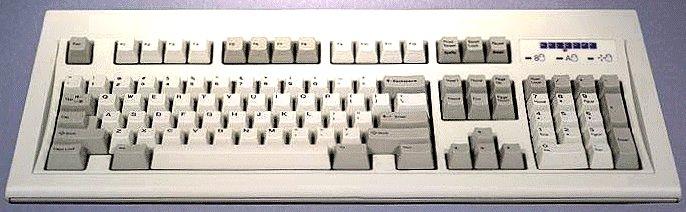
The Motorola A780 mobile phone is based on Linux and Java software. Using the flip-phone form factor, the A780 features a PDA-like quarter-VGA color touchscreen, Bluetooth networking and synchronization, a 1.3 megapixel digital camera, MP3 playback, 48MB or removable TransFlash storage and more. The A780 is a quad-band GSM phone, so it can support common US and international bands. The A780 also features EDGE, enhanced data rate for global evolution, a data networking technology capable of supporting Internet access speeds of up to 240Kbps.
Motorola, Inc., www.motorola.com.
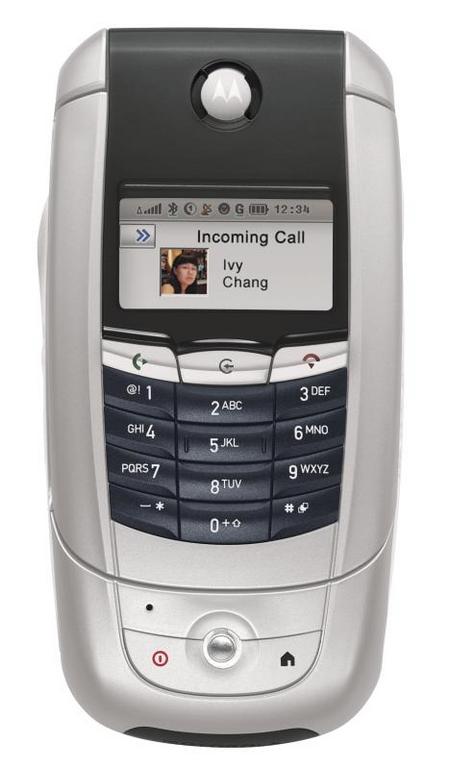
Coraid, Inc., announced the release of EtherDrive Storage Blades, a scalable networked block storage solution for servers that uses the ATA-over-Ethernet (AoE) protocol. EtherDrive Storage Blades integrate standard ATA disk drives into a flexible rackmounted storage appliance. Each EtherDrive includes its own Ethernet connect and nanoserver to provide protocol conversion from Ethernet to ATA. EtherDrives provide shared storage pools from 250GB to more than 16 petabytes. They are available with standard 2.5" or 3.5" ATA disk drives. Source code GPL drivers for Linux 2.4 and 2.6 kernels are available, with other OS drivers becoming available soon.
Coraid, Inc., 565 Research Drive, Athens, Georgia 30605, 877-548-7200, sales@coraid.com, www.coraid.com.
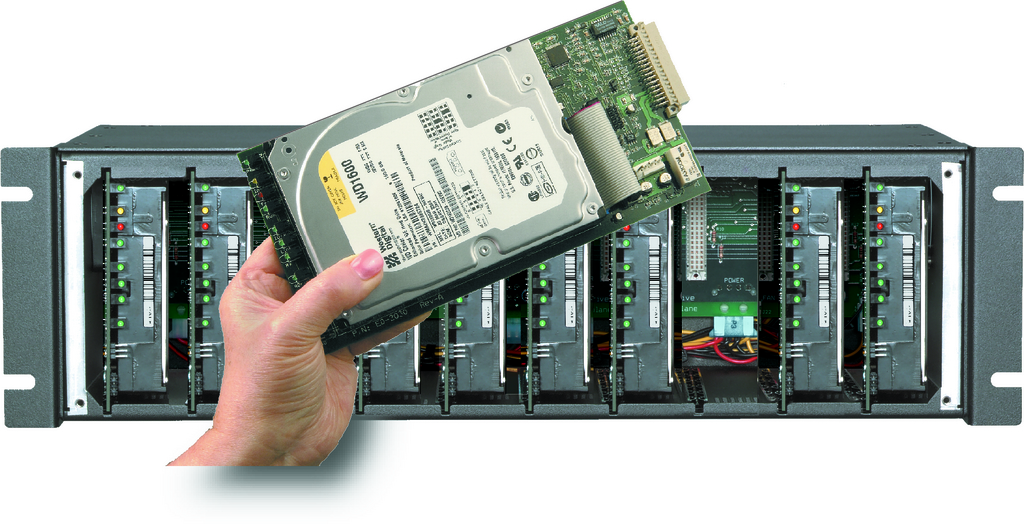
Microway's Quadputer-Navion is an SMP server built with four AMD Opteron 850 model processors that runs SuSE Linux. Housed in a 4U chassis, the Quadputer-Navion includes an 810 Watt-redundant, hot-swap power supply and up to 18 SATA/IDE or five SCSI hard drives. The processors operate at 2.2GHz and feature HyperTransport technology. The 2.5" devices can be used to create an internal RAID system with a total storage capacity of up to 1.36TB. The configuration also includes Microway's Nodewatch and MCMS hardware/software management tools for remote cluster monitoring and control.
Microway, Incorporated, Plymouth Industrial Park, 12 Richards Road, Plymouth, Massachusetts 02360, 508-746-7341, www.microway.com