New Products
Boser Technology announced the release of two embedded engine boards using the Intel 82865GV chipset. The HS-4703 and HS-4702 boards offer dual-channel DDR 400 main memory, an 800MHz system bus, eight USB 2.0 connectors, four COM connectors, a PCI ATA/33/66/100 IDE controller, an AC'97 3-D audio controller and a Serial ATA controller. In addition, both boards come with four IDE drives supporting ATA/33/66/100, a 48-bit dual-channel LVDS panel interface and giga LAN. The HS-4702 comes with TV-out, supporting PAL or NTSC TV.
Boser Technology, USA, 453 Ravendule Drive, #F, Mountain View, California 94043, 650-967-3898, www.boser.com.tw.

Redfone Enterprise Communication System (ECS) is a telephone system for connecting remote branch offices, call centers, remote agents and mobile employees. Designed for small to mid-sized businesses looking to replace PBX phone systems, ECS is built with Linux, Asterix open-source PBX software, off-the-shelf hardware and basic telephony components. ECS offers basic phone features, plus VoIP functionality, a Web interface to voice mail, conference calling, local and remote call agents and multiple mail folders. In addition, ECS enables voice mail and faxes to be sent as e-mail attachments that can be accessed by wireless devices, laptops, desktops and PDAs from any location.
Redfone Communications, Inc., 14380 SW 139th Court, Miami, Florida 33186, 786-544-1180, www.red-fone.com.
The WaveStore 703 is a signal recorder/playback unit designed as a desktop cube for work environments with limited space or for applications that require a transportable unit. The WaveStore 703 offers multiband signal recording/playback, a baseband or 70MHz IF analog interface, bandwidth programmable to 8MHz, tunable center frequency, 500GB storage capacity, continuous playback looping capabilities, DVD-R/W for data archiving and retrieval and optional external trigger signals. The cube contains a Pentium-based host computer, a Red River PCI transceiver card and complete suite of user-interface software.
Red River, 797 North Grove Road, Suite 101, Richardson, Texas 75081, 972-671-9570, www.red-river.com.
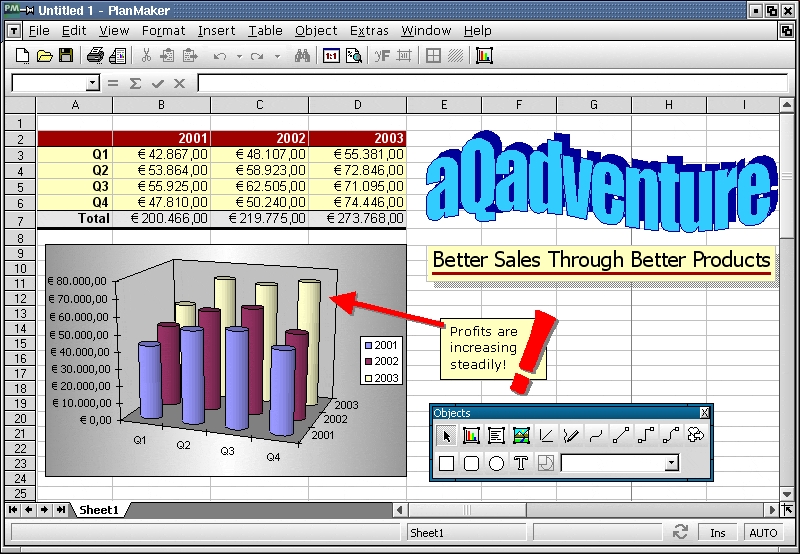
PlanMaker 2004 is spreadsheet software that operates on various OSes, including Windows and Linux, and offers the same feature set on all platforms. It also can operate on pocket and handheld PCs, as it requires limited RAM space. Over 320 calculation functions are built-in and cover areas such as date and time calculations, mathematics, statistics and data analysis. PlanMaker also offers features for preparing presentations, including stylesheets, various formatting options, an AutoShapes drawing module and freehand drawing. Charts and graphs can be created from any of the 70 different types of 2-D and 3-D charts that PlanMaker supports. PlanMaker also reads and writes Microsoft Excel files—Excel 5.0, 95, 97, 2000, XP, Excel 2003 and Excel for Apple Macintosh—for easy and safe file exchange with Microsoft Excel users.
SoftMaker Software GmbH, Kronacher Str. 7, D-90427 Nuernberg, Germany, info@softmaker.de, www.softmaker.com.
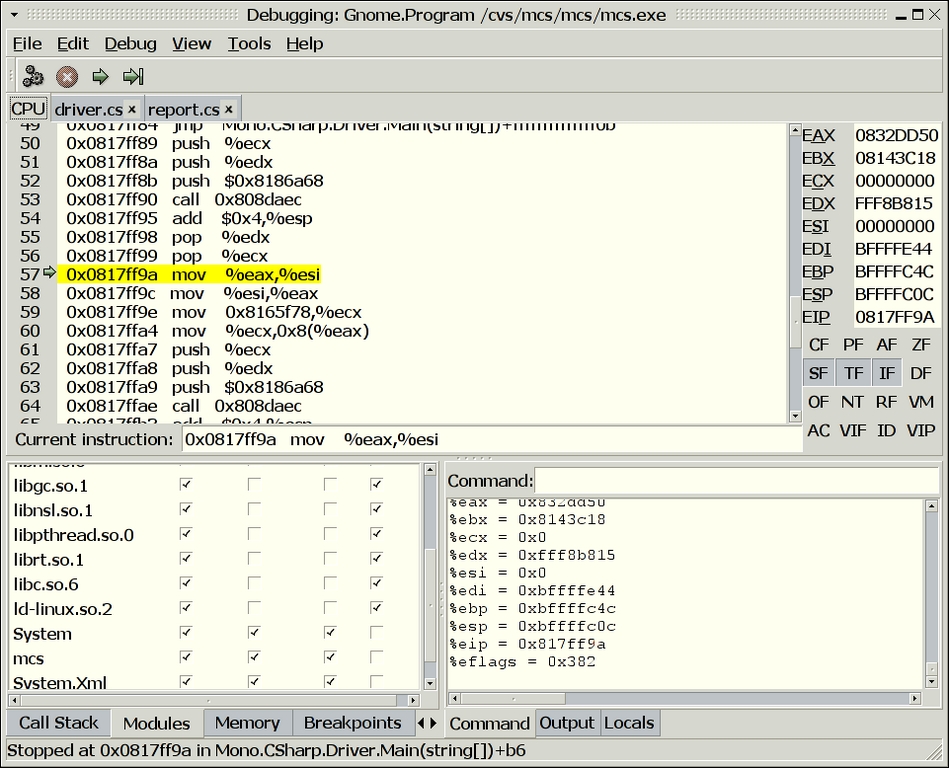
Mono 1.0, a community project sponsored by Novell, is an open-source development platform based on the .NET framework that allows software developers to build Linux and cross-platform applications. Mono 1.0 provides APIs and tools for developing Web services and client and server side applications that can be deployed on various platforms, including Solaris, Mac OS X, Windows NT/XP and various UNIX/Linux systems. Mono 1.0 uses the GTK# GUI programming library, so developers can target various platforms with a single code base from any of the Mono-compatible programming languages, such as Visual Basic, Python, JScript and Java. In addition, a new Web site, www.mono-project.com, has been launched with tools, resources and other information for Mono developers. Mono 1.0 can be downloaded at www.mono-project.com/downloads/index.html.
Novell Corporation, 404 Wyman, Suite 500, Waltham, Massachusetts 02451, 781-464-8000, www.novell.com/linux.
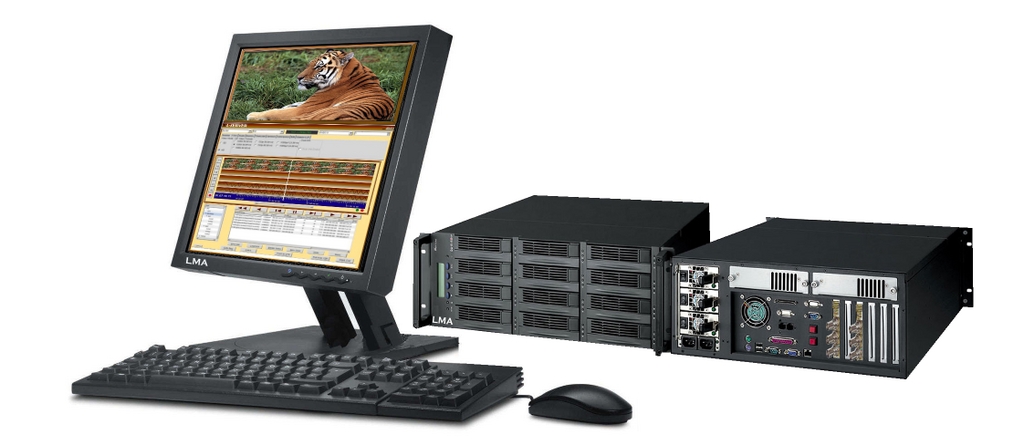
Linux Media Arts announced the availability of the L-Server, a 64-bit Linux digital disk recording (DDR) system. The L-Server employs AMD dual Opteron 64-bit technology, dual DDR memory, 1TB of storage, an AJA HD capture/playback card and eight-channel embedded AES/EBU audio. It has Serial RS232/422 control ports with Sony protocol for external deck control. It is available in an LMA mini-tower or 3U LMA rackmount configuration. Its open architecture supports any plugin, or users can build their own. The L-Server SDK allows developers to build plugins, codecs and special effects that can be dropped onto the video track timeline. Users can operate the L-Server and/or remote tape deck from a control panel or from a browser window. L-Server can capture directly from all HD VTRs and various HD cameras. Graphics can be shared across platforms using the standard NFS/SMB filesystem.
Linux Media Arts, Inc., 10442A Rockport Circle, Reno, Nevada 89521, 775-787-3768, www.lmahd.com.