New Products
Verari Systems, formerly RackSaver, introduced the QuatreX-64, a four-way server powered by the AMD Opteron 850 processor. On SPEC CPU2000 benchmarks, the QuatreX-64 reached a CINT2000 rate of 63.4 base and 68.5 peak, as well as a CFP2000 rate of 47.2 base and 50.5 peak. A platform-independent server, the QuatreX-64 features up to 32GB of DDR RAM. Up to four SCSI hard drives with optional removable drive bays are included for storage needs. The server also uses AMD's Direct Connect Architecture to reduce bottlenecks by connecting I/O directly to the CPU and connecting CPUs to one another.
Verari Systems, Inc., 9449 Carroll Park Drive, San Diego, California 92121, 858-874-3800, www.verari.com.
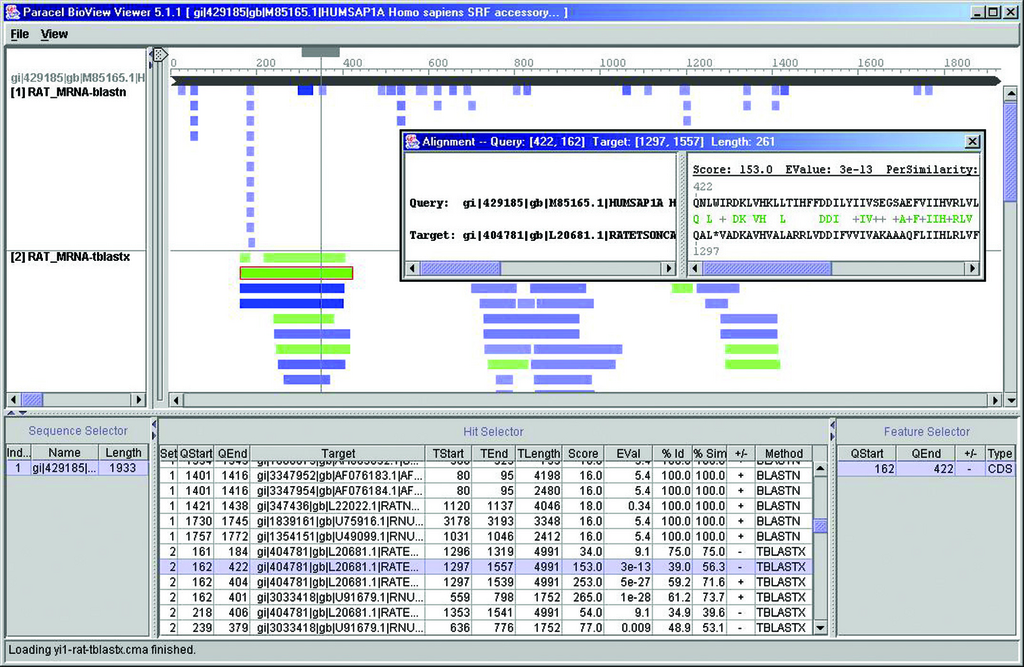
Version 1.6 of Paracel BLAST, an enhanced version of NCBI BLAST software re-engineered specifically for large-scale cluster systems, offers native support for the Opteron 64-bit processor. Designed for pharmaceutical and research institutions, Paracel BLAST 1.6 automatically handles query packing, database splitting and distribution of tasks among processors. In conjunction with Paracel BlastMachine2, a Linux-based cluster that runs on Opteron or Xeon processors, Paracel BLAST 1.6 can perform large-scale analyses rapidly.
Paracel, Inc., 1055 East Colorado Boulevard, Fifth Floor, Pasadena, California 91106, 888-727-2235, www.paracel.com.
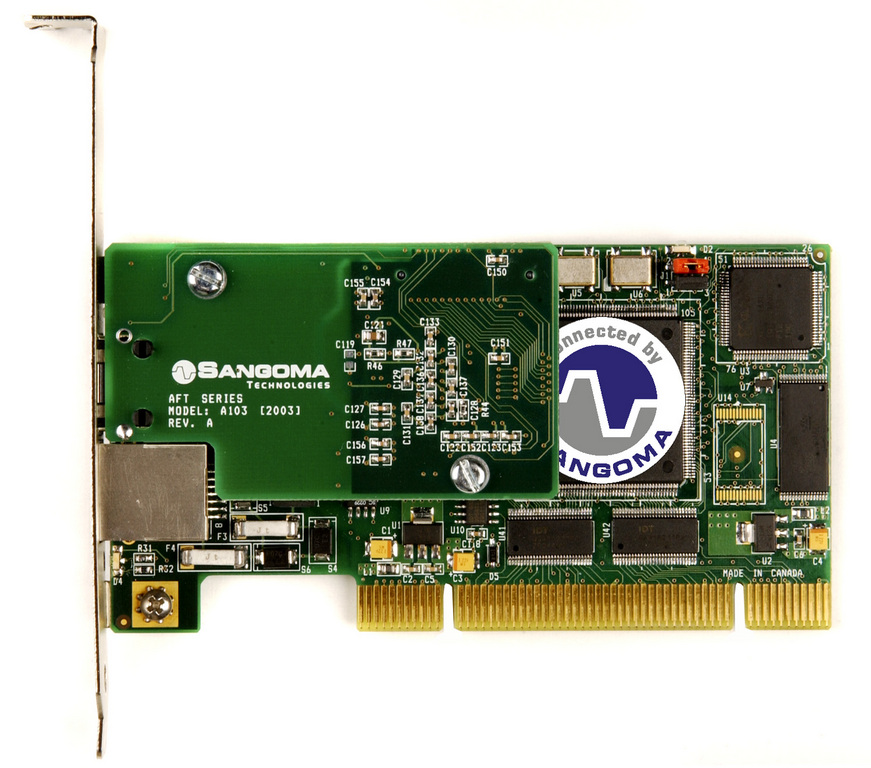
Sangoma Technologies' new line of Advanced Flexible Telecommunications (AFT) cards are designed to be easily upgradable to support different telco interfaces and line speeds. The AFT cards are based on programmable hardware technology that uses field programmable gate arrays (FPGAs) to handle line protocols in hardware. An accompanying line of self-configuring drivers automates the process of line and protocol setup. The first card to be released is the 2U form factor A101, measuring 4.7" × 2.2". It comes with a T1/E1/J1 interface and an optional 3.3v/5v PCI card that supports full channelization of the DS0s. Future upgrades of the A101 will have hardware-based ATM and SS7 MTP2 support.
Sangoma Technologies Corporation, 50 McIntosh Drive, Suite 120, Markham, Ontario L3R 9T3, CANADA, 800-388-2475, www.sangoma.com.
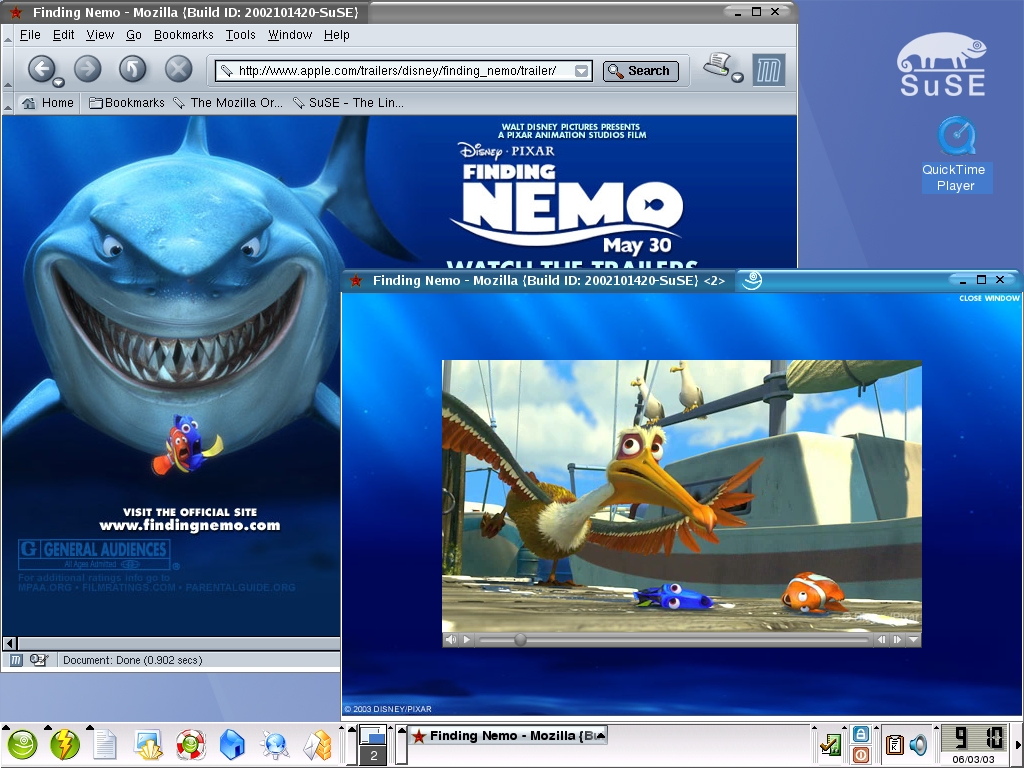
CrossOver Office allows users to install Windows applications and plugins in Linux, without needing a Microsoft operating system license. New for version 3.0 is Linux support for Lotus Notes, MS Outlook XP and MS Project. Also new for the 3.0 release is CrossOver Office Standard, a version for home users. CrossOver Office Professional is designed for corporate use and offers enhancements for enterprise-level deployment as well as the ability to run in shared multi-user mode. CrossOver Plugin, CodeWeaver's browser plugin application, now is integrated into all CrossOver products.
CodeWeavers, Inc., 2356 University Avenue West, Suite 420, St. Paul, Minnesota 55114, 651-523-9300, www.codeweavers.com.
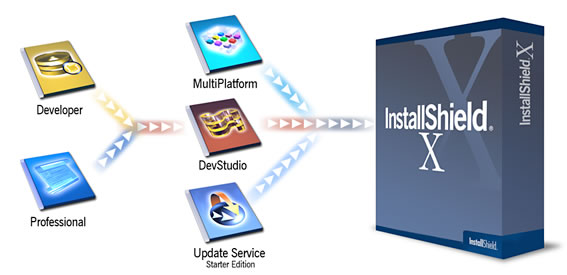
InstallShield X is installation authoring software that enables software application developers to write industry-standard installations targeting almost any platform, OS and device. This new offering combines former products InstallShield DevStudio and InstallShield MultiPlatform and adds new functionality for handling deployments. InstallShield X also includes Update Service Starter Edition, which adds updating and user messaging services for managing software life cycles. Other new InstallShield X features include SQL server and IIS Web services support, plus enhanced mobile device support for creating standalone device installations.
InstallShield Software Corporation, 900 National Parkway, Suite 125, Schaumburg, Illinois 60173, 800-374-4353, www.installshield.com.
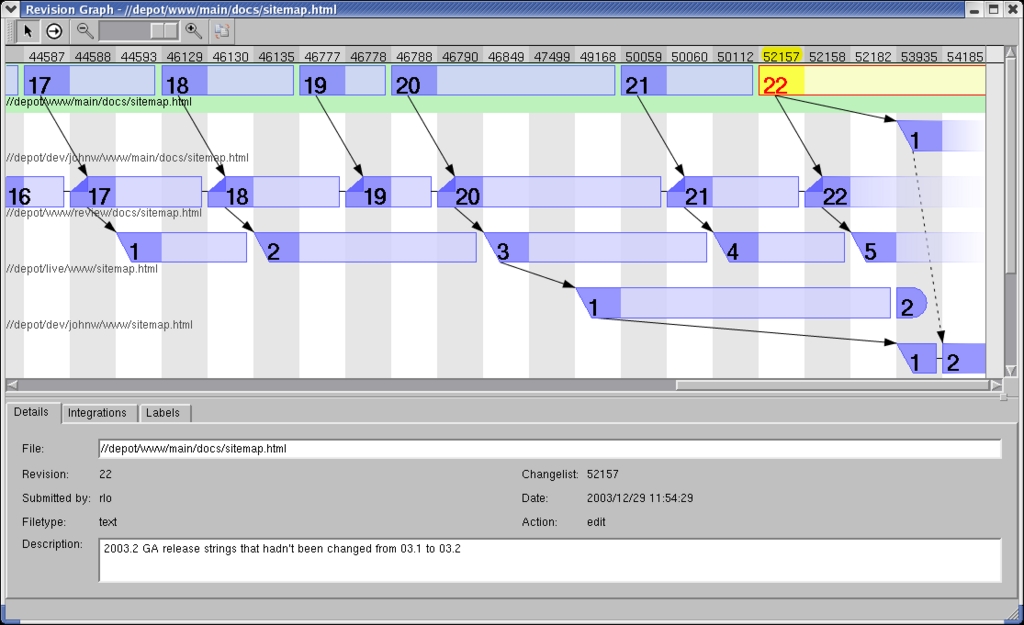
Perforce Software released version 2004.1 of its Software Configuration Management (SCM) system. Perforce SCM 2004.1 tracks and manages software development in both small and large work settings. It handles distributed development and supports developers across more than 50 OSes. The two main new visualization features are a revision graph representing branch history and a folder compare feature. The revision graph feature displays a tree-style graph outlining the branching history of a specific file, including all points, edits and merges. The folder compare displays two folders side by side in expandable tree views, allowing users to compare folder structure and file content. Both components are part of the Perforce Visual Client, a cross-platform interface for Linux, Mac OS X and Windows.
Perforce Software, Inc., 2320 Blanding Avenue, Alameda, California 94501, 510-864-7400, www.perforce.com.