
OpenOffice.org 1.0 Resource Kit by Solveig Haugland and Floyd Jones
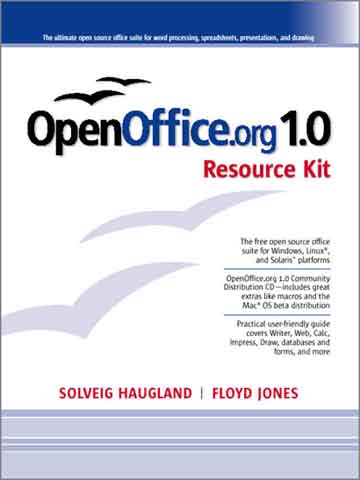
Based on Sun's StarOffice and maintained by a worldwide community of developers, the OpenOffice.org Project provides a full-featured office application suite with a language-independent API and XML-based file formats. The OpenOffice.org 1.0 Resource Kit consists of a book and a CD-ROM. The authors, Solveig Haughland and Floyd Jones, are veterans of the technical training field, and it shows in the quality of the text. The CD contains the OpenOffice.org 1.0 release, although two minor upgrades have become available since it was pressed. It also includes templates, macros and examples. The authors provide additional resources at www.getopenoffice.org.
The first five chapters of the book are devoted to basics, such as installation, migrating existing data and printer issues. OpenOffice.org is superb at converting Microsoft Word, Excel and PowerPoint files into its own open formats. The book shows how to use the handy AutoPilot, which can perform batch conversions of your existing data.
The next six chapters cover word processing. The organization of this section is quite intuitive; you'll easily learn how to create a simple letter. When you're ready to write your memoirs, you won't need to buy another book—it's all there: complex formatting options, page layout, linking cross-references and indexing. And don't forget office goodies such as mail merges, label printing and business cards.
Chapters 13–17 cover Web development. Serious Web designers may find this section useless, but the casual user will be able to create a home page without learning HTML.
The next several chapters deal with the Calc spreadsheet, Impress for creating presentations and the underrated Draw. Basic topics are organized neatly along with the more advanced ones, and neither seems to get in the way of the other. The final three chapters of the book explain how to incorporate data from a database.
An appendix covers macros, and makes the book into an all-in-one tutorial and reference, with high marks in all the important areas. It's comprehensive, well organized and has a great signal-to-noise ratio.
Superior open-source software alone isn't always enough to supplant the old way of doing things. Document it, however, and they will come. The OpenOffice.org 1.0 Resource Kit goes a long way toward fulfilling that prophecy.
