
upFRONT
Make it happen, or bet on when it will
iTux: I envision a Linux-based iMac. Call it an iTux (too bad, the domain is already taken). Dress it up in those handsome penguin colors (or lack of them), rather than the iMac's silly “flavors”. Use nothing but end-of-life components with no fan and no floppy so it can be built dirt cheap. Boot from the CD-ROM drive. Solder everything to the boards including memory, with the possible exception of a communications slot. Now we're talking about a black & white box: simple and reliable as an old phone. Shoot for a $500+ price point, complete with all network connections, OS and software including management agents. Put the money in memory and display, which ought to be active matrix, if there's any way. Build two classes: corporate and home. Skew cute for the home version and add a slot for a Sony Playstation module. Message: for the price of a Playstation, get a computer too.
Internet Floppies, Any Size: FTP and e-mail killed the floppy. Now it is time to unburden those (social as well as technical) protocols. Let's create Internet floppies. Create easily understood ways to create, share and manage virtual Internet file servers of 10 to 100MB (or larger). This will eliminate the need for virtual private networks, e-mail attachments and complicated remote access routines. Any user should be able to sign up for one with his or her ISP, then decide who else can use it. Versions of this already exist at dedicated sites, such as NetFloppy, http://www.NetFloppy.com/. Why not at any site, any ISP, any business, using free and open software?
ISPs would get stickier sites and happier customers. Businesses would get turn-key field file-service solutions for maybe $2 per user, instead of the $50-75 it might cost from a file-service vendor. End users would get easy ways to pass files around and back up hunks of their local directories.
Alexa Internet is best known for three things:
A neat little browser accessory that reveals stats, domain ownership and other non-obvious information. Alexa gathered pages for 220 million unique URLs and found that only 6 percent of Web content has changed in the last three months.
Regularly backing up the entire contents of the Web. “Links in” are determined from their ongoing web crawls.
Selling to Amazon.com for something like $250 million.
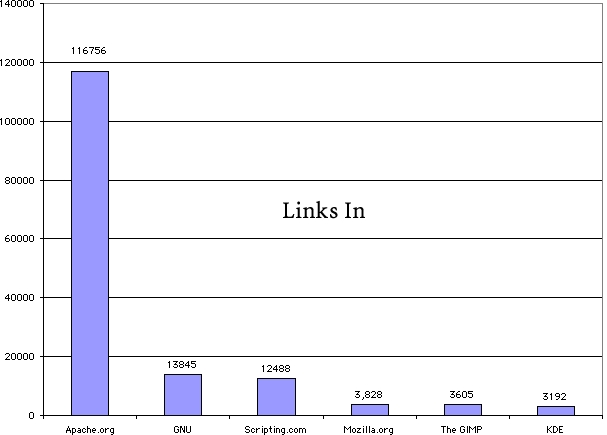
The Alexa browser accessory does not yet work on Linux, but that didn't stop us from using it to tally up some comparative numbers for various Linux-related web sites. The results are below—we'll leave the interpretations up to you.

Figure 1. Linux Resource Sites—Links In
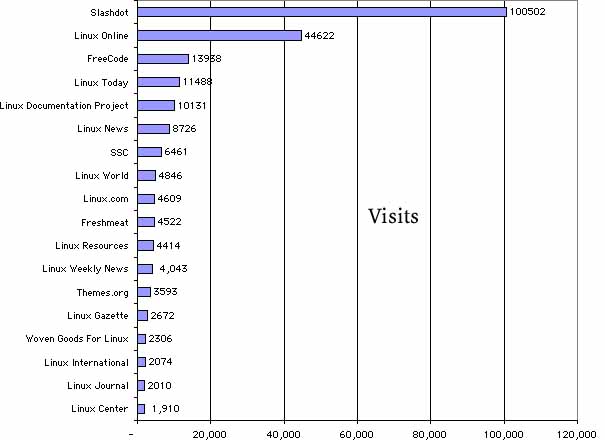
Figure 2. Linux Resource Sites—Visits
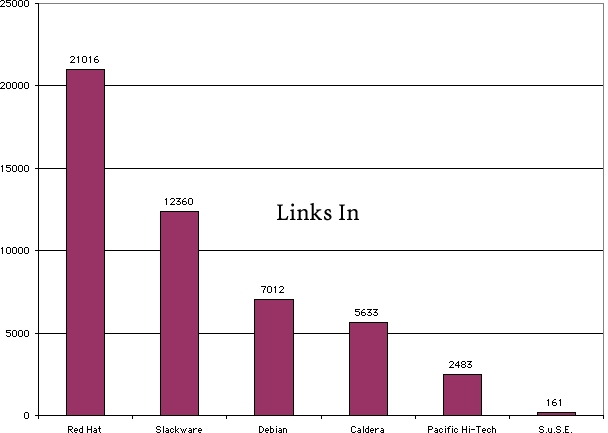
Figure 3. Linux Distribution Sites—Links In
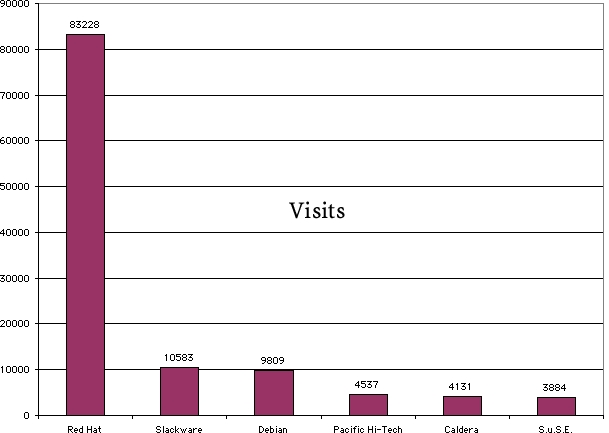
Figure 4. Linux Distribution Sites—Visits
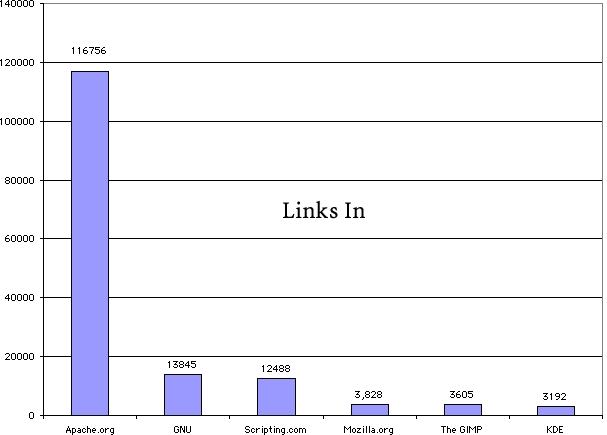
Figure 5. Linux Development Communities—Links In
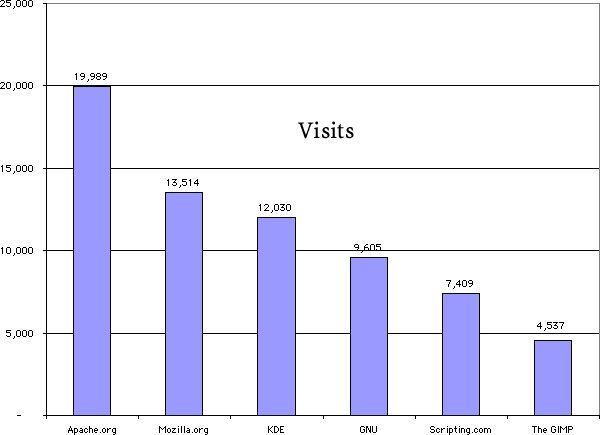
Figure 6. Linux Development Communities—Visits
Notes: These numbers were collected on 5/13/99. “Links in” are from surveys of pages served across the entire Web. “Vists” are accumulated over the previous six months of activity by Alexa users, nearly all of which are on Windows clients. Some sites, such as Scripting.com and Slackware, contain high percentages of links and visits that are not Linux-related. One major site, Linux.com, went live from VA Linux Systems only in the last few days of the survey period. A follow-up survey on 6/1 showed a 24.6 percent increase in visits to that site.
Web pages containing the word “the”: 130,310,754
Web pages containing the word “a”: 118,829,051
Web pages containing the word “Microsoft”: 10,469,074
Web pages containing the word “Linux”: 628,828
Web pages containing the word “competitors”: 612,246
Web pages containing both “Microsoft” and “competitors”: 53,368
Web pages containing both “Bill Gates” and “our competitors”: 371
Web pages containing both “Linus Torvalds” and “world domination”: 239
Penguin species: 17
Penguin species native to areas north of the Galapagos Islands: 0
Number of web sites with the word “Antartica”: 5,080
Number of web sites with the word “Antarctica”: 65,180
Number of web pages with the word “penguin”: 435,110
Number of web pages with the words “penguin” and “antarctica”: 3,949
Number of web pages with the words “penguin” and “Linux”: 14,819
Number of web pages with the name “Linux Thorvalds”: 10
Number of web sites with the name “Linus Thorvald”: 27
Number of web sites with the name “Linux Torvalds”: 940
Number of web sites with the name “Linus Torvalds”: 17,580
Journalists among Linus' parents: 2
Maximum seating for the room Comdex Spring booked for Linus Torvalds' keynote: 75
Maximum seating for the room where Linus ended up giving his Spring keynote: 850
Estimated number of people who attended Linus' Comdex Spring keynote: 1,200
Pages Hotbot finds with “Anonymous Coward”: 81
Pete & Barb's Penguin Pages
AltaVista, 5/11/99
Hotbot, 5/21/99
Linus Torvalds, speaking at Spring 99 LinuxWorld
Maxiumum occupancy listings posted on the walls of those rooms, plus observations by Linux Journal personnel in attendance.
There are now Linux productivity applications that are sufficiently attractive that I am using them. This means I am finally learning to use a mouse. I am actually using GnomeCard to maintain my phone lists now. While regular users are learning Linux command lines, I'm learning to point and click. What makes GnomeCard interesting is that it has the characteristics of a good point-and-click Roll-O-Dex, but on the backend it uses a straight flat-text Vcard format. This means you're not locked in—you can use it with other tools. —Eric S. Raymond to Doc Searls, May 1999
FairCom has a new release of their c-tree Plus file handler, which includes the Crystal Reports Driver to make ex-Windows users feel comfortable. File encryption is available using algorithms that can be decrypted only by FairCom's servers. The server includes an SDK (software development kit) to allow developers to customize the encryption process, resulting in an increased level of security. When talking to Winston Atkinson of FairCom, I learned that System Development Group, Inc. (SDG) is using FairCom's products for XLN, their Enterprise Management Software. XLN provides integrated system modules for a full range of functions necessary for planning and scheduling of work, such as production, manufacturing, distribution, data collection and accounting. XLN supports Linux and is Y2K-compliant.
Metrowerks is the manufacturer of CodeWarrior, a developer tool package that now supports Red Hat Linux. I talked to Jean Bélanger, Chairman and CEO, about why they chose to port to Linux, and he told me management had initially turned down project requests for the port. He said Metrowerks engineers did the port on their own and presented it to management as an accomplished fact. Metrowerks is so happy with this effort, they intend to port to other Linux distributions in the near future. Most of the work had already been done by the time they ported to Solaris over a year ago, but it was still not easy, as CodeWarrior uses many system-level services. Mr. Bélanger said Metrowerks hopes to become the de facto standard for developer tools on Linux.
SGI has just released their file system, XFS, to the Open Source community. Dave McAllister told me SGI is helping to fill the gaps in Linux technology by making products, such as XFS, GLX and OpenVault, Open Source. He feels that Linux fits nicely into their high-end product offerings and is a good match for clients who want innovative systems.
Rebel.com is the new name of Hardware Canada Computing, the company that bought the NetWinder from Corel Computing. They were at Linux Expo showing off the small and powerful NetWinder, with a new rack mount that holds two of the little servers. I knew the NetWinder was small, but didn't realize just how small until confronted with one—it's not much bigger than a notebook computer.
Zenguin is a new start-up company put together by Scott McNeil, Bodo Bauer and Eureka Endo, all formerly with SuSE. Zenguin is creating an installer for Linux applications to enable point-and-click installation of future Linux tools. The installer will include a knowledge database specific to the needs of the ISV's software and the variables of the Linux system. In other words, this product will act as an install-shield for Linux. This is something Linux has been needing—kudos to these guys for seeing the need and stepping up to bat.
Digital Creations introduced their Zope Portal Toolkit. I saw a demonstration and was quite impressed with its power and ease of use. It provides news, search, directory and membership services. Later, I was talking to Dan York about this product and discovered he is already using it, so I got him to agree to write a review for us.
3R Soft Co., Inc. has released their web-based e-mail server program, MailStudio 2000. Talk about ease of use—they advertise it as easy to install, easy to use, easy to manage and easy to customize. It is a slick application that supports multiple languages—a powerful mail engine.
AbiSource has shipped the preview release of AbiWord 0.7. We have a review in this issue by Craig Knudsen. I like their motto, “Show Me the Source!”, and their goal of open-source applications for the desktop.
X.org is now the steward of the X Window System. Their current release is X11R5.4 and is available for download at http://www.X.Org/.
Applied Information Systems, Inc. announced a partnership with Business Logic Corp. to provide applications for the Linux retail market. Their first product is the Standard Edition of the XESS Spreadsheet for the desktop. This impressive product is completely compatible with Excel and can even share files with it via Samba. I talked to Arthur Coston, President of AIS, who told me their first port to Linux was done five years ago by Michael Johnson—five years of support for Linux is a laudable accomplishment.
BEA announced the availability of BEA Tuxedo and BEA WebLogic Server for Linux running on Intel servers. These products provide enterprise middleware and Java application servers, allowing developers to write applications once, then deploy them without modification to any of the more than 50 platforms supported by BEA.
Collective Technologies, an IT consulting company based in Austin, Texas, is now providing Linux consulting services. They had the best t-shirt at the show, featuring a large picture of Einstein created by tiling multiple small copies of the same image.
JDH Technologies is now supporting Linux with its Web4M groupware solution that supports e-mail, news, phone, browsable library, slide show, audio conferencing and much more. All you need is a web browser and a network connection. See the “New Products” column.
Cyber Station of Canada is making Linux easy by providing products such as EZ Linux Command Card, EZ Linux Mouse Pad (containing the same information as the card) and EZ Linux Software.
International GNOME Support is a company formed to provide development and customization services for GNOME. The company will adapt GNOME to the needs of its clients, enabling it to be deployed in mission-critical settings.
TUCOWS has been acquired by B. Steinmetz Technology Holding International. TUCOWS (The Ultimate Collection of Winsock Software) is now operating as TUCOWS.com Inc. and is one of the largest Internet distribution sites featuring Windows, Macintosh, Linux and PDA software. Find them at http://www.tucows.com/.
—Marjorie Richardson
Extending the Bash Prompt by Giles Orr demonstrates the methods of customizing your xterm prompt in a Bash shell. Standard escape sequences can be incorporated to include user name, current working directory, time and more. Additionally, Mr. Orr shows us how to change the color of the prompt and manipulate the xterm title bar.
A High Availability Clustering Solution by Phil Lewis is the story of building a high-availability solution for his company, Electec. He reviews several clustering solutions, discussing cost and downtime for implementation. Also covered are load balancing, node takeover, networking hardware, partitioning and resynchronization. This article provides a thorough look at clustering and gives administrators a good start in building their own cluster.
Introduction to Sybase, Part 3 by Jay Sissom tells us how to write a web application using Sybase. Mr. Sissom begins with a discussion of some SQL Server basics, such as transactions, logs, backups and database consistency. He ends with a full-blown web application for providing an on-line bookstore. All code for the example is available on our FTP site.
Plug and Play Hardware under Linux by David Cantrell is a discussion of PnP sound cards—how they work and how you get them to play nice on your Linux box. Installation, configuration, usage and even compiling the kernel is all here for your edification.
Open Source Remote Sensing Effort by Dr. Shawana P. Johnson tells us all about a project of developing remote-sensing software for the Open Source community. The goal of this project is to bring space to your doorstep.
A book review of “Linux: The Complete Reference, Second Edition” is presented by Ben Crowder. Find out what's in the book and if it could be useful to you.
This operating system quality and approval metric is based on a periodic AltaVista search for each of several operating systems, directly followed by “sucks”, “rules” or “rocks”. It can be found on the Web at electriclichen.com/linux/srom.html--thanks to Don Marti.
Jon “maddog” Hall will be leaving Compaq on June 18 to join the team at VA Linux Systems. He struck the deal with Larry Augustin of VA Linux Systems during Spring Comdex. I talked to him on June 8 while at the USENIX Conference in Monterey, CA. Jon is actually a member of the USENIX board. The big question I asked was why he is leaving Compaq. He gave me several answers. The bottom line is because VA is a Linux company. If VA gives him a computer for his home, that computer will be running Linux, so it will be able to talk to the firewall and everything and his documents won't be in Microsoft Word format.
Jon has worked for Digital Equipment Corporation (DEC) for 16 years; DEC was bought by Compaq last year. At DEC, he worked as an engineer, a marketing manager, a product manager and a Linux evangelist. He went to DEC to help them create the best UNIX system available, and he feels they have done that. Other people agree. He also introduced DEC to Linux, and they are now selling Linux systems.
Compaq has been selling servers without licenses for years, and today many of those are Linux systems. One problem with Compaq/DEC was a type of culture clash: whereas DEC sold thousands of systems, Compaq sold millions. Thus, the sales techniques were different all the way down to what could be given away at a trade show. Also, his local boss has to approve him traveling to Texas to talk to management; in other words, it's a big company with many employees and all the red tape that goes with being big. Jon will find a much more relaxed easier to deal with.
Working for VA will give Jon the opportunity to do the two things he wants to do on a full-time basis: evangelize Linux and put more time and effort into making Linux International a bigger and better organization. That is, he wants to create a real board of directors for Linux International, get the charter finished and get every company possible involved in it. One way for Linux International to do that is by initiating projects to which both big and small companies can contribute. Basically, get everyone involved in fun things, e.g., workshops. In other words, grow Linux International and give it a higher degree of visibility.
Larry has basically agreed that Jon's job will be evangelizing Linux and fixing Linux International. For the moment, at least, Jon will continue to live in New Hampshire; VA is based in Silicon Valley.
—Phil Hughes
