UniForum 1994
For those unfamiliar with UniForum, it is an annual Unix extravaganza with hundreds of vendor exhibits, a host of tutorials and other seminars and tens of thousands of attendees. While some attendees are casually dressed, it is becoming more the “suit and tie” Unix show.
The show is put on by the UniForum Association, a nonprofit, vendor-independent association of developers, vendors and end users. The association has been around since 1981 and is in the business of promoting open systems as well as providing leadership in cooperation and standards and education.
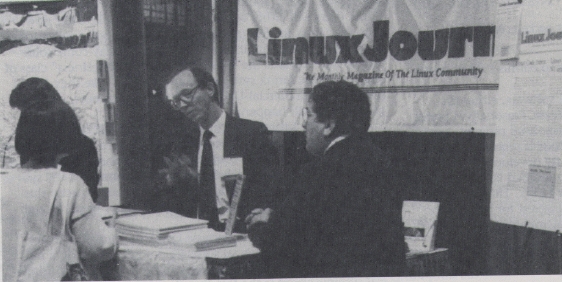
The Linux Journal/New York Unix booth was busy all three days. In fact, the people in the next booth came over and mentioned how our booth had much more traffic than the other booths in the area. Then they started asking questions about porting their product (CD-ROM-mastering software) to Linux.
Much as in SSC's booth at the University of Washington computer fair where I spent a day two weeks earlier, most people came over to talk about Linux rather than ask what it was. Some Linux-related vendors dropped by including James Vera of Fintronic and Adam Richter of Yggdrasil.
Lots of Linux users dropped by and told us about their Linux systems and experiences. Many non-Linux users, after talking to us about Linux, headed upstairs to Computer Literacy's bookstore to purchase a Linux CD-ROM.
Of the vendors that stopped by, a group of people from Compaq was the most interesting. They showed up with one of their laptops with Linux on it. Certainly not difficult to do but it was real nice to see that a hardware manufacturer had recognized Linux as something real. When they offer their computers with Linux as an alternative we will know they are serious.
Dion Johnson of developer relations for SCO also dropped by. He told me he was glad we were here, as not everyone was going to run SCO Unix. Gee, what could I say. :-)
In my evangelist role I walked around the show talking to vendors about Linux. My primary target was communications board manufacturers. Virtually all of them had heard of Linux and I did get contact names at a couple of the companies so I could talk further about Linux and intelligent comm boards. One vendor, Cyclades, gave one of their semi-intelligent comm boards to a Linux user on the condition that he write a Linux driver for it. I arranged the deal, adding the condition that he write an article about it for Linux Journal.
I attended Andrew Grove's keynote address on Wednesday morning. Andy is the CEO of Intel. I found it interesting that the CEO of a company that grew on the marketing of MS-DOS was giving a keynote at a Unix-based convention. It certainly reinforced the respectability of Unix as a real operating system with a real market.
Grove said “Unix has gone from challenger to defender without having ever been declared the winner”. This made me think about my 15 years working with Unix. My perception was that Unix was pretty mainstream but I live in Seattle which makes me think that jeans and birkenstocks are mainstream dress. But, if the CEO of Intel also feels that Unix won the OS battle maybe it really did.
He went on to say that Windows NT is the big challenger and that we need to get our collective acts together if we want to be successful in maintaining our position. Most of this responsibility is, of course, with the Suns and HPs and IBMs to cooperate on presenting a unified Unix. But, the Linux community can play an important part. If we can offer a reliable low-cost solution we can head off the move to another operating system.
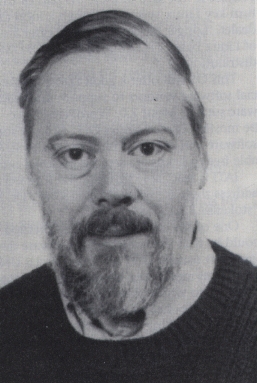
On Friday, Dennis Ritchie gave a keynote address. The title was “Building the Operating System of the Future: How the Lessons of Unix are Shaping Plan 9”. Ritchie, along with Ken Thompson, developed the Unix operating system 25 years ago. Ritchie is now head of the computing techniques research department at AT&T Bell Laboratories. Plan 9 is the current research project much like Unix was 25 years ago.
The first half of Ritchie's talk covered the history of Unix development. When talking about the AT&T/Sun alliance he pointed out that the creation of OSF, the consortium formed by other vendors to defend against AT&T and Sun setting the direction of Unix without other vendor input, was a direct result of their work. At the time of the creation of OSF, Ken Thompson was on sabbatical in Australia. Dennis sent e-mail to Ken about it and Ken's response was, “Geez, Dennis, DEC and IBM in the same bed and WE did it.”
I talked to Ritchie at the press conference after his talk. I asked him if he saw parallels between development work on Unix 20 years ago and Linux today. He admitted that he wasn't familiar enough with current Linux development to be able to make the comparison but he did expect that it was the case.
I then offered him a copy of Linux Journal and received a surprising answer. He said, “Oh, I've seen copies [of Linux Journal] around the terminal room at The Labs.” Made me feel like Linux had made it into the big leagues.
UniForum will happen again next year. And while we wait for UniForum there are other Unix shows such as Unix Expo. We had a booth at UniForum, are being represented by Telemax at the Dayton Hamvention and are planning for a booth at Unix Expo.
In order to make Unix users aware of the Linux movement, the Linux community needs to make a show of force at these events. A block of booths would certainly help. We may be able to have a shared booth for smaller Linux vendors as part of this block. If you are interested in this idea, contact Joanne Wagner, our advertising manager. If we get enough interest she will coordinate this.