
Cooking with Linux - Because Nothing Says High Performance Like a Good Race
Repeat what you just told me, François. No! Don't tell me that! Yes, François, I know I told you to repeat what you told me, but I was sincerely hoping I was mistaken and that I had heard something entirely different. Something like, “Patron, I lost the key to the filing cabinet”, not, “I lost the key to the wine cellar.” In my first restaurant job, François, this would have been considered a firing offense. No, mon ami, I am not going to fire you, but this is terrible! What shall we serve our guests?
Non! I see them walking toward the restaurant now. Quickly, François, think of something. Why you? Because you locked up the wine cellar minutes before opening time, then proceeded to lose the key. That's why. Quoi? Serve beer from my personal réfrigérateur de bière? That is not a bad idea at all, mon ami. You live to serve another day, non? Don't look so hurt, François. We have guests. Quickly!
Ah, welcome, everyone, to Chez Marcel, where fine Linux fare is served with the most excellent wines from one of the world's premier wine cellars—that is, except tonight. It seems my faithful waiter has lost the keys to the wine cellar. Never fear, mes amis, though I love that wondrous liquid fruit of the grape, your Chef also enjoys a good beer, be it lager or ale. So, tonight's menu will be accompanied by selections from my own réfrigérateur de bière. Please, sit and make yourselves comfortable. François can offer you several excellent selections, all favorites of mine, including Alexander Keiths' India Pale Ale, Kilkenny Irish Cream Ale, Sleeman's Original, Unibroue Maudite and several others.
As you know, mes amis, this issue's theme is high performance, which we all know can refer only to racing and automobiles. If the words high performance and Linux don't immediately generate the same association in your mind, you should know that in point of fact, Linux and car racing go very well together. The 2007 Indianapolis 500 featured the first ever Linux-sponsored car. The brainchild of Ken Starks, aka helios, the Tux500 Project succeeded in its aim to raise enough money to place Tux, the familiar Linux mascot created by Larry Ewing, on the hood of an Indy car. For more details, go to www.tux500.com.
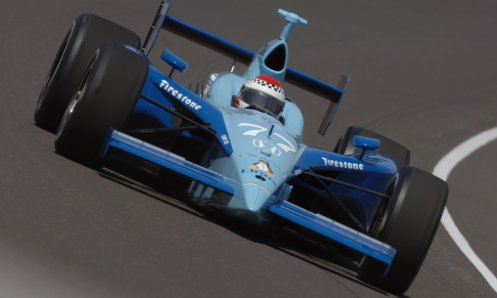
Figure 1. The Tux500 Indianapolis racecar—notice the logo on the hood.
In honor of this momentous event, the first race game on tonight's menu, SuperTuxKart, features the very same Tux at the wheel. SuperTuxKart, maintained by Joerg Henrichs, is an updated and enhanced version of the original TuxKart, created by Steve Baker. If you've played the original, you'll be impressed by the new, hugely improved, SuperTuxKart. The game features slick new graphics, new tracks, cool characters, racing adventures and more. You take the controls as one of several characters, including Tux, Penny (his friend), Mr. Ice Block, Sushi the Octopus (Figure 2), Yeti and others. You can get SuperTuxKart from supertuxkart.berlios.de.
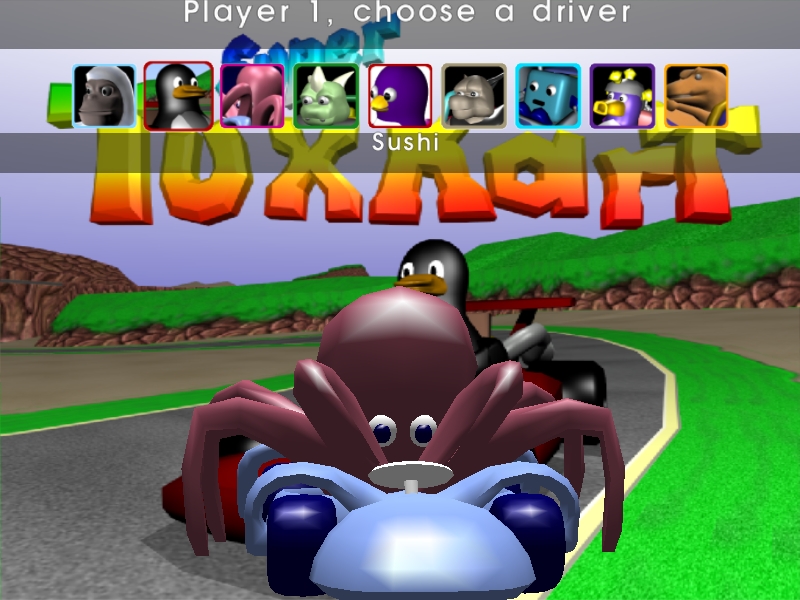
Figure 2. SuperTuxKart features some colorful characters, many with equally colorful names.
Your next step is to choose whether you want to race on your own (for practice) or enter a race with other players. These can be other humans (masquerading as SuperTuxKart characters, of course), or they can be computer AI players. Once your cast is assembled, it's time to select a race type and course. You can indulge in a Grand Prix event that takes you through all 13 courses, a handful, or simply go for a single race and select a time trial.
Note:
All these packages are available as source code bundles from their respective Web sites. Before you start compiling (unless you want to, of course), check your distribution's software repositories for binary packages. In all cases, I had no trouble finding packages.
Once you are lined up at the starting line, don't be too hasty putting the pedal to the metal or you'll be fined penalty points. Once you are off, your car can do some interesting things besides drive. For starters, you can momentarily jump above your competition and any obstacles in your path. Keep moving and collect spinning cubes along the way, as these contain things like rockets, which you then can fire at opponents and obstacles alike (Figure 3). Try to pick up the spinning fish coins as well—a penguin's gotta eat.
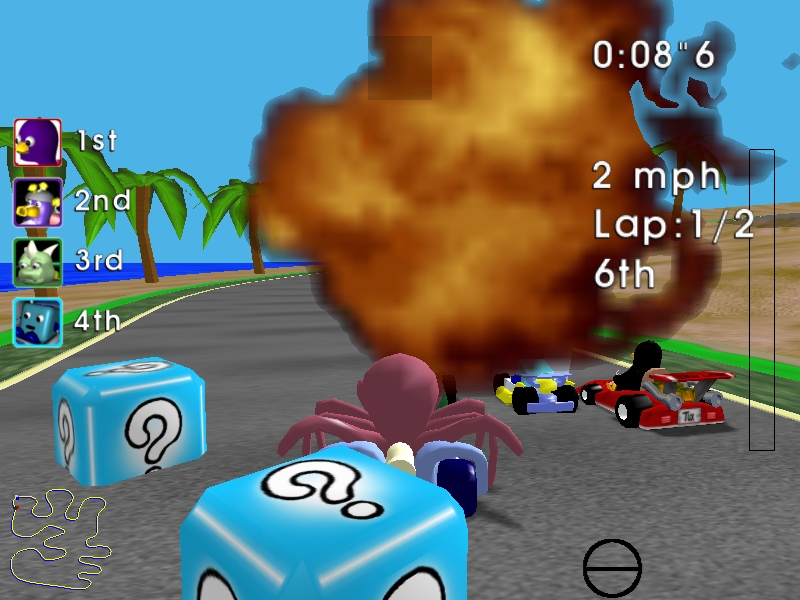
Figure 3. Explosions? They never told me there would be explosions!
The courses in SuperTuxKart are fun, colorful and imaginative. Race though an undersea lair, through the shifting sands of the Egyptian desert or around obstacles in Oliver's Math Glass. And, don't worry too much about falling off the edge of the world or an altogether psychedelic cliff. Your jumping/flying car will carry you back to safety using its combination magnetic levitation system and butterfly wings.
The next item on tonight's menu is a great racing game called VDrift. Created by Joe Venzon, VDrift is an exciting game based on drift racing. The V in VDrift refers to the Vamos Automotive Simulator, written by Sam Varner. Vamos is the physics engine that powers the game. Aside from being exciting and great fun to play, VDrift comes with 19 world-class tracks and 28 different car models. VDrift is available at vdrift.net.
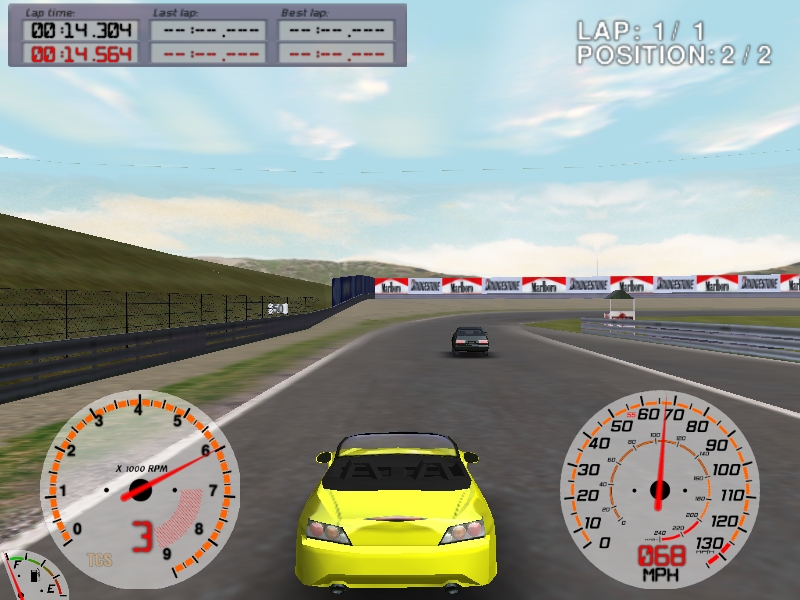
Figure 4. On the Track with VDrift against a Computer Player
In case you don't know what drift racing is (your humble Chef did not), it's a form of racing where the driver employs “drifting” to control the car. Doesn't help? Well, this quote from Wikipedia might clear things up: “A car is said to be drifting when the rear slip angle is greater than the front slip angle and the front wheels are pointing in the opposite direction of the turn.” In other words, the car is turning one way, but the wheels are pointing in another direction. This, strange as it may seem, this is not an accident. Remember, the driver is in control. As the driver, what you are doing is sliding into a turn to avoid slowing down as much as possible.
When the game starts, you can select the car you want and, in some cases, the color. Where you race is another option. Choose a racetrack or go for a relaxing, high-speed drive in the country. Practice races put you on the track with no other cars to worry about. Races pit you against an opponent. On a single computer, you can play VDrift alone or against a computer opponent, at which point, you also can decide on your opponent's car model and color (Figure 5). VDrift also can be run as a server, at which point, your friends can join in for a networked game.

Figure 5. VDrift lets you select from several different cars, colors and racing venues.
Several option controls exist to make the game more realistic, and more difficult, if you so choose. For instance, you can decide what effect speed has on steering by adjusting a slider to a desired percentage. The higher the percentage, the more difficult it is at high speeds. You also can choose to map different keys for the gas pedal, brakes and steering. Shifting and clutch controls can be defined as well. I confess that I found it much easier to set up to use an automatic transmission on my first few races. That brings up another point—make sure you are in gear before you start. It took me a few tries before I realized that I was going backward. Press the S key to start, then press 1 to get in gear. If you have selected automatic, shifting will happen automatically for you after this.
There are more options and settings, which I'll let you discover, but I do want to mention one other group of settings that may be important. Given that this an OpenGL game and that it does require hardware 3-D acceleration, owners of somewhat less-powerful video cards may find the game more responsive by toning down some of the effects.
As you race, you can change your viewing angle by pressing F1 through F5. If you find yourself totally taken with the action on-screen and you feel the desire to preserve the moment, you can get a screenshot of the action at any time by pressing F12. Those images will appear in the folder .vdrift/screenshots in your home directory.
The final item on tonight's menu is the perfect selection for those of you who experience a kind of mania when it comes to racecar driving. The game, aptly named ManiaDrive, is an incredibly fast-paced game with rapid turns, nerve-wracking jumps (Figure 6) and a driving, rocking, soundtrack (ManiaDrive is actually a clone of Nadéo Studio's Trackmania game). ManiaDrive features a training mode designed to prepare you for the real thing and a set of complex tracks that can be played locally or on-line with other players. You can get ManiaDrive from maniadrive.raydium.org.
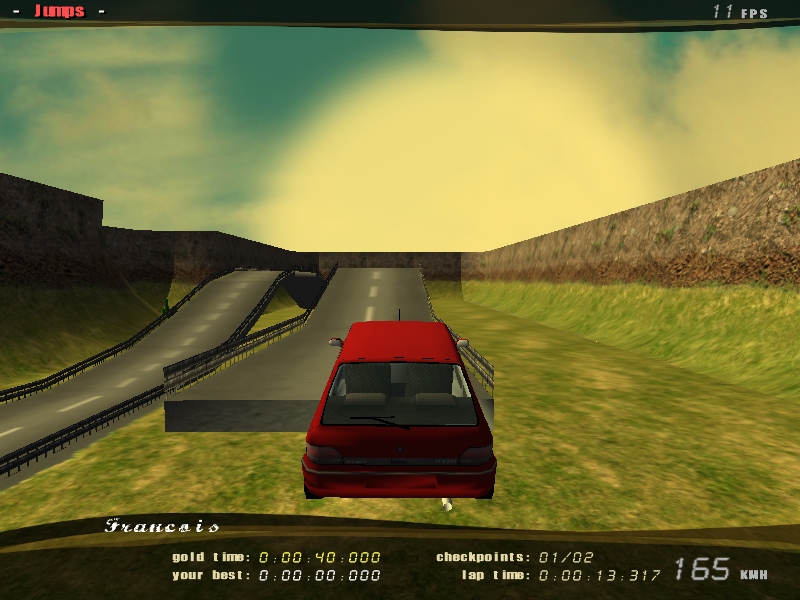
Figure 6. Yes, it is exactly what it looks like. There is a huge gap in the road. Hammer down, jump, keep it straight and keep your cool.
When you start ManiaDrive, make sure you go through the Beginner story, which will guide you through the various moves that are expected of you. When you are ready for the big time, choose the Pro story mode. This game is more an endurance and skill test than a race. Sure, there's a clock ticking and your speed is tracked (on-line, against others, no less), but races last only a short time, some less than a minute. If you are the type that gets bored quickly, ManiaDrive is for you.
Speaking of fast, is it possible that the time has gone by so quickly? Mon Dieu! And yet, it does appear that closing time is almost upon us. Well, mes amis, despite the apparent crisis that we apparently faced tonight, I dare say the beer selection was most refreshing. I can tell from your approving nods that you agree with me. Nevertheless, tomorrow, I shall have the wine cellar lock changed, and next time, our award-winning cellar will once again be open. But for now, François will pour you another beer that you may enjoy at your leisure while you enjoy another race. Remember, mes amis, that sitting in front of your Linux systems driving a virtual car is the only way to drink and drive safely. Raise your glasses, mes amis, and let us all drink to one another's health. A votre santé! Bon appétit!
Resources
ManiaDrive: maniadrive.raydium.org
SuperTuxKart: supertuxkart.berlios.de
VDrift: vdrift.net
Marcel's Web Site: www.marcelgagne.com
The WFTL-LUG, Marcel's Online Linux User Group: www.marcelgagne.com/wftllugform.html
Marcel Gagné is an award-winning writer living in Waterloo, Ontario. He is the author of the all-new Moving to Free Software, his sixth book from Addison-Wesley. He also makes regular television appearances as Call for Help's Linux guy. Marcel is also a pilot, a past Top-40 disc jockey, writes science fiction and fantasy, and folds a mean Origami T-Rex. He can be reached via e-mail at mggagne@salmar.com. You can discover lots of other things (including great Wine links) from his Web site at www.marcelgagne.com.
