
New Products
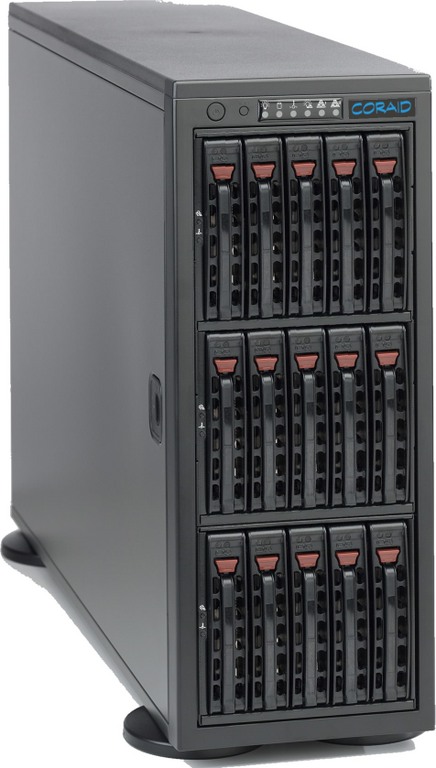
The Coraid folks have released a free-standing tower version of their EtherDrive Storage Appliance, christened the SR1521T. The SR1521T, with internal RAID, provides true networked storage over standard Ethernet and is based on the open ATA over Ethernet (AoE) protocol. Coraid says that “AoE is a block level storage protocol that is simpler to implement than other SAN technologies and at considerably less cost than iSCSI and Fibre Channel solutions.” Further, because AoE is non-routed, “the need for TCP/IP processing overhead or expensive network adapters” is eliminated. The target customers are those that do not seek a rackmounted solution and “that need powerful and scalable network storage readily available at the departmental level”. The AoE protocol is native in the Linux 2.6 kernel, and software drivers are available for Mac OS X, Windows, Solaris and FreeBSD.
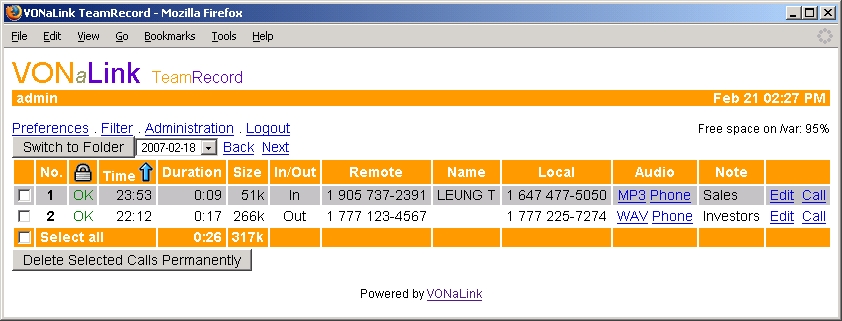
Arcosoft joins the growing list of companies that have come to their senses: it just released a Linux version of its VONaLink TeamRecord VoIP-based call-recording application. TeamRecord works with any VoIP phone system based on the SIP standard (think Asterisk), centrally recording all phone calls for a company's workgroup. VONaLink says that TeamRecord, for instance, allows “business transactions over the phone to be verified and disputes resolved” or comply with Sarbanes-Oxley or other disclosure provisions. Furthermore, TeamRecord replaces both expensive analog recording equipment and proprietary products from the dreaded phone company. The recording process involves unobtrusive monitoring of network packets via the port mirroring capability of a network switch and results in an inaudibly watermarked MP3 or WAV file. Users can listen to recordings of their own calls from a Web browser. TeamRecord is available for x86 Linux and Windows platforms.
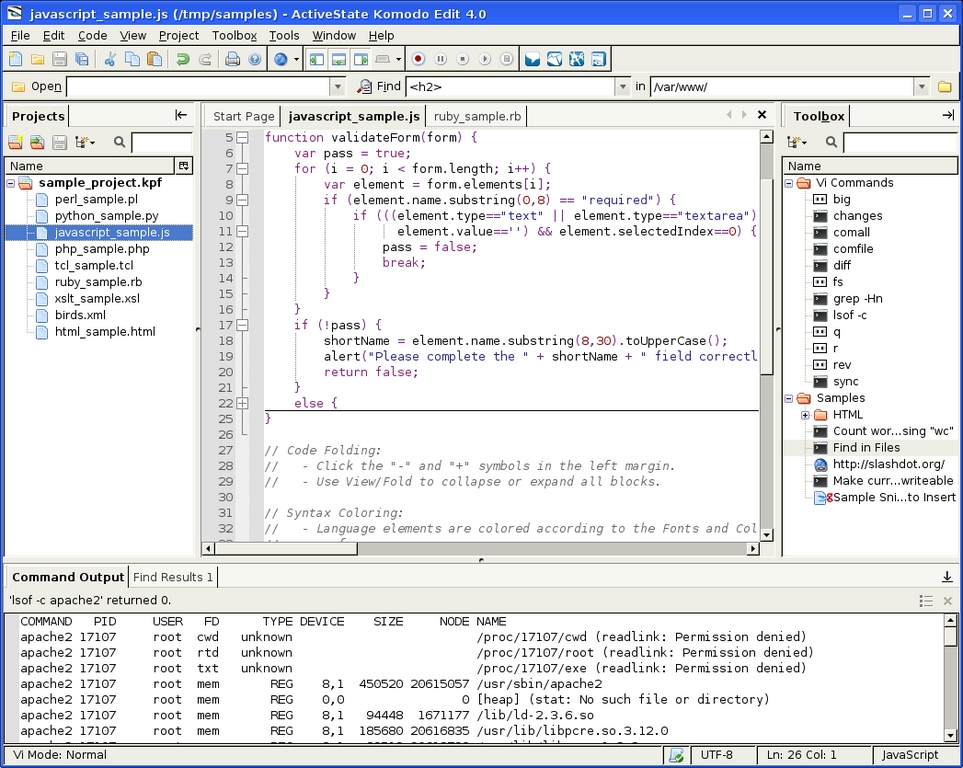
ActiveState recently released its new version 4.0 of Komodo Edit, the firm's free, multilanguage editor for dynamic languages. Based on ActiveState's Komodo IDE 4.0, Komodo Edit not only supports Perl, PHP, Python, Ruby and Tcl, but also client-side languages and Ajax technologies, including JavaScript, CSS, HTML and XML. OS support includes Linux, Mac OS X and Windows. Among the product's advantages, says ActiveState, are capability additions via .xpi extensions, storage of configurable elements (such as run commands, macros, code snippets and so on), syntax checking and coloring, an active community site and more. A gratis download of Komodo Edit is available from ActiveState's Web site.
When not spending time in Amsterdam's offbeat caf�, the members of Dyne.org are busy developing dyne:bolic, upgraded to version 2.4, a live-or-installed Linux distribution focused on the needs of media-production fanatics. The main advantages of dyne:bolic include recognition of a wide variety of devices and peripherals, numerous tools for recording, editing, encoding and streaming audio and video, and the ability to run on lower-powered hardware. New in version 2.4 are improved user-friendliness via the Xfce-4.4 desktop, encrypted nests for preventing access to personal data stored in home directories, new (QParted) and updated (Cinelerra) software and a modularization of the inclusion of different kernels. You also can run (the previous edition of) dyne:bolic on “modded Xbox game consoles” and even cluster them! Raw ISO CD images can be downloaded for free or purchased for a minimal cost.
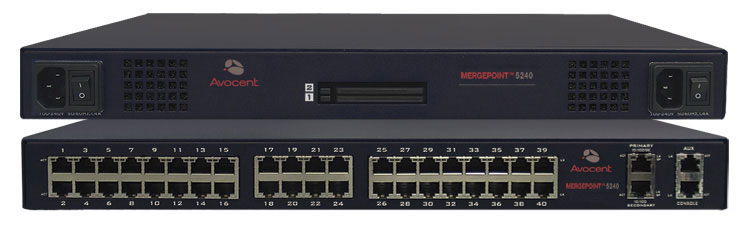
Two new arrows in Avocent's quiver are the MergePoint 5224 and 5240, appliances for controlling the service processors found in nearly any server. Service processors help manage servers independently of the main processor, controlling such functions as power, hardware monitoring and alerts. With its MergePoint appliances, Avocent claims to be the first company to “enable IT administrators to manage multiple service processors in Windows, Linux and UNIX servers from a single console”, leveraging the “embedded management capabilities of servers already in their network”. Product advantages include the ability to manage and control nearly all types of service processors (DRAC, iLO and RSA II) with a single gateway; increased efficiency through the unified utilization of service processors; reduced costs via consolidation of service-processor Ethernet ports; and added security through authentication, authorization and accounting features.
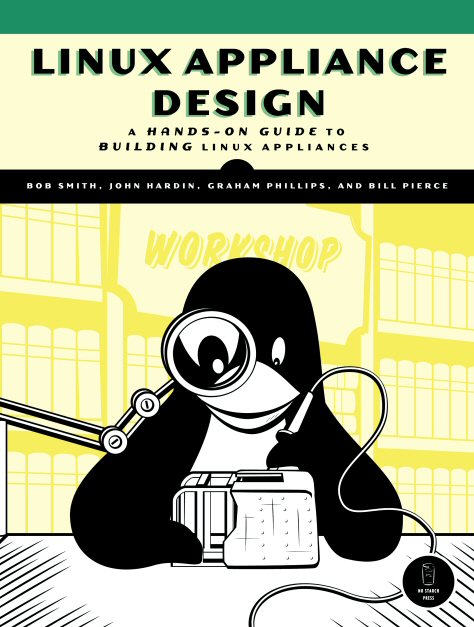
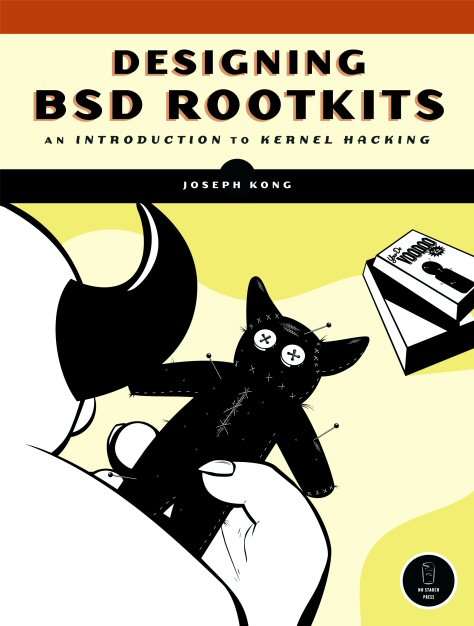
Here's the deal. Right now, No Starch Press is giving life to so many great titles, I'm not completely sure which single title will bring you the most geek enlightenment. So, let's give the coolest ones some abridged love, shall we? First, there's Linux Appliance Design by Bob Smith, John Hardin, Graham Phillips and Bill Pierce. Although many books tell readers how to run Linux on embedded hardware or how to build a Linux application, No Starch says this is the first title to demonstrate how to merge the two to create a Linux appliance. The CD includes a prototype appliance—a home alarm system—that readers can use and modify. Next up, because we know many of you do BSD, there's Designing BSD Rootkits: An Introduction to Kernel Hacking by Joseph Kong. Written in a cheeky style with lots of geek humor, the book covers the fundamentals of programming and developing rootkits under the FreeBSD operating system. Finally, the Book of Qt 4 by Daniel Molkentin, a core KDE developer, shows readers how to build applications both with and without Qt's graphical GUI builder, Qt Designer.
Monopolists need tools like this to keep them honest. You can now download Sun's plugin application for Microsoft Office 2003 that will allow for “seamless two-way conversion of Microsoft Word's documents to and from ODF”. At the time of this writing, support for spreadsheets and presentations is due in April 2007. The conversion is claimed to be fully transparent to the user. Might this be the end of the beginning of the end of the

Database admins should note that BakBone Software has released the new NetVault: Backup APM for MySQL, version 3.0. The solution provides low-complexity deployment and protection of the MySQL Enterprise and Community editions, consolidated backup and recovery and a common administrative UI that allows users to set up, configure and define a wide range of backup policies and scenarios. Additional highlights include full, incremental and differential backups while data is on-line and accessible; a common UI across multiple storage engines; consolidation of multiple storage engines into a single job; and protection down to the table level. The product is a MySQL Enterprise Gold Certified solution.

Please send information about releases of Linux-related products to James Gray at newproducts@linuxjournal.com or New Products c/o Linux Journal, 1752 NW Market Street, #200, Seattle, WA 98107. Submissions are edited for length and content.

