
New Products
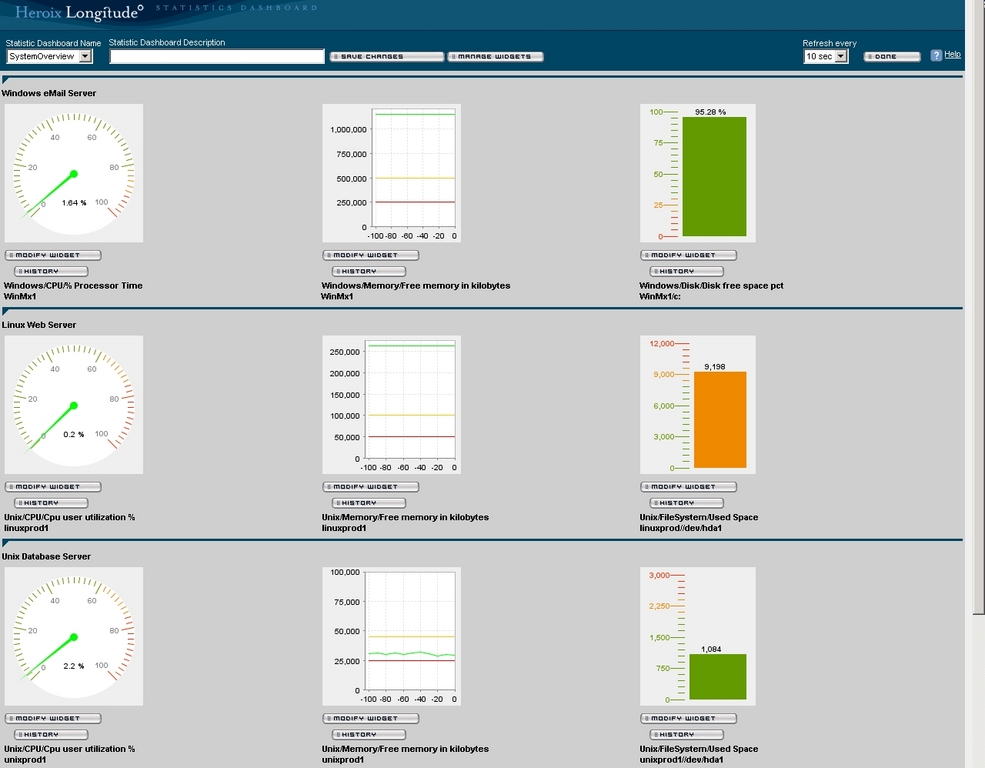
Heroix just announced version 4 of Longitude, the firm's agentless performance monitoring and reporting software. The application is intended to monitor an enterprise's entire IT infrastructure, including OS, Web, database, J2EE, messaging, infrastructure, and user and business metrics, all out of the box and without agent software on monitored computers. New features in version 4 are a new centralized event monitor; a customizable, real-time statistics dashboard; expanded monitoring coverage to any SNMP-based device via a graphical studio; an archived report portal; and consolidation of Windows Event logs. Platforms monitored are Red Hat, SUSE Linux, Solaris, HP-UX, AIX and Windows. A 14-day free trial is available at Heroix's Web site.
eZ Systems recently released version 3.9 of eZ Publish, the company's open-source, ready-to-run enterprise management system and framework. eZ Publish is an application for creating Web sites, on-line stores, intranets and extranets. New features in 3.9 include an intuitive front-end editor (Web site interface), enhanced shipping manager, extended LDAP user-group mapping, support for translating class attribute names and more. The product is available in either out-of-the-box or tailor-made solutions for the varying needs of clients. GPL'd Linux and Windows versions are available for download at the eZ Systems' Web site.

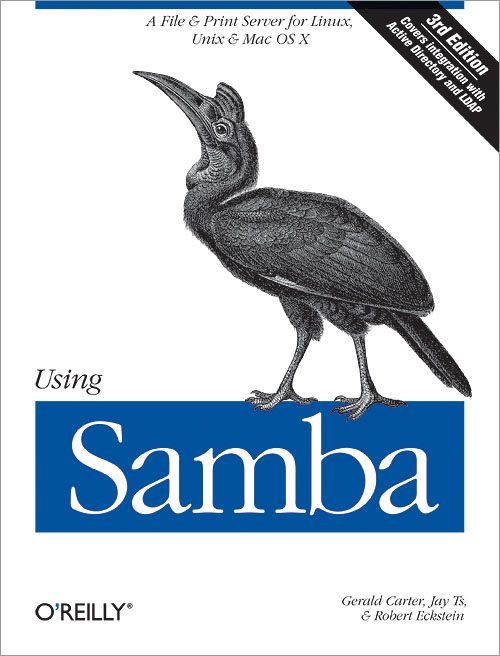
In our community, Samba is the way to go to turn your Linux or UNIX system into a file-and-print server for Windows network clients. Now in its third edition, Using Samba is the book “officially adopted by the Samba team” says the publisher. Further, it “delves into the internals of the Windows activities and protocols to an unprecedented degree, explaining the strengths and weaknesses of each feature in Windows domains and in Samba itself.” This third edition covers Samba 3.x features, such as integration with Active Directory and OpenLDAP, migrating to Samba from Windows NT 4.0 domains, delegating administrative tasks to non-root users, central printer management, virtual filesystem plugins and others.
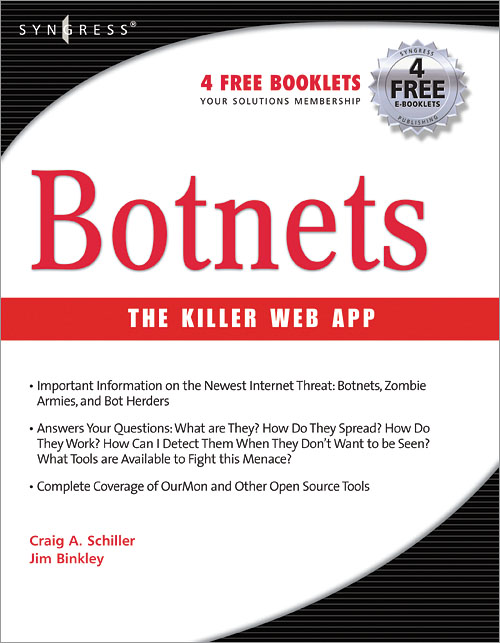
If battling botnets gives you nightmares, the new book Botnets: The Killer Web App may slay those pesky nocturnal dragons in your head. The book's mission is to arm you with useful information on botnets, zombie armies and bot herders, answering questions, such as “What are they? How do they spread? How do they work? How can I detect them when they don't want to be seen? What tools are available to fight this menace?” The main tools covered here are open source, with a focus on the network monitoring tool Ourmon.
We've been given the lowdown on Liferay's new version 4.2 of the Liferay Portal, an enterprise-class, open-source portal framework. One of the key features in the updated edition involves integration with the ServiceMix Java Business Integration engine, which acts as a single point of connection for disparate enterprise applications, simplifying the integration, upgrade and substitution of siloed applications, such as CRM, ERP and ECM. Additional new features include a jBPM workflow engine, an Ajax-based chat messaging solution, Alfresco integration and a new parallel portlet rendering engine. Liferay is available for download from the company's Web site.

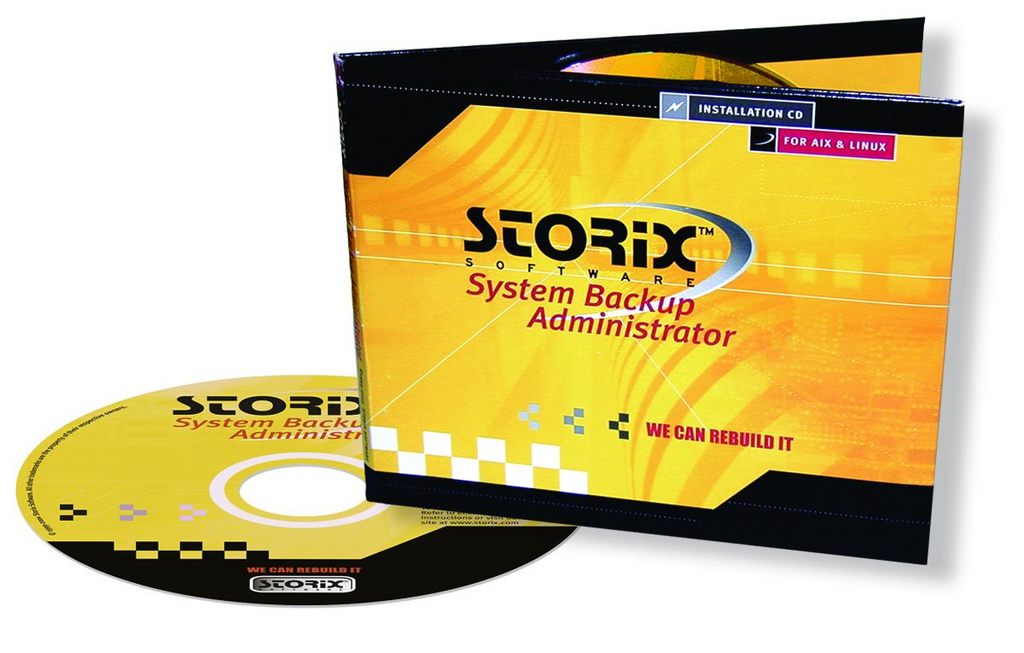
Storix has brought forth a new version (6.0) of its flagship backup and disaster recovery application, System Backup Administrator (SBAdmin). SBAdmin not only backs up data files to a network server, but it also provides the ability to rebuild a system from the ground up on different hardware environments. One can reconfigure the system to restore onto completely different hardware, change filesystem types, migrate from disk partitions to LVM or software RAID and so on. Examples of new features are a Web-based interface, Oracle DB backup, remote system installation and balancing of the CPU load against the backup size. Supported OSes include Linux and AIX; supported hardware includes all Intel-based (x86/Pentium), IBM pSeries (32/64-bit) and HP Integrity (Itanium 2).
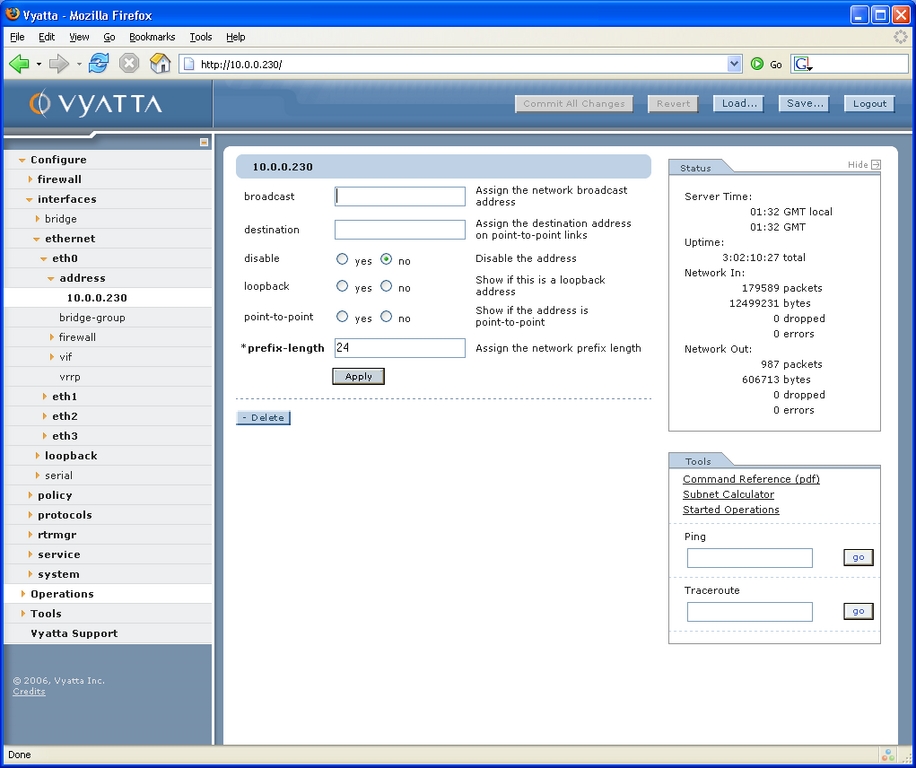
Vyatta's Open Flexible Router (OFR), upgraded recently to version 1.1, is an open-source LAN and WAN routing solution for small- to medium-sized businesses. OFR's product benefits include not only all standard routing protocols and high-availability and security features, but also the ability to customize the product and add features as needed. The latter feature gives users flexibility in managing future requirements on their own terms rather than relying on the actions of closed-source vendors. Vyatta also states that OFR allows one to deploy an “enterprise-class router for a fraction of the cost of a traditional closed-source, proprietary router”. This latest release adds support for T3 WAN connections and provides compatibility with third-party application packages from Debian GNU/Linux. Debian package compatibility extends OFR's capabilities to include third-party applications in the Debian universe, such as Openswan, Asterisk and ClamAV, among others. The OFR software is available for download from Vyatta's Web site.
XenSource has gone hog wild with its concurrent announcement of three different virtualization products: XenEnterpriseT, XenServerT and XenExpressT. The products target the needs of “Fortune 50 enterprises, mid-market Windows standard server IT environments to technology enthusiasts and developers”, respectively. All three products share a common, open-source, Xen-based architecture, which makes “the upgrade path seamless between products”, sayeth XenSource. Xen allows multiple virtual server instances to run concurrently on the same physical server, with near native performance. XenEnterpriseT is designed for the heterogeneous environment of enterprises, delivering “bare metal” performance for virtualized guest operating systems. Meanwhile, XenServerT is intended for Windows standard server environments and “gives IT professionals a high-performance, easy-to-use virtualization platform for Windows”. Finally, XenExpressT is made for for developers and technology enthusiasts, offering a “comprehensive, production-ready, free product, which enables anyone to get started with Xen virtualization quickly”. All three products support Windows Server 2003/2000, as well as Windows XP, Red Hat Enterprise Linux, SUSE Linux Enterprise Server and Debian Sarge guests.

