
New Products
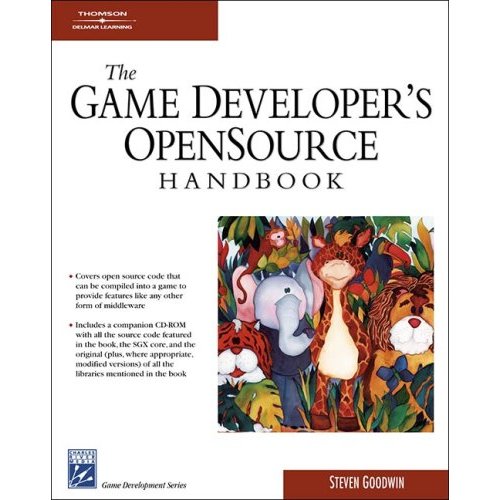
Charles River Media's recent book titled Sex in Video Games came out too early for me to include it here (curses!), but then a new title with much appeal caught my eye: The Game Developer's Open Source Handbook by Steven Goodwin. The book is targeted at “all game developers, especially the 'Indies', who want to use the wealth of free software in their own games to help increase the scope of the technology available and reduce the financial burden”. Charles River also calls it “required reading for the producers and systems analysts of game studios who want to see the big picture”. The book's main purpose is to help the game developer find and utilize the plethora of open-source software tools and libraries—such as graphic editors, IDEs, MIDI sequencers, 3-D editors, movie playback code and so on—for use in every aspect of the development process. The author, Steven Goodwin, has been responsible for developing five different game titles, including Die Hard: Vendetta on the three big console platforms.
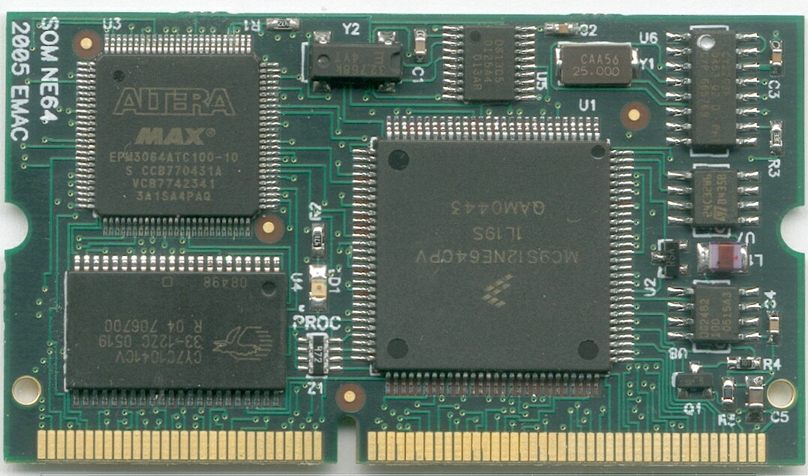
The EMAC folks have let us know about their new 16-bit, System on Module Internet-appliance engine, which they have ubercreatively named SoM-NE64M. The SoM-NE64M module is based on the Freescale ColdFire MC9S12NE64, 16-bit, 68HC12-compatible processor with built-in Ethernet MAC and PHY and two serial ports. It also features 64KB of Flash, 32KB of EEPROM and 8KB of RAM, with room for up to 512KB. The aforementioned functionality is integrated into a diminutive board—smaller than a business card and using less than a Watt of power—and is designed to plug in to a custom carrier board. Applications for the SoM-NE64 can be programmed using GNU tools within an Eclipse IDE or with CodeWarrior. One of the product's advantages, says EMAC, is “more functionality built in than many other SoM designs”, making the carrier board easier to design and produce and thus lowering cost and time to market. Target applications are Web/network data acquisition and control.
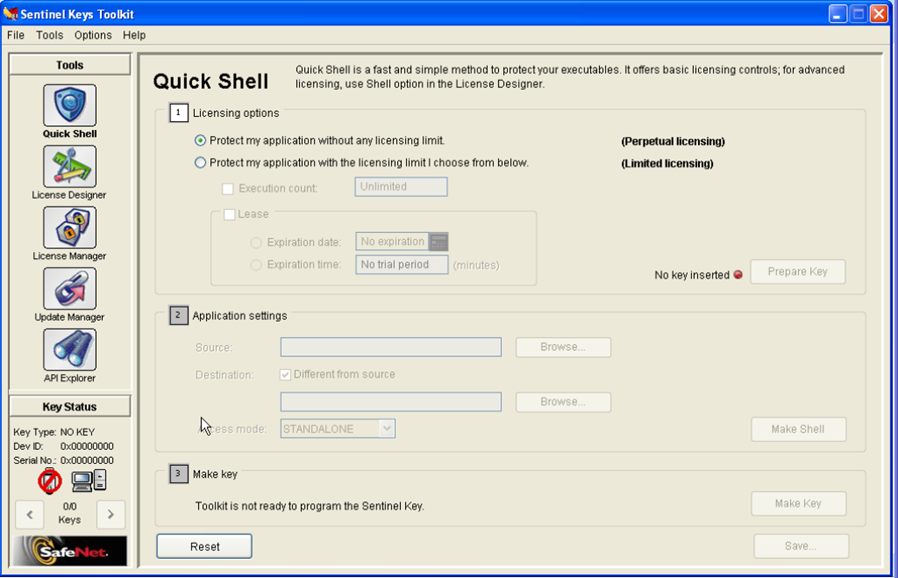
SafeNet has introduced its Sentinel Hardware Keys to the world of Linux. The product is a rights management token with military-grade security that is intended to allow “software developers in the Linux community to protect 32-bit software applications from piracy and implement flexible licensing models”, sayeth SafeNet. When attached to a computer or network, the keys monitor and enforce the licensing of products that have been protected using SafeNet's solution. The Java-based Sentinel Hardware Keys Software Development Kit is supported on Red Hat Enterprise Linux, Fedora Core and SUSE and includes “a device driver to access keys, a network server dæmon to manage licenses, a Web-browser-based monitoring tool to track licenses on site and a set of Business Layer APIs for high-level licensing implementation.”
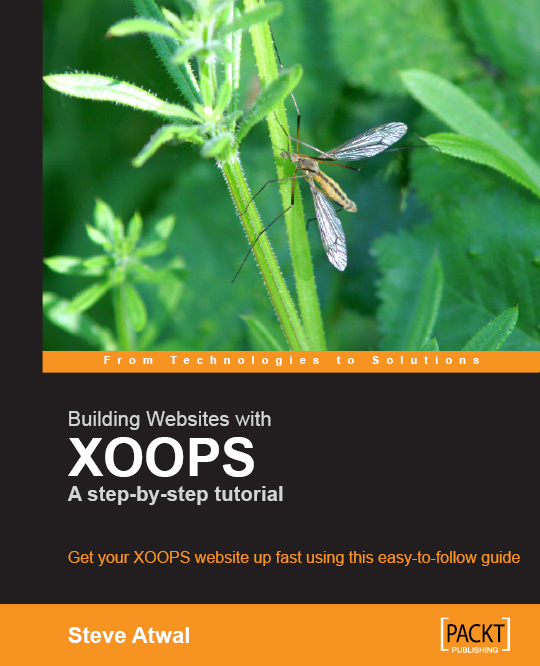
Packt Publishing is a relatively new yet prolific IT publisher that focuses heavily on Linux and open-source titles. Its tagline reads “Community Experience Distilled”, with the firm contributing a royalty back to the open-source projects it writes about. A case in point is Packt's new title, called Building Websites with XOOPS: A step-by-step tutorial by Steve Atwal. XOOPS is a popular open-source, object-oriented, PHP-based Web content management application. The book introduces readers to XOOPS and shows how to use it to create “small to large dynamic community Websites, intracompany portals, corporate portals, Weblogs and much more”. Some topics covered include configuration of XOOPS, working with news stories and managing diverse elements, such as blocks, modules, users, themes and more.
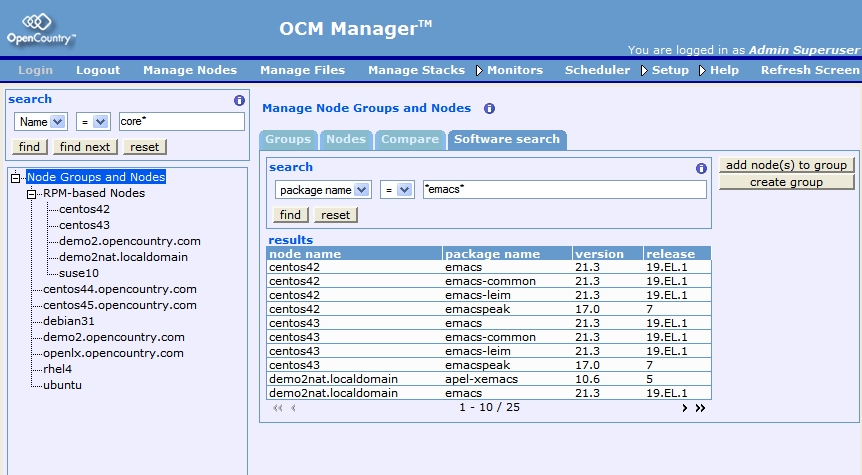
Open Country hops on the 64-bit bandwagon with release of the OCM Universal Linux System Management Suite, Version 3.1. This systems management application now supports Intel's Itanium 2 processor line. OCM's raison d'�re is to “help companies with widely distributed Linux investments to easily discover their entire inventory of hardware/software investments, then track installations and updates, deploy security patches, simplify repetitive management tasks, and respond effectively to changing computing needs”. Open Country further credits its Web-based architecture with optimizing expertise and reducing labor costs over traditional client-server architectures. In addition, besides the mainline Linux distributions, OCM supports many distributions less common to North America, such as Asianux, CS2C, Red Flag, Turbolinux, Haansoft and several others.
Arkeia Software recently brought forth the release of Arkeia Network Backup Version 6, the firm's flagship data-protection solution for medium- to large-sized networks. Arkeia says that the main intent of Version 6 is to “improve backup performance and increase flexibility for distributed infrastructures such as organizations with Storage Area Networks”. Some of the specific new features include a media server for SAN option that enables LAN-free backup for SAN environments, remote drive management for LANs and WANs to centralize the management of remote servers and networks and to consolidate and share drives across the LAN, an integrated virtual tape library option to leverage the performance and flexibility of disk technology, and a disk-to-disk-to-tape option to shorten backup/restore times and to create granular tiered storage policies. A trial version is available at Arkeia's Web site.

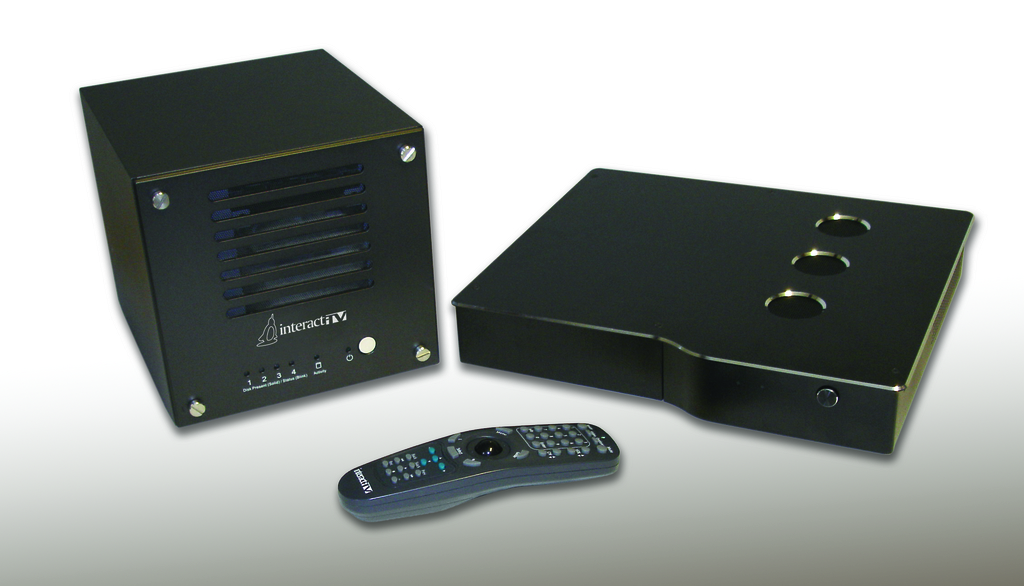
Okay media packrats, this one's for you. Interact-TV has just released a line of home entertainment servers, called ProTelly, which will permit you to stash your DVDs and audio CDs in the basement for good. The products range from the the baseline ProTelly Media Server that can hold up to 150 DVDs to the ProRAID, which, with 3TB of protected storage, can hold up to 600 DVDs. All ProTelly products include features such as a subscription-free PVR, video library with a “save DVD” function, as well as music and photo libraries. In addition, it has features that Interact-TV says people in the home networking and home automation fields are looking for, namely component video out with 720p and 1080i, Gigabit Ethernet and MPEG-2 video encoding. Naturally, Linux is inside, making all of the enjoyment possible.
The OpenVZ Project recently announced that its OpenVZ OS-level server virtualization solution, which is built on Linux, is now available for systems using Power 64-bit processors. Like other virtualization solutions, OpenVZ allows one to create isolated, independent, secure virtual environments on a single physical server in order to achieve better server utilization and ensure that applications do not conflict. However, the OpenVZ Project asserts that its advantages lie not only in its single rather than its multiple kernels but also in its “portability across different architectures since 95% of the code is platform-independent”. The OpenVZ Project is an Open Source community project supported by the firm SWsoft, which utilizes OpenVZ as the heart of its commercial virtualization product, dubbed Virtuozzo. The OpenVZ software, complete with Power support, can be downloaded from the project's Web site.

