New Products
Those of you who follow this section will wonder why products in the high-end 3-D graphics space keep popping up. Admittedly, your editor's dream to work for Pixar has (foolishly) not yet been dashed. This month, we'll see a new book title about Autodesk's Maya package, titled Learning Maya 7: Foundation with DVD. The book is authored by Maya's creators at Autodesk and published by Sybex's Autodesk Maya Press imprint. Maya is a powerful program used by the film, TV and computer/video game industries for 3-D modeling, animation, effects and rendering. And, Maya runs on Linux as well. This full-color book uses a real, forthcoming Hollywood film as material for its tutorials, teaching readers animation, modeling, texturing and visual effects. Also included is a DVD with instructor-led tutorial videos and other extra features. (Psst! Anyone out there with connections at Pixar who can hook me up?)

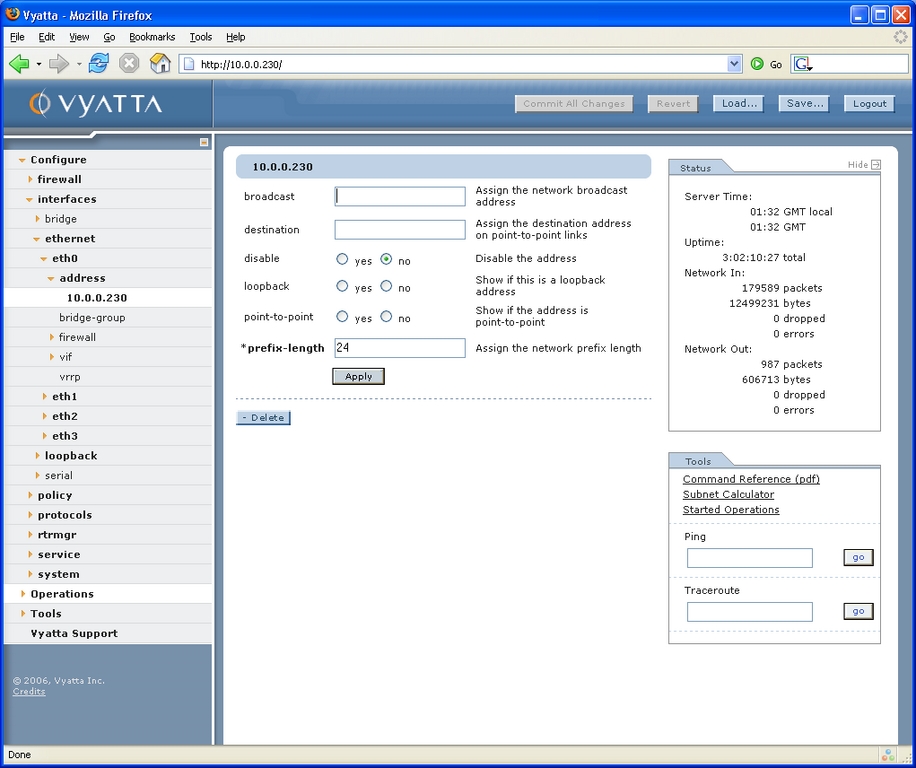
The word vyatta means “open” in ancient Sanskrit, and this relatively new company that has taken on the moniker is applying this philosophy of openness to routers. Vyatta's product, the Open Flexible Router (OFR), is reputed to be the IT industry's first enterprise-grade, open-source router platform. OFR allows users to utilize industry-standard x86 hardware to “create a high-performance router for WAN and LAN routing” that offers “dramatically improved price/performance and open flexibility” vis-à-vis closed-source solutions. Vyatta targets OFR at mid-sized enterprises or branch offices of larger ones. Product benefits include not only all standard routing protocols and high-availability and security features, but also the ability to customize the product and add features as needed. The latter is intended to give users flexibility in managing future requirements on their own terms rather than relying on the actions of closed-source vendors. In addition, both free and paid support options exist. Free support comes in the form of the Vyatta Community, which includes tools, discussions, blogs and newsfeeds. Paid support includes tiered subscription packages customized to the user's needs. The OFR software is available for free from Vyatta's Web site.
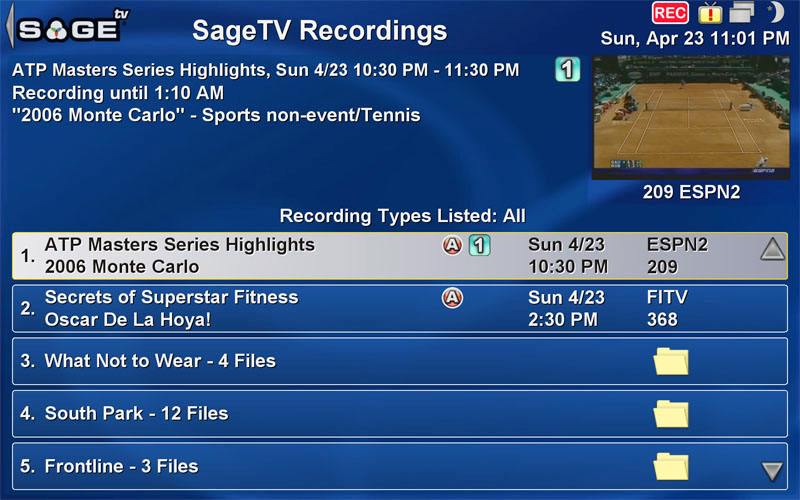
Hear ye, hear ye, all TV freaks! SageTV recently released a product dubbed SageTV Media Center, which, according to the the company, allows you to turn a Linux-based computer into a full-featured PVR and media center. In addition, you can utilize the Placeshifter option to watch your entire home-based media library from any remote computer with high-speed Internet access. Furthermore, the Media Center also can interact with SageTV's related product, the Wireless Media Extender, which allows every TV in the home to access all live or recorded media content from the Media Center independently without a need for a PVR on each set. Meanwhile, a central, unified media library is maintained. SageTV claims that one can set up a complete, full-home media center for hundreds rather than thousands of dollars for other solutions, and there is no need to pay subscription fees for PVR capabilities.
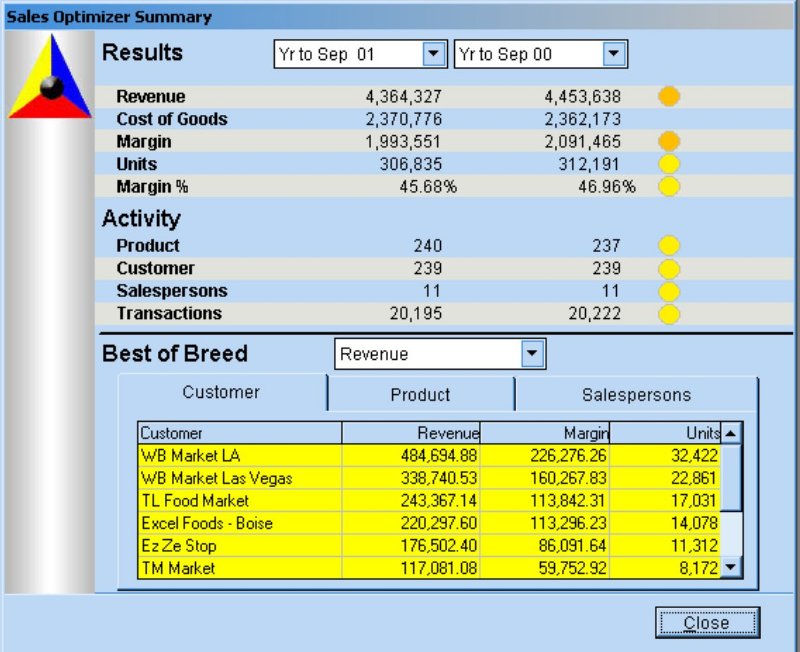
Sage Software (no relation to SageTV above) recently announced a new version, now Release 5.4, of its Sage Accpac ERP business management system. In essence, Sage Accpac ERP is a Web-enabled accounting and business management solution for integrated business management applications, including CRM, POS, HR, inventory management and so forth. It can be deployed either on-site or on-line. New user features in Version 5.4 include a new returns management (RMA) module and 267 other product enhancements, such as improved multi-currency tax accounting. A new technical feature of Accpac ERP is its compatibility with Intel and AMD 64-bit processors. Also of interest to the Linux crowd is the ability of Sage Accpac ERP to run simultaneously on both Linux and Windows clients in parallel against the same database, be it DB2, Oracle, PSQL or Microsoft SQL.
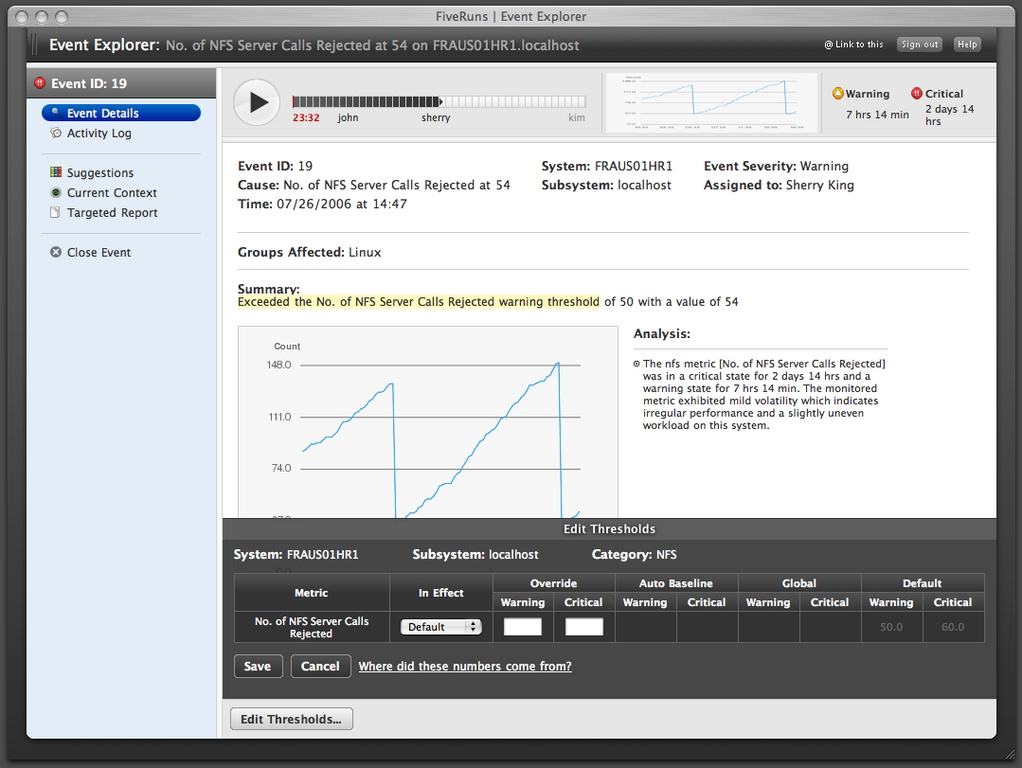
FiveRuns, whose name comes from the founder's favorite childhood fishing hole, has left the world of beta releases (now 1.0) with its open-source Systems Management product, “complete with Web 2.0 richness and usability.” According to FiveRuns, its “approach to systems management utilizes open-source technologies, such as Ajax, Ruby and Ruby on Rails to deliver a sleek, hosted application.” Because IT professionals must typically manage both open-source and proprietary environments, FiveRuns' philosophy is to support these heterogeneous environments through a single interface. FiveRuns also claims that businesses of all sizes can benefit from its products. Other features include software-as-a-service-based monitoring, allowing users the flexibility to subscribe to the appropriate level of service as infrastructure levels change, as well as automated configuration discovery and auto-baseline thresholds to keep implementation time to a minimum. Free support for the product is available through FiveRuns.net, a community of users that includes troubleshooting advice. A free 30-day trial of FiveRuns is available by signing up on the company's Web site.
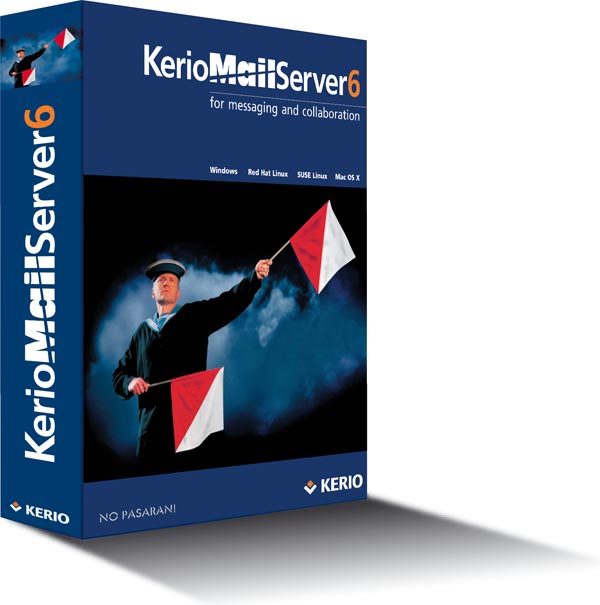
The Kerio folks told us that they have updated their MailServer product, now Release 6.2, which supports Linux, Mac OS and Windows. The product is a groupware server targeted to small- and mid-market businesses and is available in 16 different languages. The most noteworthy new user and administrator improvements are Universal binaries (MailServer is now a Universal application on Mac OS X); two-level spam rating (messages can be tagged or blocked/rerouted); distribution-list definition and syncing; Sticky Note support (users can create and sync Sticky Notes in WebMail and Outlook); Clam AntiVirus plugin; and improved search, including calendar events and tasks. Kerio also improved its WebMail application utilizing Ajax.
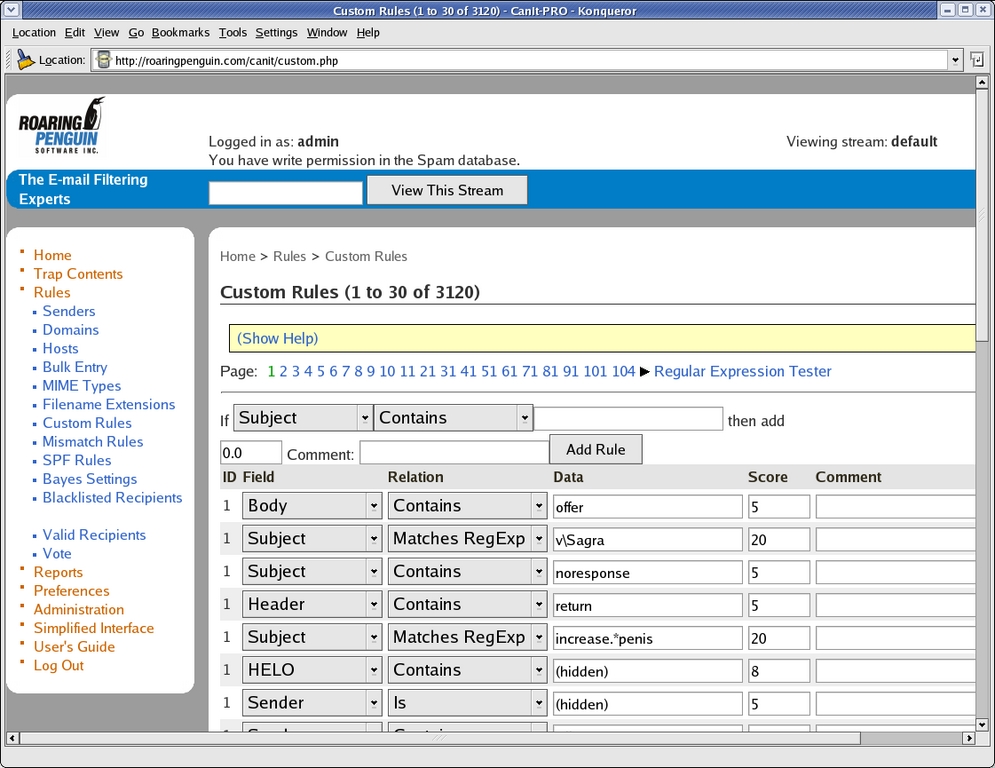
The developers of e-mail applications are rockin' these days, and one of the companies responsible for the buzz is Roaring Penguin Software, who just released Version 1.0 of its CanIt-Domain-Pro. This product is an antispam solution designed specifically for organizations with complex e-mail needs related to managing multiple domains, such as ISPs, universities, governments, Web hosts and so on. Roaring Penguin says its product can solve problems in universities and governments “where each department often has its own domains” or in the ISP world where “merger activity has brought multiple domains under one roof”. Roaring Penguin's approach is to simplify the management of multiple domains by allowing a “super system administrator to delegate system administration rights” to lower-level “realms”, with realm administrators able to create baseline rules, users and streams within their jurisdictions. CanIt-Domain-Pro is available as a software download, a soft appliance or a preconfigured plug-and-play appliance.