New Products
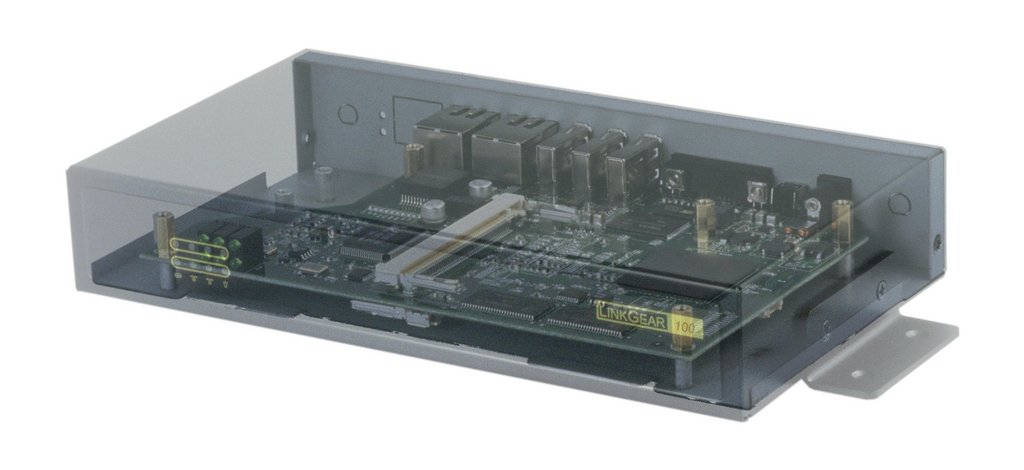
If Q were to make a Linux server to fit into 007's jacket pocket, it might look something like the LinkGear Series 100. This compact device, so sayeth JJPlus, is “the first affordable replacement for Intel-based Linux PC servers in low power, small form factor applications.” Measuring in at 38mm x 203mm x 112mm (1.5" x 8" x 4.4") and weighing 0.55kg (1.2lbs.), this little guy is a standard Linux server, sporting an SH4-7751R RISC processor that consumes 2 Watts of power. Other standard features include a pre-installed Linux OS (2.6.12 kernel) based on GNU glibc and RPM; built-in firewall and wired or wireless gateway features; two mini-PCI slots for wireless networking; USB 2.0; and a NAND-flash block device driver compatible with fdisk, lilo and ext3 filesystem tools. Optional features are an internal IDE/CF-ATA storage adapter, an 802.3af-compliant PoE module, a Wi-Fi mini-PCI card and more. Also included are complete native and cross-development tools, sources and binary RPMs. Mr Bond, you've foiled the bad guys again, this time with the firewall in your pocket!
Your valiant editor dithered a bit on whether to include this item, the Mandriva Kiosk service, thinking it more at home in TUX, our sister publication for the Linux desktop. As you can see, the desktop enthusiast in me cannot be subdued! According to the company, Mandriva Kiosk is “a Web-based one-click software installation service” that offers “access to the latest versions of the most popular applications through a simple installation process”. Packages with multiple dependencies, such as KDE and GNOME, are aggregated into bundles and treated as a single entity from the user's perspective. Although the initial range of available applications is a bit sparse, the offering will presumably grow over time. Although many of you may balk, arguing that you lose valuable control of your system, I call on your inner evangelist. Have you not a mother-in-law you wish to lure away from the dark side? Subscriptions to Mandriva Kiosk start at 29.90 EUR (around $38 US) per year. Only newer releases of Mandriva Linux are supported.

Good golly, so many wonderful Linux books, so little time! We hope to better use this space to tell you what's hot off the press and perhaps worth a further look. Now, it is a good sign if, in today's competitive market, a book makes it into a 3rd edition, which is the case with Mark Sobell's A Practical Guide to Red Hat Linux: Fedora Core and Red Hat Enterprise Linux. The publisher, Prentice Hall, describes the book like so: “In 28 chapters, this book takes you from installing a Fedora Core (updated for Fedora Core 5) or Red Hat Enterprise Linux system through understanding its inner workings to setting up secure servers that run on the system, as well as working with GNOME, KDE, Samba, sendmail, Apache, DNS, NIS, and iptables.” This new 3rd Edition includes beefed up info on system administration, security issues, networking and server setup. The publisher also notes how Sobell “knows every Linux nook and cranny”, indicating that this book is especially comprehensive. A Practical Guide spans nearly 1,100 pages and includes a DVD with the full Fedora Core 5 OS.

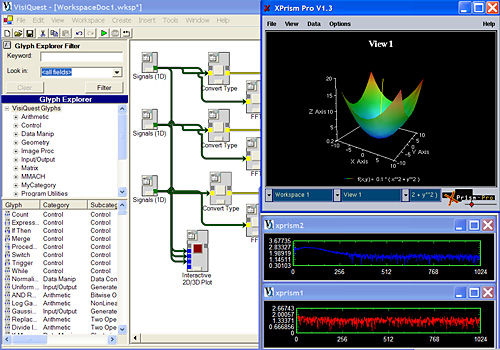
Those in our community involved in data and image analysis—researchers, scientists, engineers and educators, among others—will be interested in the latest update to the VisiQuest software application from AccuSoft. VisiQuest's raison d'etre is to perform complex image and data analysis tasks using visualization. The latest release, per AccuSoft, features a “toolbox with 60 additional functions for image registration and segmentation tasks”. Included therein is a plethora of new functions or “glyphs” that help solve the challenge of mapping data of a rotated image to a fixed image. What's more, users can utilize these glyphs in a drag-and-drop environment without the need for proprietary programming languages; users can also roll their own glyphs in C, C++ or Perl. In addition, AccuSoft announced a price reduction and a new, bundled purchasing option. Supported platforms include Linux, Mac OS, Windows and UNIX.
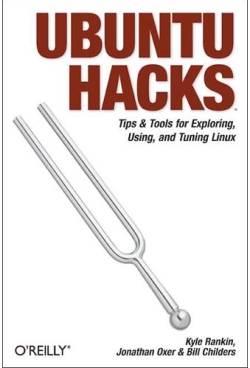
Yes, dear Reader, yet another book, based on the mildly presumptuous assumption that you love them as much as I. If the Ubuntu distro is your fancy, you'll be happy as a clam, for an avalanche of great Ubuntu books hits booksellers this summer and autumn. Naturally, I must insert a shameless plug for my friend and fellow LJ editor, Marcel Gagné whose title Moving to Ubuntu Linux should be available sometime around now. However, the focus of this blurb is a title from Tim O'Reilly's library, namely Ubuntu Hacks from the trio of Bill Childers, Jonathan Oxer and Kyle Rankin. All three authors are self-described “passionate Ubuntu and Kubuntu users”. The book is timely because, without a doubt, Ubuntu is far and away the hottest distro out there and one of the most active hubs of Linux-based innovation. Ubuntu Hacks is meant to whet the appetite of true hackers, those whom the authors describe endearingly as “creative, having the technical chops to get things done.” Regardless of your level of expertise, the folks at O'Reilly Media say that this book will challenge you. It contains more than 100 different hacks, that is, creative ways to get the most out of your Ubuntu system, ranging from the basics through to mobile computing, X11 tweaks, virtualization and emulation, SOHO-level servers, security and more.
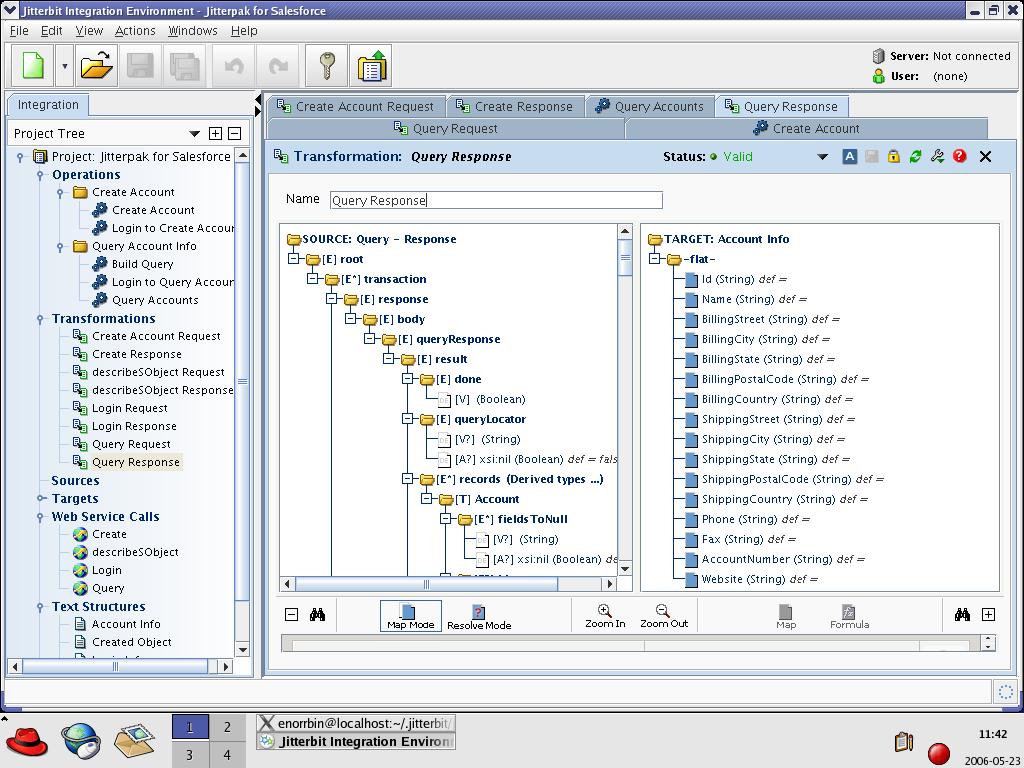
Imagine you're a small nontechnical retailer who wants to integrate your internal systems with an eBay on-line store. What do you do? One option is to hire a team of coders and developers to do the job. Jitterbit aims to make that solution superfluous and allow you to accomplish complex integrations on your own—all via drag and drop and without coding. The Jitterbit open-source integration application can be used to connect data from ERP and CRM applications, data warehouses, on-line marketplaces and so on. Some of the supported formats are Web services, XML, HTTP/S, FTP, ODBC, flat and hierarchic file structures and file shares. Customers can choose between two different editions: a free, community-supported edition and a professional edition, complete with enterprise-level support and services. The Jitterbit Community Edition for Linux or Windows is available for free download at the company's Web site.
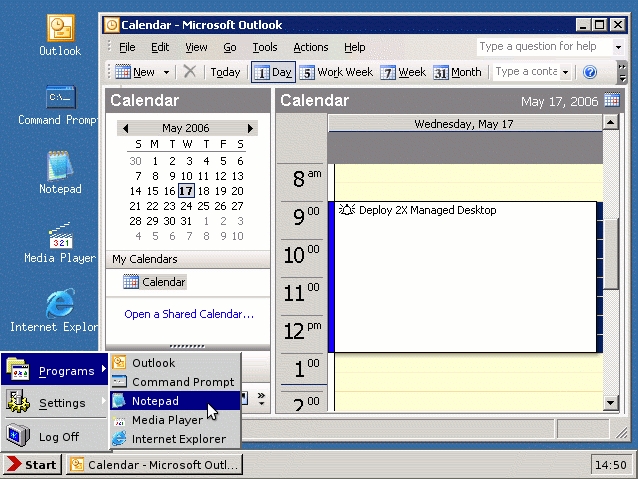
2X wants to bring joy to managing your Windows desktops by turning them into Linux ones—without users suspecting a thing! The company's ThinClientServer, just upgraded to Version 3, is a tool for centrally managing your network's desktops via thin client—that is, both existing “fat” PCs and thin-client devices from any vendor. 2X's approach is to deploy a secure, self-updating, small-footprint, Windows-mimicking Linux desktop to each client, which allows for central administration (Active Directory, LDAP) of users' connection and device hardware settings (RDP/ICA/NX, screen size and so forth), as well as which Windows apps are available. Windows apps are tunneled to clients either via the firm's application server or Citrix Metaframe. The upshot, says 2X, is that you avoid the technical and financial hassles of Windows; desktop administration is simplified (backup, updates and patching and so on); and unauthorized use of removable media is impossible. A free, five-client version can be downloaded from 2X's Web site.
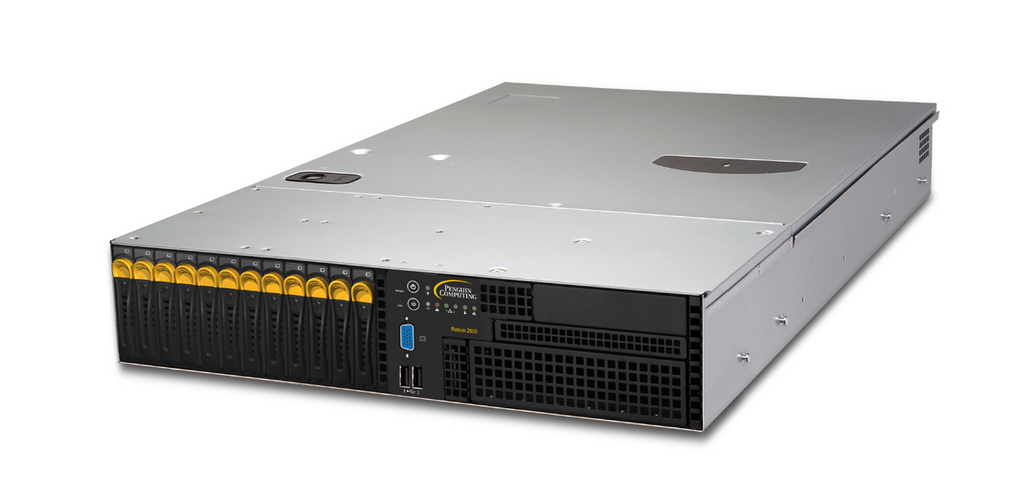
Penguin Computing recently expanded its line of Relion servers, which it targets at customers with memory/CPU-intensive, highly scalable, high-performance computing needs. The Relion 1600 (1U) and 2600 (2U) servers offer the option of up to two of Intel's new Dual-Core Intel Xeon 5000-series processors per server and integrate the most up-to-date Intel server technologies for improved performance. The result, according to Penguin's people, is “twice the speed as previous designs within the same power and space parameters”, as well as reduced operating costs due to “cooler, more economical performance and greater workload capacity with dynamic, instantaneous CPU performance scaling.” These improvements are possible due to Intel's Demand Based Switching and SpeedStep technologies, which provide dynamic scaling of CPU performance depending on the application's workload. In addition, they enable automatic switching from full, dual-core, dual-CPU utilization to a bare minimum level of power consumption when idle. Relion servers support Red Hat or SUSE Linux operating systems.