
New Products
You're watching The Princess Bride on your DVR, and Wesley is about to kiss Buttercup. There's a blissful moment of silence, but it's pierced by the whirr of those pesky cooling fans. VIA Technologies wishes to save you such agony, and to that end has released the fanless Eden and Eden ULV processors. Boasting 90nm manufacturing technology and sipping a meager 3.5 watts for their 1GHz ULV processor, it's just the ticket for an application requiring either low power or low heat specs. For something with a little more umph, the 1.5GHz version is still a power miser, consuming only 7 watts. And Linux is fully supported, of course.

If you truly love your data, let it run away. If it doesn't come back, restore it from backups using BakBone's NetVault. The recently released Enterprise Edition 7.4 can manage all your troublesome backup needs, even in a heterogeneous platform environment (that is, you're stuck backing up your NT servers as well as your Linux and Solaris boxes). The latest release adds support for backing up VMware ESX server environments, allowing guest systems to access tape drives installed on the host. Pricing begins at $1,195 US for Intel-based systems.
Just as winter turns to spring each year, and Chicago Cubs fans prepare for another year of cruel disappointment, so too does this month bring another virtualization product announcement. The OpenVZ Project has a new beta, based on the Linux 2.6.15 kernel. New in this release is better hardware support (notably for AMD dual-core processors), resizing of ext3 filesystems and improved memory management. OpenVZ is the community face of the Virtuozzo commercial virtualization product, and those wanting to download or contribute to the project should visit the OpenVZ Web site.
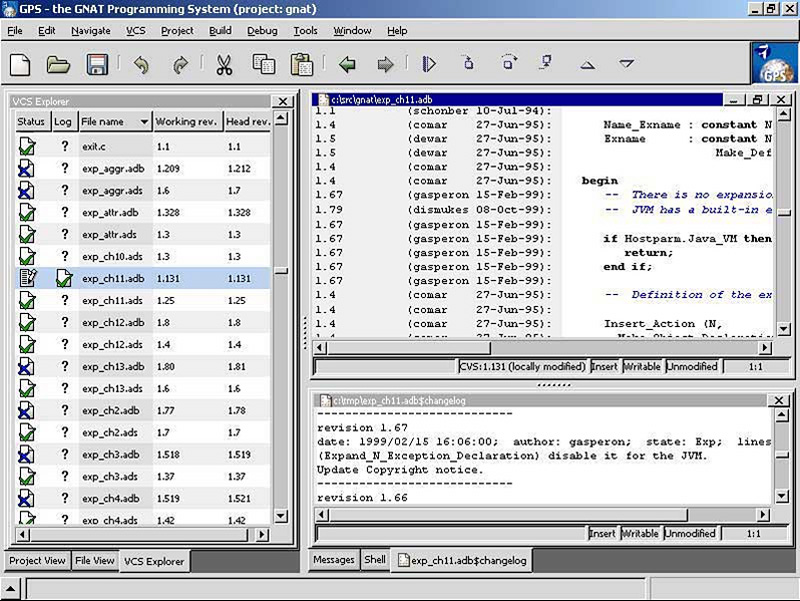
Your editor has fond memories of developing an Ada compiler in Pascal to generate 6502 machine code in college. My therapist says the trauma will eventually fade. For those looking for a more modern take on Ada, AdaCore has a new version of its GNAT Programming Studio, now available for x86-64-bit versions of Linux. In addition to ADA, that old DOD favorite, GPS also supports C and C++ for cross-language development. GPS is part of the GNAT Pro Ada Development Environment, and subscriptions start at $14,000 US.
Realizing the promise of Apache® Hadoop® requires the effective deployment of compute, memory, storage and networking to achieve optimal results. With its flexibility and multitude of options, it is easy to over or under provision the server infrastructure, resulting in poor performance and high TCO. Join us for an in depth, technical discussion with industry experts from leading Hadoop and server companies who will provide insights into the key considerations for designing and deploying an optimal Hadoop cluster.
Sponsored by AMD
If you already use virtualized infrastructure, you are well on your way to leveraging the power of the cloud. Virtualization offers the promise of limitless resources, but how do you manage that scalability when your DevOps team doesn’t scale? In today’s hypercompetitive markets, fast results can make a difference between leading the pack vs. obsolescence. Organizations need more benefits from cloud computing than just raw resources. They need agility, flexibility, convenience, ROI, and control.
Stackato private Platform-as-a-Service technology from ActiveState extends your private cloud infrastructure by creating a private PaaS to provide on-demand availability, flexibility, control, and ultimately, faster time-to-market for your enterprise.
Sponsored by ActiveState
| Non-Linux FOSS: libnotify, OS X Style | Jun 18, 2013 |
| Containers—Not Virtual Machines—Are the Future Cloud | Jun 17, 2013 |
| Lock-Free Multi-Producer Multi-Consumer Queue on Ring Buffer | Jun 12, 2013 |
| Weechat, Irssi's Little Brother | Jun 11, 2013 |
| One Tail Just Isn't Enough | Jun 07, 2013 |
| Introduction to MapReduce with Hadoop on Linux | Jun 05, 2013 |
- Containers—Not Virtual Machines—Are the Future Cloud
- Non-Linux FOSS: libnotify, OS X Style
- Lock-Free Multi-Producer Multi-Consumer Queue on Ring Buffer
- RSS Feeds
- Introduction to MapReduce with Hadoop on Linux
- Validate an E-Mail Address with PHP, the Right Way
- Tech Tip: Really Simple HTTP Server with Python
- Weechat, Irssi's Little Brother
- Linux Systems Administrator
- Help with Designing or Debugging CORBA Applications
Featured Jobs
| Linux Systems Administrator | Houston and Austin, Texas | Host Gator |
| Senior Perl Developer | Austin, Texas | Host Gator |
| Technical Support Rep | Houston and Austin, Texas | Host Gator |
| UX Designer | Austin, Texas | Host Gator |
| Web & UI Developer (JavaScript & j Query) | Austin, Texas | Host Gator |
Free Webinar: Hadoop
How to Build an Optimal Hadoop Cluster to Store and Maintain Unlimited Amounts of Data Using Microservers
Realizing the promise of Apache® Hadoop® requires the effective deployment of compute, memory, storage and networking to achieve optimal results. With its flexibility and multitude of options, it is easy to over or under provision the server infrastructure, resulting in poor performance and high TCO. Join us for an in depth, technical discussion with industry experts from leading Hadoop and server companies who will provide insights into the key considerations for designing and deploying an optimal Hadoop cluster.
Some of key questions to be discussed are:
- What is the “typical” Hadoop cluster and what should be installed on the different machine types?
- Why should you consider the typical workload patterns when making your hardware decisions?
- Are all microservers created equal for Hadoop deployments?
- How do I plan for expansion if I require more compute, memory, storage or networking?


42 min 3 sec ago
1 hour 5 min ago
2 hours 42 min ago
2 hours 44 min ago
4 hours 37 min ago
7 hours 26 min ago
12 hours 39 min ago
12 hours 41 min ago
12 hours 43 min ago
12 hours 45 min ago