
Letters to the Editor
Painting
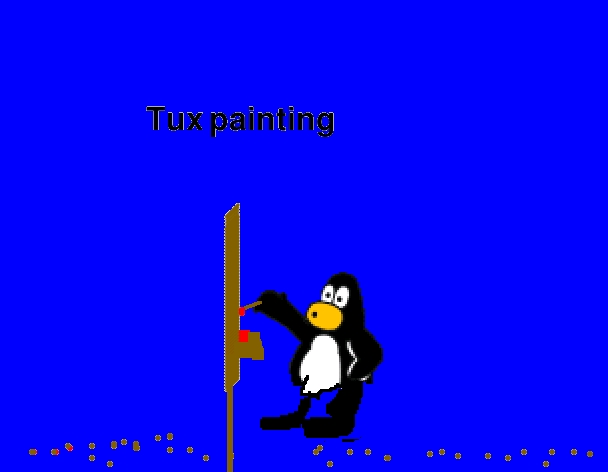
Well, it's rather an image. My daughter, Liv Helene, seven years old, has used Tux Paint to make a picture of a painting Tux. She has not told me what he is painting, though. My guess is that it is a kernel image.
—
Morten
See next issue for more fun Linux apps for kids. —Ed.
/var/spool/fanmail
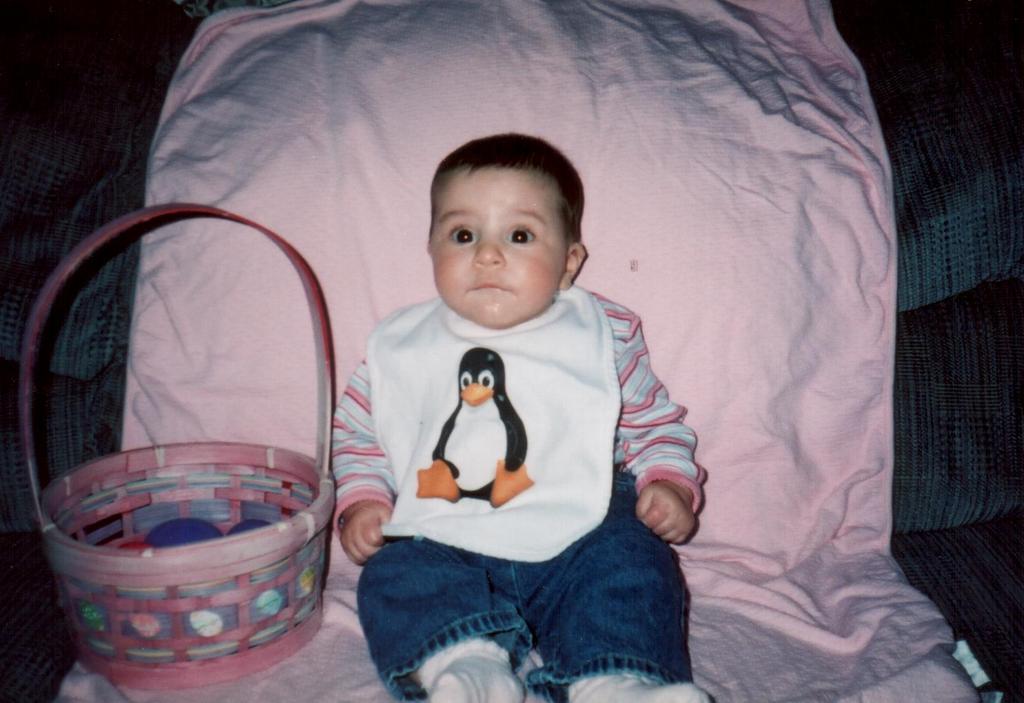
My niece, Addison Lotspaih, really seems to like penguins. I think she was wondering “where's the Easter Penguin?” in this picture. Future Linux guru? I hope so.
I wanted to let everyone at Linux Journal know, I think you're doing a wonderful job! I look forward to reading your magazine each and every month.
—
Mark Lotspaih
Historic Linux Distribution
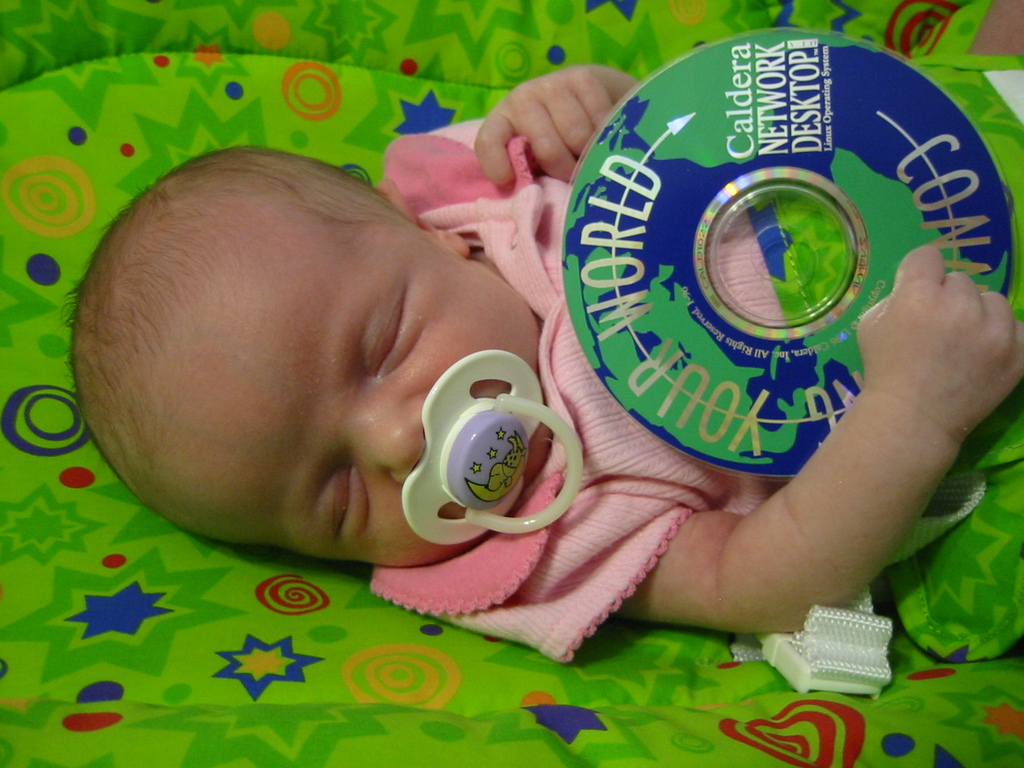
After trying out several different Linux distributions, my baby Molly decides Caldera Network Desktop version 1.0 is just right. Should I be worried that she might become a lawyer instead of a hacker?
—
Terry
That was the first distribution to bundle a pre-Mozilla Netscape browser. —Ed.
“Wrong Sed Fred”
Thanks to Larry Richardson for an enlightening overview of the sed command [July 2005]. I've been using it for years, but did not know about its pattern matching (//command) capabilities.
My friend, Samueluel, tells me there's a small
bug in the s/Sam/Samuel/
code example, though.
—
Jeremy
echo "How's this, Samuel?" | sed s/Sam\\b/Samuel/
—Ed.
LJ Cover Okay for US Government Offices
Anyone that thinks the May 2005 cover is “smut”
is a complete idiot and doesn't deserve to read your
excellent publication. I work in a Federal Government
installation, and since the woman on the cover is
clothed, I don't see any sexual harassment potential.
—
Tony Heaton
Another Cover Photo Fan
I just got the latest LJ and was shocked at reading
two of the letters to the editor concerning the
May 2005 cover. I work at a software company
that displayed the issue on the magazine rack for
a full month. Not one person mentioned the cover
image. Don't listen to the backward, foolish idiots
who would have us stay in 1920.
Good job, LJ. Don't stick to men and/or hardware on
the cover. Keep branching out.
—
Dave Wiard
Nice Shirts
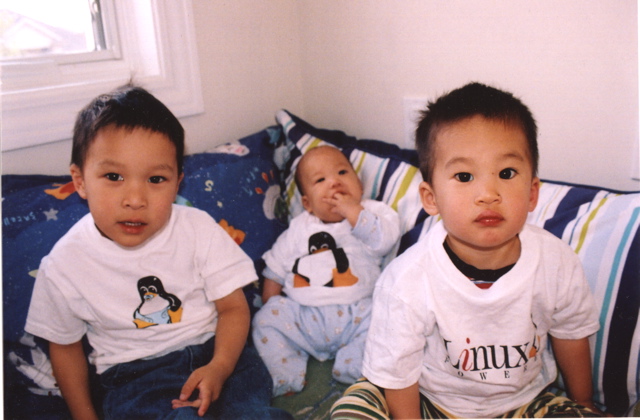
Baby Tux is in good hands. The oldest is saying, “We're protecting Baby Tux.”
—
Wendy Cho
Millions for iSCSI, Not One Cent for LJ
The article on ATA over Ethernet [June 2005] has got to be the perfect example of the kind of crap that stops me from buying the magazine again. Great eye-catching title. Excellent introduction to a SAN alternative (we use a Hitachi that cost several million so I like to see what the alternatives are).
Halfway through the article I find out that the setup
requires a vendor-specific piece of hardware that
I'm sure not so coincidently is the advertisement
facing page 26 of the article. If you're going to
have multipage advertisements disguised as articles,
then state it up front. I buy this magazine for
Linux solutions (like iSCSI target and host on Linux)
primarily. I don't mind seeing vendor stuff, but don't
dress it up as something else. It wastes my time.
—
Henry Scott
AoE is an open standard protocol that any vendor is free to implement. Check out sourceforge.net/projects/aoetools for a free server and recent Linux releases for the client code. —Ed.
GB: the New MB?
In the third paragraph of the July 2005 “diff -u”
section, it states: “Of course, because SquashFS
is a compressed filesystem, this really amounts to
about 8MB of actual data.” This should probably be
8GB of data instead of 8MB.
—
Dan Eisenhut
Yay, Monarch
I was reading your July 2005 issue, and I saw an ad for
Monarch Computer. I wanted to drop you a note to tell
you that I have been buying from them for five years
now. My company buys all of our systems from them,
I have never heard of a company that bends
over backwards for their customers like Monarch does.
They have over-nighted me parts at no charge, along with
a number of other amazing things.
—
Scott Adams
Linux Now on Tour
It is sad to see the ignorance and prudishness in some of letters published in the June 2005 issue with regards to the cover of the May 2005 issue.
Belly dancing has been a form of improvisational dance from the Middle East, for both women and men, dating back thousands of years. The dance is not inherently sexual in nature, and while the image on the cover does display a fair amount of belly, it is far less than what one would see at a swimming pool or at the beach.
I found the cover to be very tasteful and artistic.
The article was quite interesting and already has
proven useful in helping to spread Linux to several of
my friends who are about to start touring with their
(non-belly dancing) shows. Lastly, it was very nice
to see a cover that explodes the male-computer-geek
stereotype so effectively. My wife even picked up
my copy just to read the cover article. Keep up the
good work.
—
Chris Poupart
Everyone's Playing Tux Racer
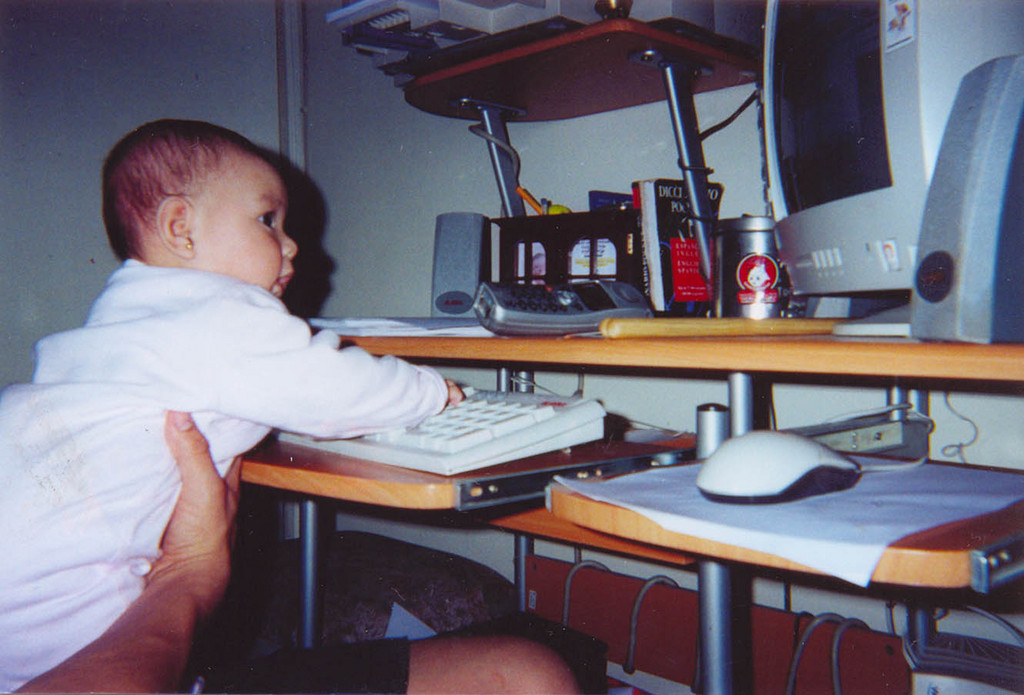
Greetings from Mexico. This is my niece Regina, enjoying Tux Racer on my Debian box.
—
Leonardo Ibarra Moran
Bad Advertiser, Bad, Bad
I would like to register my protest against the publishing of the advertisement that appeared on page 7 of the July 2005 issue.
I'm not a member of any identifiable minority—obese, ethnic, physically or mentally handicapped—but I strongly disapprove of the use of photos such as the one in the advertisement. I hope that I don't need to explain why.
For several years I have been a regular buyer of Linux Journal and a proud owner of two of Marcel Gagné's books. Any remote idea of ever buying a Carinet server has now been banished from my mind, forever.
May I suggest that you publish some sort of apology
in the next issue?
—
Alan Eastgate
Everyone's Favorite Magazine
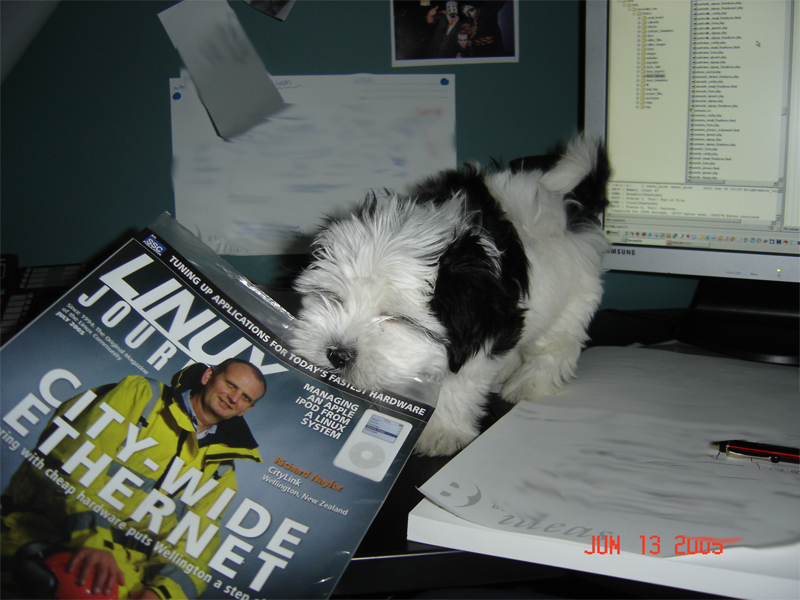
I wanted to send you a picture for your next issue. We get LJ sent to our office every month, and between the developers and sysadmins it is a race to crack into the magazine first; however, we all lost this time. The newest addition to our development team got to it first. Keep up the good work LJ.
—
Travis
Tux over My Hammy
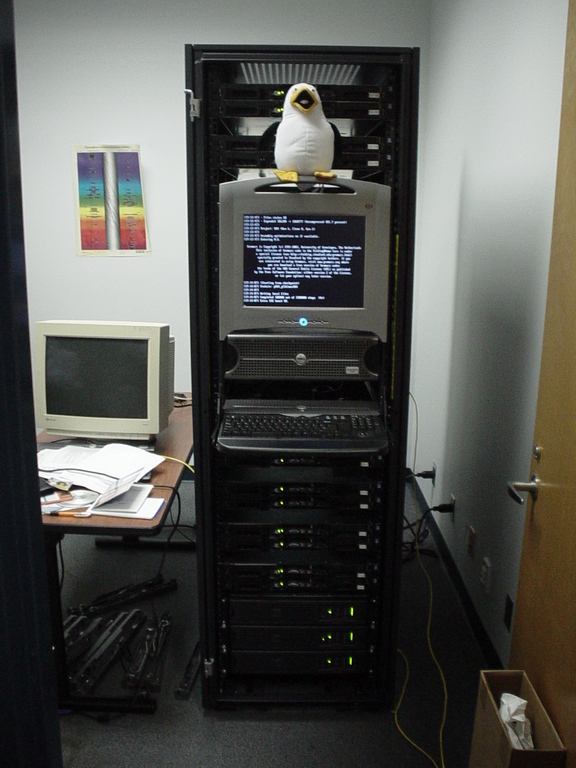
I have been an avid LJ reader for a couple of years now and always look forward to receiving my monthly dose of Linux news updates from you all. Here is a picture of a 72 processor Linux cluster install at Florida International University. On a funny note, I won the stuffed Tux out of one of those prize machines during a 4 AM run to Denny's on the last day of the install.
—
Jason Grimm
Reply to July “Vendor Troubles” Letter
Monarch apologizes for the inconvenience to the valued customer [Letters, July 2005]. We take pride in taking care of our customers. Upon receiving his contact info, we contacted him immediately and are pleased to say he has been taken care of to his satisfaction.
We checked our Web/voice-mail logs and found no trace
of receiving a message related to this customer's
problem, which is why there was not an immediate
response to the customer's inquiry. Monarch handles
over 250k customers a year, more than 700 per day,
and has the highest rating for customer service based
on volume at www.resellerratings.com;
unfortunately,
this one got through the cracks. We thank Linux Journal for bringing this to our attention.
—
Trey Harris
Monarch Computer, Founder
GIMP and nvu on Ubuntu
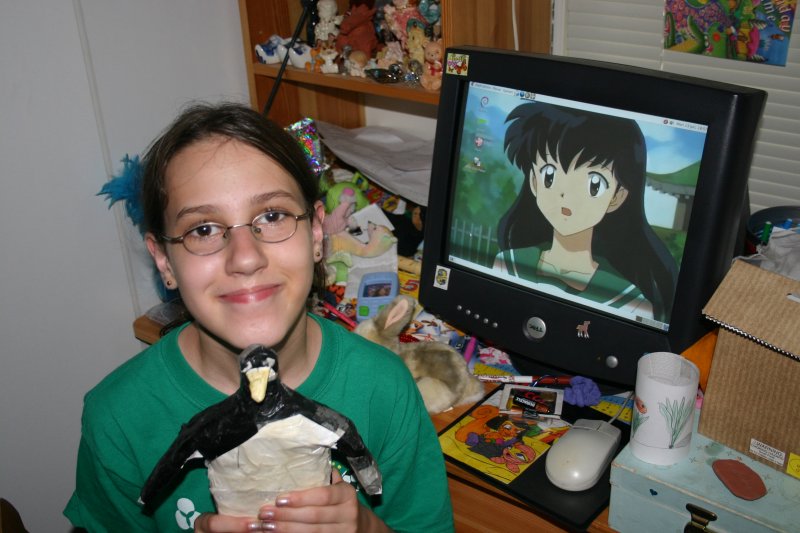
This photo is of my 11-year-old daughter Julia Meadows, who is happily using Ubuntu Linux. She enjoys working with the nvu Web authoring tool and is having fun learning GIMP. She is also holding her own personal penguin, from an art class project at school.
—
John Meadows
Multimedia Lock-in?
It appears that law-related issues are starting
to crack down on the Linux multimedia scene.
According to the MPlayer site, “Multimedia is a
patent minefield.” I would like to know where we (the
Linux people) stand with the patent rights and all the
other hub-a-baloo with DVDs and the like. I think the
Linux community would embrace such a writeup.
What direction do we see the “Multimedia scene”
going for Linux? Are we going to be out cold?
—
Darin Riedlinger
You can create your own media in patent-free formats you can use on any OS. See xiph.org for details. In the USA, the infamous Digital Millennium Copyright Act lets the non-Linux OS vendors lock in their customers with multimedia formats. Join eff.org to support legal reform to let people legally switch OSes without losing access to content they bought. —Ed.
