
Linux Quick Fix Notebook by Peter Harrison
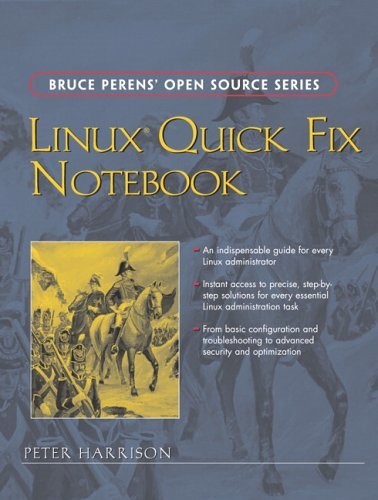
Peter Harrison's new Linux Quick Fix Notebook is the kind of book that all Linux professionals should have handy for times when they need immediate results. Harrison doesn't waste time explaining theory or concepts. Instead, he works off the assumption that if you need to build a DNS server, you already know what DNS is and how it operates.
The book covers topics ranging from configuring the boot process to building DHCP servers. Within each topic, Harrison jumps directly to what you need to do to get the application running right away. Although the directions and configurations are not always sophisticated, they are fully functional and technically correct. This approach of providing a starting point for a service and leaving the rest to the reader to configure is probably for the best, as each user has individual requirements.
The layout of the book is almost that of a FAQ. Each topic is covered within a few pages. Of all the computer books I own, this is the most direct and to the point when it comes to Linux configurations.
Harrison's writing style is clear and easy to understand. He manages to provide adequate detail on each step of a procedure without going overboard on details. Linux Quick Fix Notebook is suitable for all levels of Linux users. Novice Linux users will appreciate the ability to dive right in and begin setting up services. On the other hand, this book makes an excellent quick reference for the experienced Linux administrator who needs a little help remembering the proper steps to configure a particular service.
All in all, Linux Quick Fix Notebook has become one of my new favorite books on Linux administration. I've used it on several occasions at work, and it has yet to let me down.
