
New Products
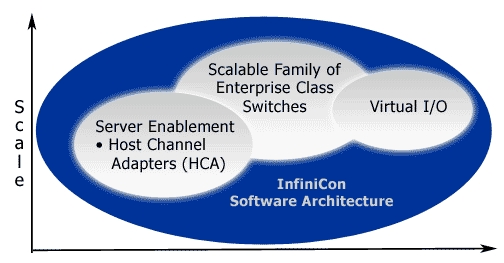
InfiniCon Systems released version 3.0 of its architecture for the InfiniBand-based hardware and software platform. The platform includes all host software, switch embedded software and InfiniCon's FastFabric tools, opening the architecture to enable the use of third-party tools and applications. The 3.0 software can be incorporated into server architectures that embed InfiniBand on the motherboard—either on servers or on blade platforms—eliminating the need for a Host Channel Adapter (HCA) to access the InfiniBand network. Release 3.0 also includes support for Linux 2.6, scalability to more than 1,000 node fabrics, Oracle certification, certification of additional commercial MPI packages, additional fabric reliability features, performance enhancements for InfiniBand and Ethernet protocols and additions to FastFabric tools for management needs.
InfiniCon Systems, 680 American Avenue, Suite 100, King of Prussia, Pennsylvania 19406, 610-233-4747, www.infinicon.com.
Mark 21 of the NAG Fortran Library includes more than 300 new functions, taking the total to more than 1,500 functions. New functions include a complete chapter covering mesh generation that incorporates routines for generating 2-D meshes with a number of associated utility routines. Extensions have been included for zeros of polynomials, partial differential equations, eigenvalue problems (LAPACK) and sparse linear algebra. The random number generation (G05) function also has been expanded to include a new random number generator, the generation of univariate GARCH, asymmetric GARCH and EGARCH processes, quasi-random number generators and generators for further distributors. The NAG Fortran Library is available for implementations ranging from PCs to supercomputers. Not restricted to a single environment, algorithms can be called from other languages including C++.
The Numerical Algorithms Group Ltd., Wilkinson House, Jordan Hill Road, Oxford OX2 8DR, UK, www.nag.com.
Wind River Systems announced the availability of Platform for Network Equipment (NE), Linux Edition. Platform NE supports the Carrier Grade Linux 2.0 specification and Linux 2.6 kernel technology for device software development. It also enables ATCA-based commercial-off-the-shelf (COTS) solutions for control and management applications in carrier grade network equipment. In addition, Platform NE provides access to a wide range of third-party runtime and tool vendors, as well as the Eclipse-based Wind River Workbench IDE to support the entire development cycle.
Wind River Systems, 500 Wind River Way, Alameda, California 94501, 800-545-9463, windriver.com.
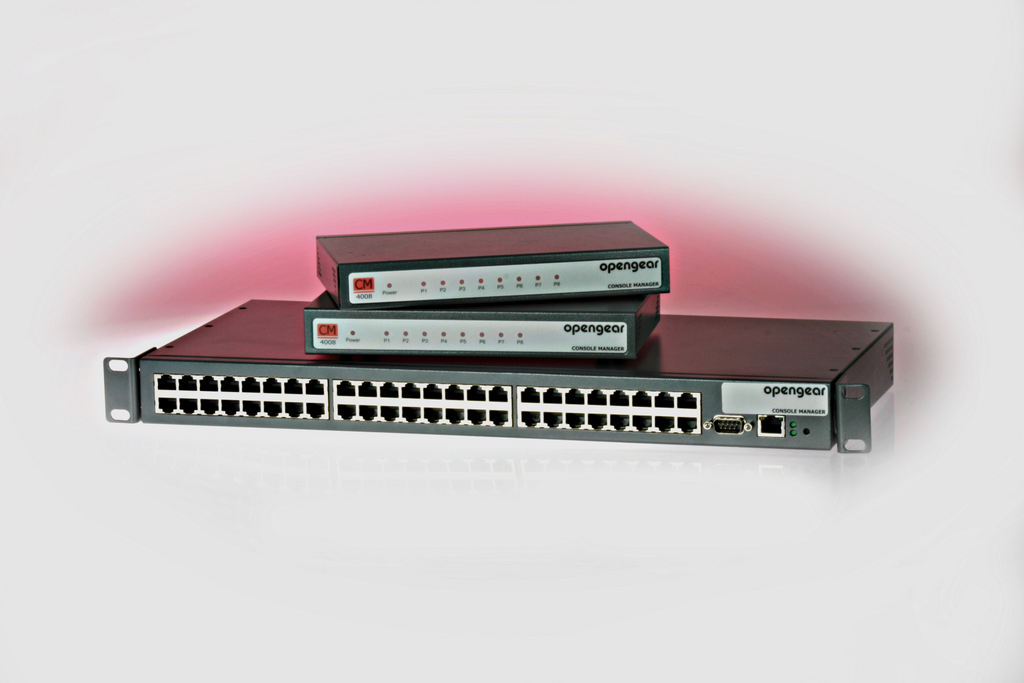
A new family of console servers is available from Opengear, Inc. The CM4000 serial console server comes in 8-, 16- and 48-port versions that enable control of serial consoles on Windows, Sun and Linux servers. Opengear's CM4000 products also can monitor and control network appliances, including routers, gateways, PBXes and power switches. Remote site servers can be accessed in-band through the enterprise TCP-IP network or directly through a dial-up modem port, both using up to 128-bit AES encryption. The Opengear CM4000 console server also provides filtering and access logging facilities, enabling console logs to be archived off-line. The CM4000s are built with the okvm open-source console and KVM management software, as well as open-source KVM hardware. Both Web browser and command-line management options are available.
Opengear, Inc., 7984 South Welby Park #101, West Jordan, Utah 84088, 801-282-1387, www.opengear.com.
The IBM eServer Application Server Advantage for Linux, also known as Chiphopper, combines support and testing tools that enable ISVs to develop cross-platform Linux products. Chiphopper is a no-charge offering that can be used to take existing Linux-on-x86 (Intel or AMD) applications and test, port and support those applications across all IBM systems. Chiphopper supports applications written directly to the operating system or written to middleware. For applications written directly to the OS, Chiphopper bases portability on the Linux Standard Base (LSB) specification. In addition, Chiphopper supports LSB applications that use open extensions including OpenLDAP, OpenSSL, Kerberos, PHP, Perl and Python. For applications using middleware, Chiphopper supports IBM's WebSphere, DB2 and Rational, providing Java, J2EE, Web services and services-oriented architecture open standards-based support.
IBM Corporation, 1133 Westchester Avenue, White Plains, New York 10604, www-1.ibm.com/linux.
