New Products
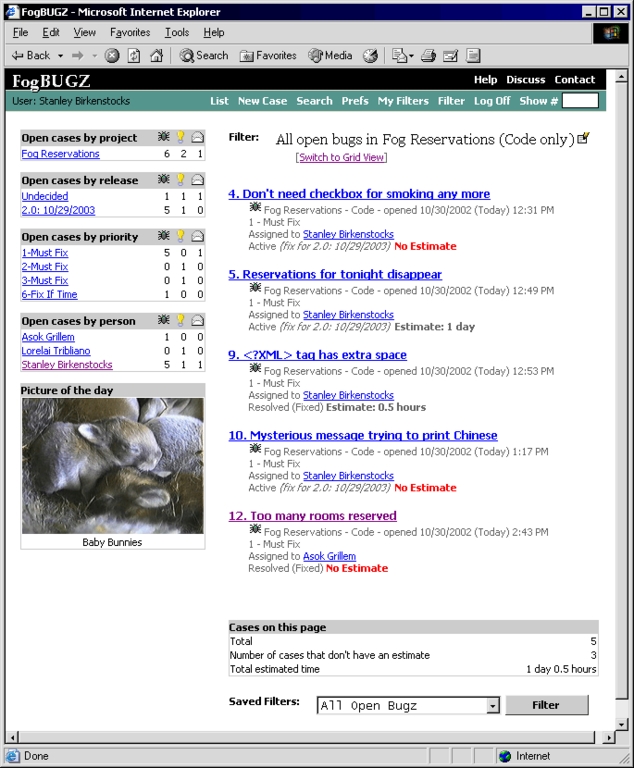
FogBUGZ 3.0 is a Web-based software project management system. Created to be a database of cases, which can be feature requests, traditional bug reports or customer e-mails, every case is assigned to one person who must resolve it or forward it to someone else. Cases can be prioritized, documented, edited, estimated, searched and more. Cases can be entered by e-mail or through the Web interface; there are no required fields, and anyone can edit a bug report. Screenshots, sample files and almost any type of document can be attached to a case in FogBUGZ, and Unicode is supported so bugs can be entered in any language. In addition, FogBUGZ can be integrated with source code managers, such as VSS, CVS, Vault and Perforce, and bidirectional links between check-ins and bugs may be maintained. FogBUGZ 3.0 for UNIX can run on Red Hat, SuSE, Mandrake, Debian and FreeBSD.
Fog Creek Software, 535 Eighth Avenue, 18th Floor, New York, New York 10018, 866-364-2733, www.fogcreek.com/FogBUGZ.
The Escalade 8506 Series Multi-lane Internal (MI) Connector RAID controllers are an integrated connector system that combines four SATA ports into a single connection on the controller side and a single connector on the backplane. The Multi-lane Controllers support up to 12 Serial ATA drives on a single PCI card, enabling up to 3TB of storage on a half-length card (dependent on drive capacity). Employing Escalade's StorSwitch switched architecture, the 8506-MI enables Serial ATA's point-to-point architecture performance of up to 1.5GB/sec per port. The MI Controller offers RAID 0, 1, 10, 5 and JBOD support and is 64-bit/66MHz PCI-compliant.
3ware, Inc., 455 West Maude Avenue, Sunnyvale, California 94085, 877-883-9273, www.3ware.com.
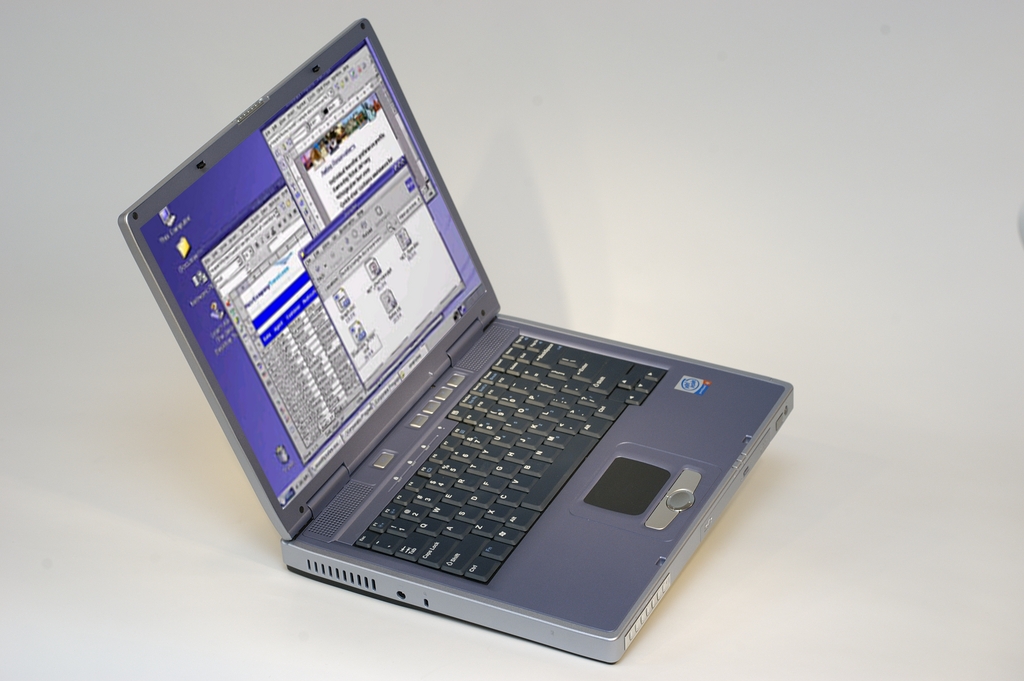
Tadpole Computers announced that it now is offering the Sun Java Desktop System on Tadpole's newest family of notebooks, the TALIN series. Tadpole notebooks offer users easy migration, integrated security mechanisms and the ability to maintain existing UNIX, Java and Linux applications while interoperating with office documents and back-end services. The Java Desktop System includes GNOME, StarOffice, Mozilla, Evolution, Java 2 Platform and a Linux OS. TALIN 15, now available, has a P4 processor with speeds of up to 3.0GHz, 128MB to 1GB of SDRAM, a 15" SXGA+ screen, 3-D graphics support and integrated Wi-Fi. Other TALINs to be released include the 100X, weighing 3.5 pounds, and a 17" screen model.
Tadpole Computers, Inc., 20245 Stevens Creek Boulevard, Cupertino, California 95014, 800-734-5483, www.tadpolecomputer.com.
Roku, maker of the HD1000 high-definition digital media player, recently released a software developer's kit (SDK) for the creation of media applications for high-definition television. The Roku SDK allows developers to create applications for the Roku HD1000 in the C and C++ languages. Developers can use the SDK to access television-centric user-interface elements, media streaming, network and memory card access and device control. In addition, custom installers can control the Roku HD1000 without the SDK by using simple ASCII control commands. The HD1000 is completely controllable from the serial port, Ethernet port or scripts running on the device. The SDK is available for download at www.rokulabs.com/developers.
Roku, 399 Sherman Avenue, Suite 12, Palo Alto, California 94306, 866-400-7658, www.rokulabs.com.
Zultys Technologies' LIPZ4 is a freely available software phone that allows users to make and receive phone calls from their computers, without the need for telephone handsets. Based on open standards, the LIPZ4 is compatible with any IP telephony system using Session Initiation Protocol (SIP). It supports four call appearances, instant messaging, hold, transfer, forward, redial and many other features. The LIPZ4 can store the last 32 incoming and outgoing phone numbers. Additional features, including conferencing, compression (G.729) and backup server specification, are available by purchasing a license from Zultys. The advanced encryption standard (AES) is used for network security. LIPZ4 can be downloaded from www.lipz4.com.
Zultys Technologies, 771 Vaqueros Avenue, Sunnyvale, California 94085, 408-328-0450, www.zultys.com.

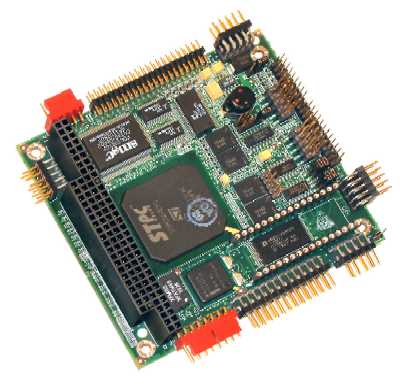
Ampro's CoreModule 420 PC/104 SBC is a migration product designed to keep 486-based embedded systems in production through 2010. The I/O addresses and IRQ mappings allow it to be configured to match many legacy system setups. In addition, the memory hole is configurable for legacy PC/104 peripheral cards. The CoreModule 420 supports four serial ports (two for RS-485), along with eight general-purpose I/O (GPIO) pins, an EPP/ECP parallel port, one USB 1.1 port and a high-resolution 2-D video controller with CRT. Interfaces are provided for PS/2 keyboard and mouse, floppy and Ultra/DMA 33 IDE disks, 10/100BaseT Ethernet and TFT flat panels. CoreModule 420 provides 64MB of soldered SDRAM, along with a byte-wide socket for a DiskOnChip 2000 bootable Flash drive and a Type II CompactFlash socket.
Ampro Computers, Inc., 5215 Hellyer Avenue, Suite 110, San Jose, California 95138, 800-966-5200, www.ampro.com.