
New Products
OpenOffice.org has released version 1.1 of its office suite for Linux, Windows and Solaris in a variety of languages, including English, German, Swedish, Spanish and Japanese. New features for version 1.1 include native, one-click PDF export, Flash export, a faster load time, improved MS Office file compatibility and accessibility support. In addition, support for AportisDoc, Pocket Word and Pocket Excel has been added for easier transfer of documents to PDAs and handheld devices. OpenOffice.org 1.1 also offers an open, future-proof XML file format, which allows users to avoid file format lock-in situations. The suite and its source code can be downloaded from www.openoffice.org/dev_docs/source/download.html.
OpenOffice.org, www.openoffice.org.
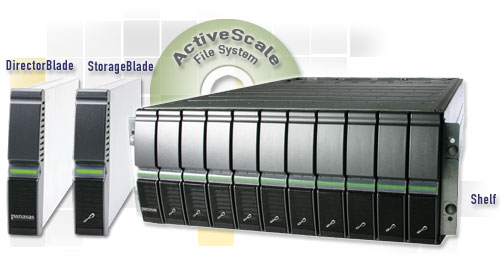
Employing an object-based architecture that manages data as large virtual objects, the ActiveScale Storage Cluster is comprised of the ActiveScale File System, StorageBlades and DirectorBlades, a 4U system shelf and an integrated gigabit Ethernet switch. The ActiveScale File System turns files into smart data objects and then dynamically distributes data activity across the StorageBlades. This design enables parallel data paths between servers and StorageBlades, eliminating performance and capacity bottlenecks. Application and user data is stored in the StorageBlades, and filesystem activity is coordinated by the DirectorBlades. DirectorBlades also virtualize data objects across the range of StorageBlades so the system can be viewed as a single namespace.
Panasas, 6520 Kaiser Drive, Fremont, California 94555, 510-608-7790, www.panasas.com.
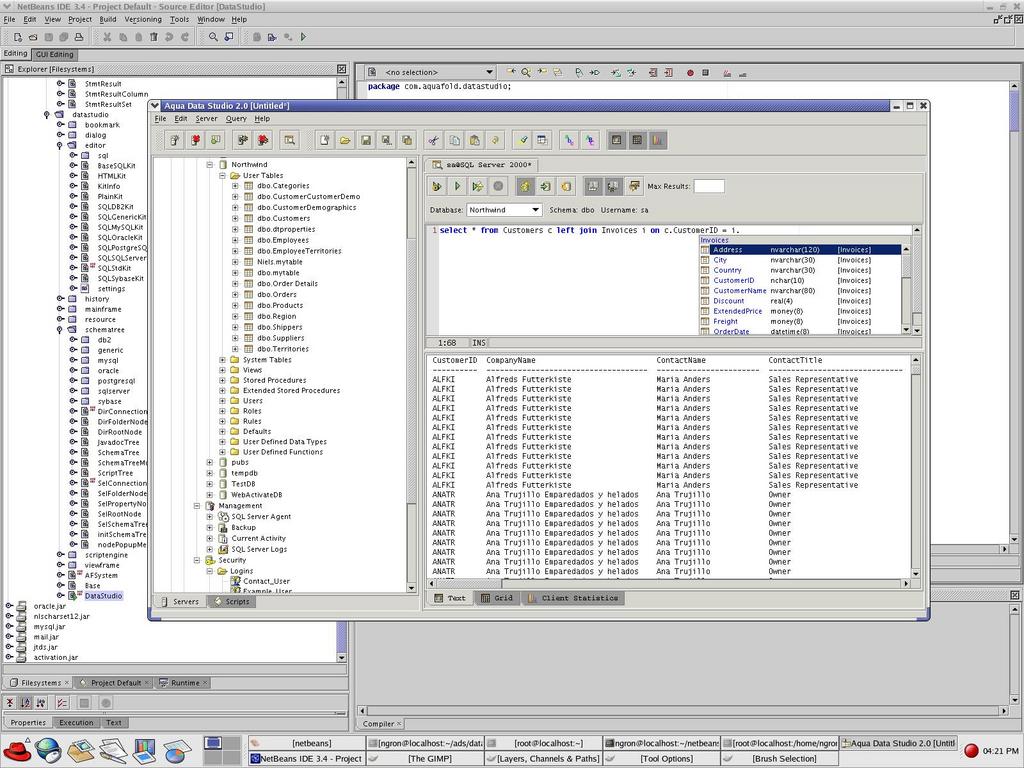
Aqua Data Studio 3.5 is a database query and administration tool that allows developers to create, edit and execute SQL scripts, as well as browse and modify database structures. Aqua Data Studio provides an integrated database environment with a single consistent interface to all major relational databases. This allows the database administrator or developer to tackle multiple tasks simultaneously from one application. Aqua Data Studio includes support for such database platforms as Oracle 8i/9i, IBM DB2, Informix Dynamic Server, Sybase Adaptive Server, Microsoft SQL Server, MySQL and PostgreSQL. New features for version 3.5 include complete schema extractions, SQL scripting of database objects and expanded Query Analyzer options.
AquaFold, Inc., www.aquafold.com.
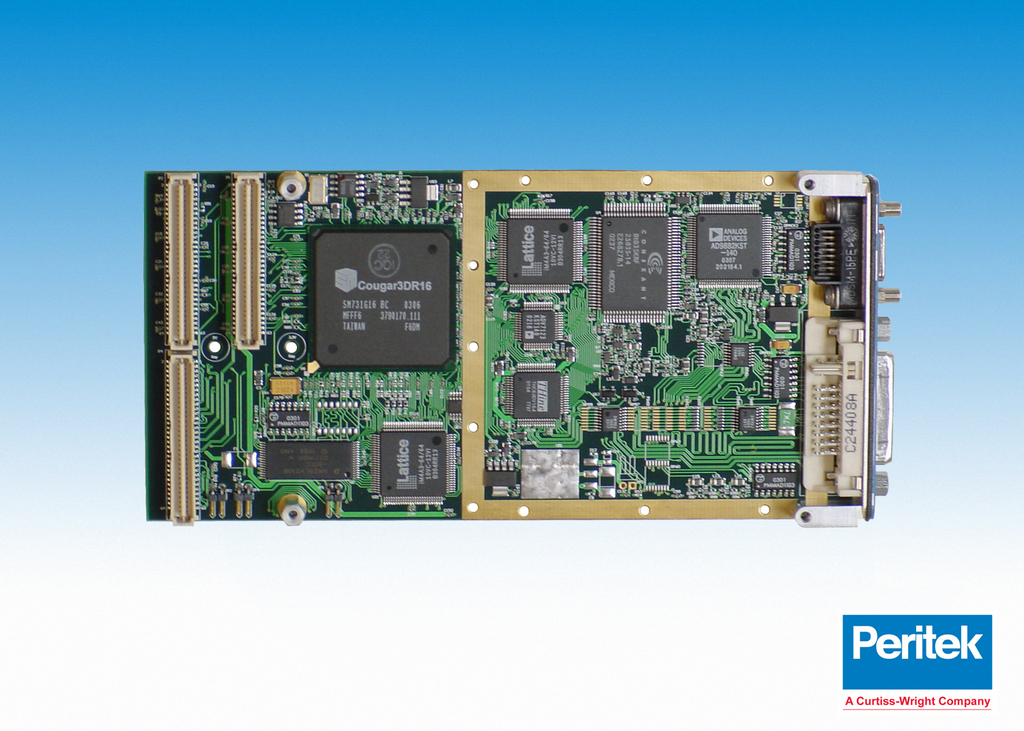
The Stratus/PMC is a dual-head graphics controller PMC card designed for use in VME and CompactPCI embedded systems. It features a 128-bit graphics module for video capture with analog/digital I/O. Stratus/PMC's two display channels simultaneously deliver dual VGA or LVDS outputs or a single DVI output. Using the Silicon Motion SM731 graphics accelerator, Stratus/PMC supports single displays at screen resolutions up to 1600×1200×24bpp (with 16.7 million colors) and dual displays at 1024×768×24bpp. It also has an onboard 33/66MHz, 32-bit PCI interface; 16MB of SDRAM on-chip; composite and S-Video PAL/NTSC/SECAM support; and field-programmable VGA BIOS EEPROM. Stratus/PMC offers support for VxWorks, XFree86 and Microsoft Windows.
Peritek, 5550 Redwood Road, Oakland, California 94619, 800-281-4567, www.peritek.com.
Xybernaut has announced the release of ServicePoint, a mobile mini-server that is configured and shipped as a mobile application services platform. ServicePoint can function as a mobile or even wearable mini-server to direct information and application services to various devices and users over a wireless or wired network. Shipping with Red Hat Linux Professional Server, ServicePoint devices include a 500MHz Mobile Celeron Ultra Low Voltage Memory and Storage processor, 256MB of SDRAM, 5 or 10GB internal expandable hard drives, optional external drive ports, CompactFlash and USB ports, 8MB of SDRAM and a built-in sound card for full-duplex, stereo I/O.
Xybernaut Corporation, 12701 Fair Lakes Circle, Suite 550, Fairfax, Virginia 22033, 703-631-6925, www.xybernaut.com.

Adlink's new embedded computer series, the General Embedded Machine Engine (GEME), is designed for measurement, automation and communication needs. GEME combines an embedded SBC and power supply unit with optional storage peripherals, such as CompactFlash or a 2.5" hard drive. Featuring multiple mounting schemes, the modular chassis design allows one PMC and multiple PC/104 modules to be added. GEMEs come in three base configurations, all featuring low voltage, fanless processors and various extension modules, including video capture, gigabit Ethernet interface, remote I/O, serial communications and 64-channel DI/DO.
Adlink Technology America, Inc., 15279 Alton Pkwy., Suite 400, Irvine, California 92618, 949-727-2077, www.adlink.com.
RackSaver and AMD have collaborated on the new NemeSys 64-Bit Digital Audio Workstation (DAW64), which features AMD's 64-bit Opteron processor. Designed for digital audio processing, editing and mastering needs in a studio environment, DAW64 is a 4U rackmountable system with dual Opteron processors, 4GB of RAM, four 36GB Raptor SATA hard drives, a 3ware RAID controller and an NVIDIA Quadro 4 380XGL graphics card. The 64-bit address spaces provide users with direct access to virtual instruments and music libraries in physical memory, eliminating the need for distributed content on multiple workstations.
RackSaver, Inc., 9449 Carroll Park Drive, San Diego, California 92121, 858-874-3800, www.racksaver.com.
