New Products
Atmel Corporation announced the availability of a Linux port for its AT91RM9200 microcontroller and its ARM9 core-based ASICs. The port consists of the 2.4.19 kernel, the ARM9 Linux adaptation maintained by the ARM Linux support team, a kernel patch for the advanced interrupt controller and system timer, and a set of AT91RM9200-specific drivers. The port also includes a minimal RAM disk that contains the most frequently used commands. In addition, a development kit is available that contains the port, the U-Boot loader utility and the GNU toolchain in source and binary forms.
Atmel Corporation, 2325 Orchard Parkway, San Jose, California 95131, 408-441-0311, www.atmel.com.
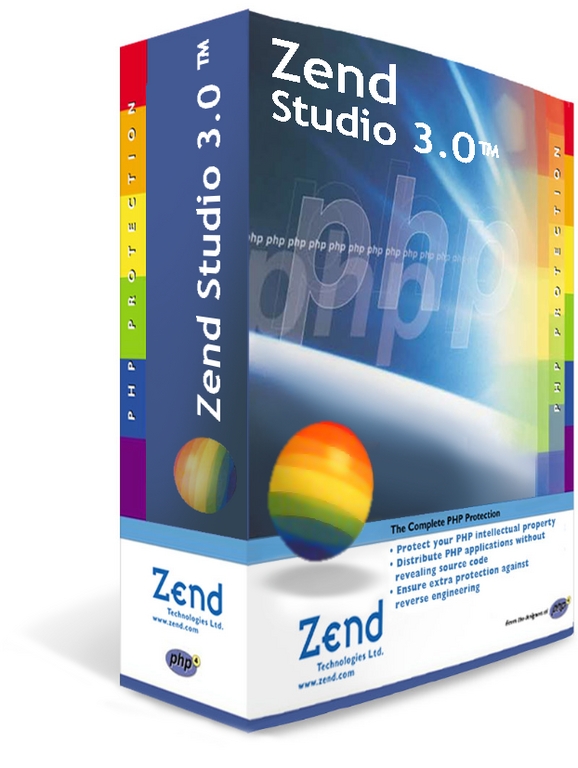
The Zend Studio 3.0 IDE now is available for Web developers building mission-critical applications in PHP, JavaScript and HTML. Zend Studio 3.0 supports PHP 5 and offers increased performance speeds and improved project management tools. Version 3.0 also has new code debugging tools, including a remote debugger that provides developers with a debug URL so they can debug directly from a browser. In addition, version 3.0 includes a Code Profiler, which tracks down pieces of the application that are slowing down the project, and a Code Analyzer, which analyzes static source code to reconcile problems. Other new features include improved XML integration, advanced code completion, customizable key maps, full version management and FTP integration.
Zend Technologies Ltd., PO Box 3619, Ramat Gan, Israel, 52136, 877-936-3747, www.zend.com.
QVISION version 2.0 is a real-time, view-based network monitoring tool that provides visibility into all the activities on networks, connected systems and applications. QVISION resides on the network at the Internet connection and inside the network, monitoring traffic flows and detecting unnatural network patterns. New features for QVISION 2.0 include a behavior view, a non-signature-based method of exposing network, policy and security issues based on equations linking event properties in real time; intelligent alerting, triggers set off by specific predetermined behaviors; and selective application content capture, a tool that allows users to configure the desired level of content capture.
Q1 Labs, Inc., 15 Piedmont Center, Suite 1040, Atlanta, Georgia 30305, 877-471-5227, www.q1labs.com.

Western Digital released a new version of its serial ATA (SATA) 10,000RPM WD Raptor hard drives. The new Raptor drives offer 74GB of storage capacity, Ultra/150 Command Queuing (CQ) technology and Rotary Accelerometer Feed Forward (RAFF) technology. Raptor drives are designed for enterprise-level specifications, with 1.2 million hours of mean time between failures, 10,000RPM, an average of 4.5ms seek time and a five-year warranty. Ultra/150 CQ technology optimizes the sequence of data transfers between the host and hard drive for increased transfer efficiency. RAFF technology maintains hard drive performance in high-vibration environments. In addition, the Raptor 74GB drive utilizes fluid dynamic bearings to reduce noise and increase reliability.
Western Digital, 20511 Lake Forest Drive, Lake Forest, California 92630, 949-672-7000, www.westerndigital.com.

A new board support package (BSP) from Metrowerks is designed to help developers create embedded applications powered by Motorola's PowerQUICC III processor. The Metrowerks BSP is tested and configured for use within a fixed configuration for specific hardware reference platforms. It includes an embedded Linux kernel, a GNU debugger and toolchain, a runtime environment and a complete set of device drivers and libraries for PowerQUICC III processors. Aimed at the networking and communications markets, the BSP works with Metrowerks' Platform Creation Suite, a management tool that helps developers customize Linux for embedded devices.
Metrowerks, 7700 West Parmer Lane, Austin, Texas 78729, 512-996-5416, www.metrowerks.com, sales@metrowerks.com.
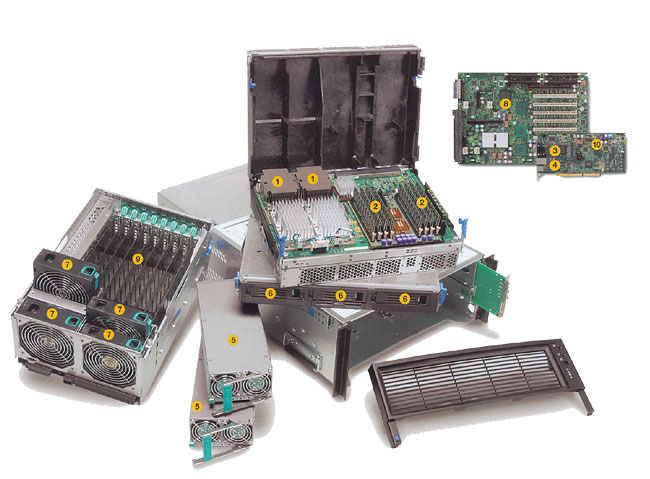
Aspen Systems announced the release of two new systems based on the Itanium 2 processor and targeted at the high-performance computing (HPC) market. The Aspen Systems Glacier Dual Itanium 2 system has a 1.4GHz processor and 1.5MB of L3 cache. Based on the SR870BH2 Intel server platform, this system is available in a 2U rackmountable form factor. The second system is based on the Low Voltage Itanium 2 processor and comes in 2U and 4U rackmountable form factors. Its processor has a 1.0GHz core clock frequency and 1.5MB of L3 cache. Both systems have low power consumption, reducing the cost of scalability.
Aspen Systems, Inc., 3900 Youngfield Street, Wheat Ridge, Colorado 80033, www.aspsys.com.
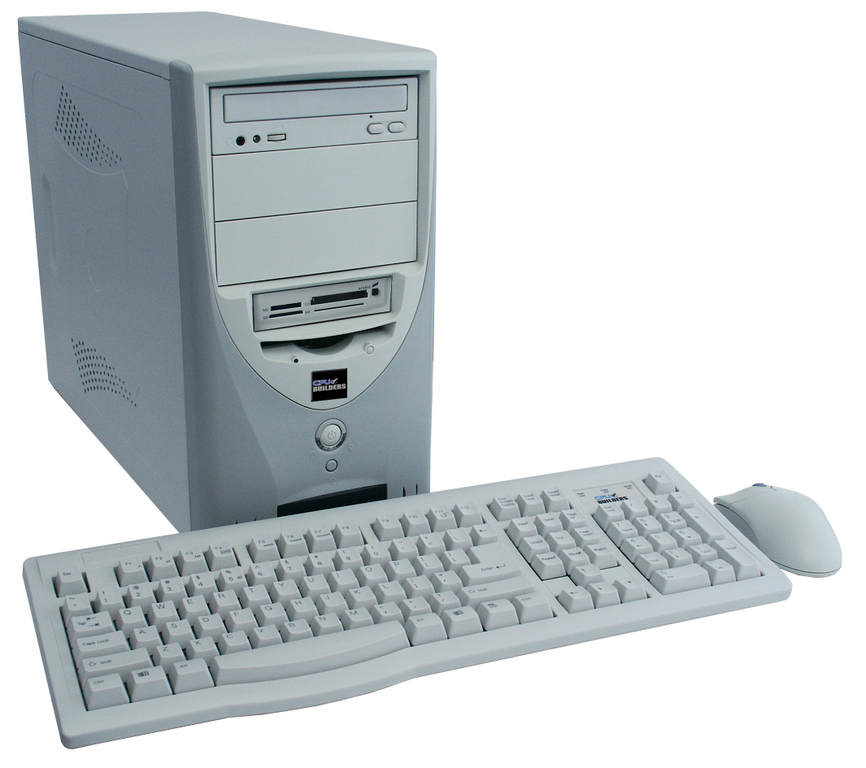
CPUBuilders released a new control panel, Cognitio, with its Linux for Everyone v 3.0 systems, which are available through Sam's Club and the CPUBuilders Web site. The Cognitio control panel is designed to handle ease-of-use issues relating to Linux-based hardware and software. It allows users to add plug-and-play devices, CD writers, hard drives, scanners and USB storage. Also new in v 3.0 Linux for Everyone systems are USB 2.0, faster processors, DDR memory on all models and USB 6-in-1 card readers. In addition, 3.0 systems feature one-click software updates, automatic monitoring tools for network and Internet connections, automatic network file-sharing access points and documentation for new Linux users.
CPUBuilders, 316-315-0300, www.cpubuilders.com, support@cpubuilders.com.