
The Practice of Network Security by Allan Liska
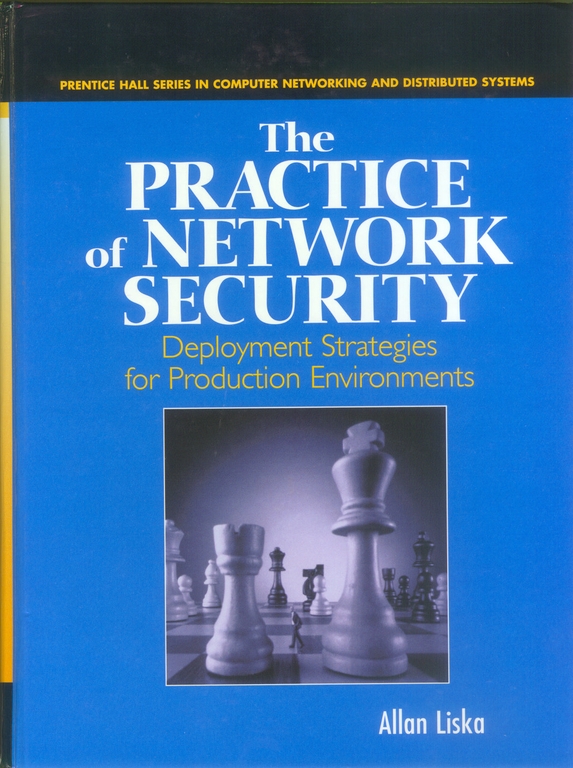
Three years ago, the lead network technician on my campus network spent 95% of his time installing, configuring and tweaking network-attached devices. Today, he spends 95% of his time securing them. The field of network security is large, and security is a tough job. It also can be next to impossible to stay current with all the latest developments, let alone track all the vulnerabilities, patches, alerts, incidents and attacks. So, Allan Liska's book on current network security practice is welcome, indeed.
The central dogma of the book is the organization of a security policy on a series of fronts that when implemented in their totality provide “layers of protection” against attackers. This is excellent advice. Liska also drums home the message that network security has to be a priority for the entire organization, not only the IT department or network administrator. Without the involvement of the organization, the resulting security policy is sub-optimal at best and next to useless at worst.
After setting the scene in his opening chapter, Liska discusses organizing your network security practice around an established security model. RFC 2196, Cisco's SAFE and ISO 15048 are surveyed before Liska recommends CERT's OCTAVE as the model to get you started, citing that it offers the most flexibility.
Liska then devotes a chapter to the various classes of network technologies that need to be protected. There's specific material relating to routers, switches, authentication/authorization services, RAS/VPNs, wireless WAN/LANs, firewalls, intrusion detection systems and the use of a demilitarized zone (DMZ). The advice in the DMZ chapter is presented well and is some of the best material in the book. One of the longest chapters deals with server security, and it is followed by chapters relating to securing DNS and workstations. The later chapters of the book are concerned with the management of network security, including such topics as SNMP deployment, monitoring, logging and incident reporting.
Chapter 15 presents the author's Top 10 Security Mistakes. This is a great list and includes items such as “over reliance on a firewall” and “failure to follow through”. If you can work through the list and state that none of the mistakes apply to your organization, you are in great shape. If you cannot, you have some work to do.
It would be reasonable to think that a book on security strategy would ignore the details, but that is not the case with this book. Most of the time, Liska manages to strike the right balance between talking strategy and providing the all-important details. On occasion, though, too many or an inappropriate amount of details are provided. This is especially true of the IPSec packet format diagrams in Chapter 7.
The quality of the diagrams themselves is one of my biggest complaints, as some diagrams are referenced incorrectly in the text (pages 116–118), have typos on them (page 129) or are too dumbed-down to be of real use (page 125). Some are simply useless, with the diagram on page 132 being a particularly bad example. And I do have a problem with some specific advice. For instance, I don't agree that “all things being equal, a dynamic routing protocol used with proper security precautions will be more secure than a static routing protocol” (page 75).
By and large, though, this book is well put together and is a good overall survey of a fast-moving field. If you are new to the network security game or have inherited responsibility for your organization's network security and are wondering where to start, this book points you in the right direction. If you are a seasoned administrator, this book has less to offer.
As a final comment, I am pleased to report Liska's consistent use of the term attacker to refer to the bad guys, as opposed to the confusing cracker or the just plain wrong hacker, which has been hijacked by the popular press and consistently is used incorrectly when referring to the bad guys. Attacker avoids any confusion and is, in my opinion, the correct term to use when talking about IT security.

