
Upfront
Folks waiting for LVM1 to be fixed in the kernel can stop waiting. It's been removed, after six months of sitting in an unmaintained, broken state. Joe Thornber posted the actual patch to take it out. This seems to be part of a general “let's get cleaned up for 2.6” push. There was talk on the mailing list of replacing the code with LVM2, Device Mapper (DM) or even EVMS. None of these were universally hailed as the obvious choice. DM had a lot of missing features, while EVMS had too many available ones. There was even some talk of trying to fix LVM1 instead of pulling it out—or at least of finding a suitable replacement first. So far, EVMS looks like the prime candidate for 2.6, but it's still too soon to say.
At the Ottawa Kernel Summit it was agreed that driverFS would be changing its name, and patches have begun appearing to do exactly that. The only problem is no one can agree on what the new name should be. Patrick Mochel wants “kfs”, but others say that single-letter-plus-fs is getting to be a cluttered namespace. H. Peter Anvin has suggested “kernelfs” or simply “kernfs”. About the only thing that's known so far is the name will change.
Support has been added for the NEC PC-9800 architecture, a popular architecture in Japan that is roughly the equivalent of the Intel-based PC in the West. Traditionally, it has run ported versions of MS-DOS and Microsoft Windows, although it has never been fully “IBM-compatible”. With 40-50% PC market share in Japan, these patches open Linux up to a huge number of people who previously may not have had access to it.
Jeff Dike's User-Mode Linux now has SMP support. Up until now, regardless of the number of CPUs on your system, UML processes were entirely uniprocessor. Among other things, this meant that testing SMP software (particularly the kernel itself) under UML was not going to get you much. This new advance opens the door for speedier testing of various applications that otherwise would require many lengthy reboots, possibly accompanied by filesystem corruption.
The ioctl interface is now deprecated. New drivers should create a filesystem-based interface with libfs, newly included in the 2.5 tree. I/O control functions have been condemned for years as an unmaintainable, undocumentable, ever-growing mess, but for a long time there was no way around it. Now at last, Linux developers can use an interface that makes sense—one that won't cause more trouble than it's worth.
The kernel went into feature-freeze on October 31, 2002. It's much too soon to tell if this will lead to 2.6 in a reasonable amount of time, or if events will lead back to a period of rapid development with no end in sight. Linus Torvalds and others have been struggling for a while to bring the kernel rev-time into a reasonably short time frame, but the time between stable series is still measured in years. If we see 2.6 before April 2003, it will be a major achievement in the development of the development process itself.
—Zack Brown
Wi-Fi (802.11 wireless Ethernet) access points have been around for a while. But most of them allow rather limited programmability, especially if you want to make a business out of selling customized ones.
Chipset maker Intersil (www.intersil.com) has walked into this marketplace and taken care of the opportunity problem by introducing a new self-hosting access point reference design called PRISM AP. What makes it so marketable is its operating system: embedded Linux. PRISM AP comes with a whole Linux development environment on which you can run a web server, a DHCP server, DHCP client and SNMP server, among other things.
Because the OS is Linux, you can customize units for your own uses or develop whatever product you like—VPN gateway, bridge, router, mesh network, whatever—and burn the code into Flash memory. Then you can sell it without worrying about licensing costs.
In other words, it's hard to imagine anything more equally hackable and marketable, or in more different ways.
—Doc Searls
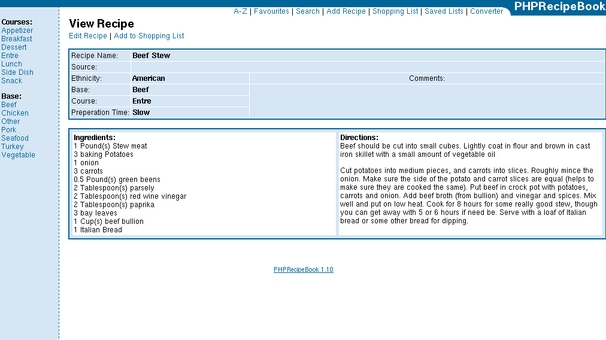
PHPRecipeBook: phprecipebook.sourceforge.net
If you need to keep a recipe book, this is the ticket. You can input ingredients and the preparation process and save it. When you decide you want to cook something, the program can generate a list of ingredients in a shopping list and you can print it out. Now, if you could just ship it off via the Web to a local grocery store and have the ingredients delivered, you wouldn't even have to leave the house. Unfortunately, recipes are not included. Requires: web server with PHP and SQL (PostgreSQL or MySQL) support, SQL server and a web browser.
—David A. Bandel
Techtables: techtables.sourceforge.net
This particular trouble ticket and asset tracking system is a little different from some others. It deals fairly exclusively with trouble tickets and assets, not so much with clients and the the rest. Depending on your needs, this might fill the bill nicely. Installation and use is simple. If you need to protect anything, you'll need to implement htpasswords and/or secure web support (easily done). Requires: web server with PHP and SQL (PostgreSQL or MySQL) support, SQL server and a web browser.

—David A. Bandel
HP is talking about how HP-UX will be able to run Linux applications; so is Sun with Solaris. ISVs are going to be asking themselves, “Why should I bother to develop for a specific UNIX if I can develop for Linux and it will run on almost all UNIX platforms?”
—Dan Kusnetsky
Middleware? I think it's something that sits between something that's useful and something you can understand.
—David Sifry
You need 64-bit support; you need terabyte filesystems. IBM says the Open Source community will tackle that. I don't think so. Somebody's got to build that.
—Jonathan Schwartz, Sun Microsystems
[See page 44.]
