
Soldier of Fortune for Linux

Manufacturer: Raven Software
E-Mail: sales@lokigames.com
URL: www.lokigames.com
Price: $29.99 US
Reviewer: J. Neil Doane
Looking at the Soldier of Fortune box, I was initially struck by the number of warning labels visible, each proclaiming such things as “Violent Subject Matter” and “Animated Blood and Gore”. And who can forget “Low-Violence Installation Option Included”. Inside, the CD-case itself was also littered with these warnings; clearly, this game has some self-esteem issues. Without reading the manual, I loaded up the software, started the game and was met with the main menu screen. Yet even more warnings here (I was up to about nine at this point), including a scrolling text window at the bottom of the main menu whose message informed me of the game's “MA” rating and even how to access the parental controls in an appropriate menu. The net effect of all these warnings was perhaps the opposite of their intention; I felt a distinct urge to see what the heck these people were going on about.
I started up the first level. After a short introductory movie, I was in the thick of it, heading down a hallway to stop some terrorist bad guys and free their hostages. About three steps into the hall, the first bad guy swung out, leveling his pistol at me. I aimed the shotgun for a leg shot, hoping to be a nice guy. Boom! The shot cleanly REMOVED his leg and blew the detached portion a few feet behind him, leaving not only a bloody stump with an exposed femur and jetting arterial spray, but also producing a terrifically realistic scream of pain and agony from my would-be assassin as he slid to the floor clutching his bloody stump and literally moaning for a few moments before his virtual life ended. I leaned back away from the keyboard slightly with an audible, “whoa”. After a short pause, a slow grin crept across my lips. “This is going to be interesting.” Indeed it was.
The story for Soldier of Fortune is a sort of evil twist on the Rainbow Six story line. You're John Mullins, a mercenary of the highest caliber (no pun intended), who works on the darker side of the counter-terrorism world. You're on the team the good guys call when they want their dirty deeds done dirt cheap. The bad guys, a fanatical terrorist organization hell-bent on mass destruction, have seized some nukes. Soldier of Fortune takes you on a series of missions against this organization and its leader to recover or destroy the nukes before they can be used against the world. Each mission is worth a specified amount of money, payable upon successful completion and leads to the next mission in some way, perhaps giving clues about where the next mission should be, etc.
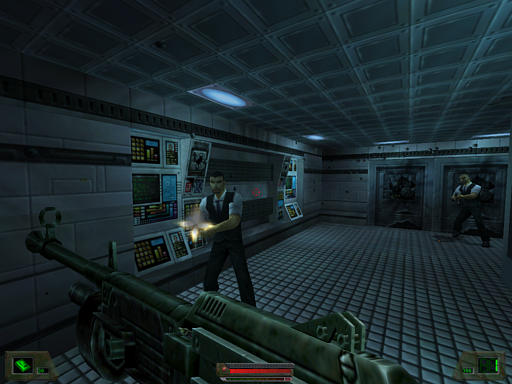
Figure 1. Your Partners: “Hawk” Parsons and Sam Gladstone
Unfortunately, as much as this description would seem to indicate that there is a fluid plot with specific goals, pieces to fit together and money to earn and accumulate, there really isn't. The plot itself is about as deep as a Dr. Seuss book and only randomly seems to interject coherent story line ties. The good news is that it's okay. It's a first-person shooter; we don't expect much of a plot, just a clear shot to the next bad guy and a general sense that we're getting somewhere. I admit, I kept waiting for the “hook” in the story line, the weird twist at the end that would have made it all the more interesting. When it did predictably arrive, it was a letdown, mainly because of the lack of plot development leading up to it. The aspect that you're getting paid for all this killing only enters into the game in the most tangential of ways, and no matter how much you make, you really don't get anything from the cash that you wouldn't get normally. You either win the mission and get the cash, or you play the mission until you win the mission and get the cash so you can continue to the next mission. Again, the good news is that once you start playing, the game is fun enough that you don't care.
Soldier of Fortune is, if nothing else, rather detailed in the blood-n-gore department. It uses Raven's proprietary rendering system, appropriately called GHOUL, to deliver what Raven calls “Bolt-on Gore”. Using GHOUL (which also provides a number of lighting, texture, network and modeling enhancements) Soldier of Fortune's programmers were able to create individual characters that can react differently based on weapon impacts in any of 26 discrete “Gore Zones”. Shoot someone in the foot, they hop around for a moment yelping in pain. Shoot someone in the throat, they grasp at their throat, gurgle, and fall to the floor. They don't always die, however. I walked around one room for five minutes trying to figure out where a soft slurping sound was coming from only to find that one of my targets was on the floor, alive, yet gurgling softly through a hole in his throat. Nice touch. You can even shoot the gun from someone's hands if your aim is good enough. Parents fear not; all the really nasty stuff in Soldier of Fortune can be controlled via the parental controls by disabling and password-protecting such things as Damage Skins, Blood, Death Animations, Dismembered Limbs (my favorite) and so-called Adult Textures (which mainly deals with the adult language used in the dialogue subtitles.)
Though the gory details are very cool, gamers expecting Rainbow Six-type combat reality are likely to be disappointed with the rather Quake-like feel of the rest of the game. Soldier of Fortune actually runs on a slightly hacked version of the Quake II engine, and you can feel some of that old blockiness in the game environment. However, Raven has done some really nice work in creating interesting levels, and some especially sick and twisted levels. Most levels are littered with the typical “unlikely FPS props” such as doors that open with the push of a big red button, first-aid boxes or conveniently located ventilation system crawl spaces. The feel of the game is a bit Duke Nukem-like (you'll see yourself twirling a gun on your finger casually as you walk along, for instance) and even at moderate levels of difficulty, the level of combat proficiency of the AI characters you fight could probably be eclipsed by that of a two-year-old in a temper tantrum. That said, all these aspects actually work in concert to make a first-person shooter that is, quite simply, incredibly fun to play.
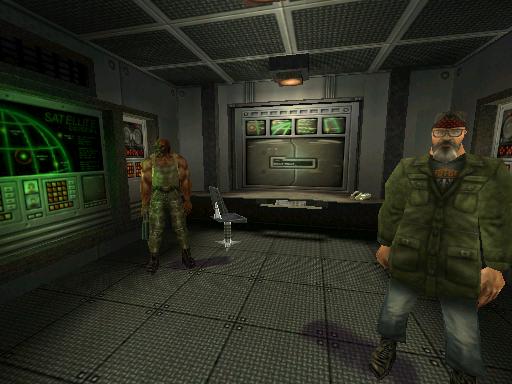
Figure 2: Infiltrating the Suni Secret Research Lab
I found the multiplayer environment to be great entertainment. Soldier of Fortune's multiplayer games betray its Quake heritage and no cooperative multiplayer modes exist. The favorites are there, like standard Deathmatch and Capture the Flag, along with a couple new types: “Arsenal” where random weapons are assigned to you by the computer and you must score a kill with each of your weapons; “Assassin” where you must kill a specific player and defend yourself against players who are assigned to specifically kill you; and “Realistic”, a multiplayer type where weapons do realistic damage to arms and legs, and medkits repair specific body parts (fixing your legs so you can run again, or your arm so you can aim again, etc.). Like Quake, SOF's multiplayer mode seems to warp space and time, shrinking what originally appears to be a long, boring evening into a short series of endless multiplayer levels and countless virtual homicides.
Loki, as usual, did a spectacular and totally seamless job porting Soldier of Fortune to Linux. SOF does require a 3-D accelerated video card and uses Mesa/OpenGL to support 3-D hardware acceleration. Loki lists the Voodoo Banshee, Voodoo2, Voodoo3, G200, G400, RIVA TNT and TNT2, and the GeForce 256 as supported chip sets. I had no real difficulty getting the software to install cleanly on a standard VA Linux Systems 6.2.3 load (a Red Hat 6.2-based system) with a Matrox G400, or on my Debian (woody) system with the XFree4 CVS tree and a GeForce GTS. The footprint of the install is a bit hefty (about 700MB for the full install, which is the only option) and comes with both text and graphical install modes. Loki's minimums include glibc 2.1, a 2.2.x series kernel and an OSS-compliant sound card and driver. Obviously, if you want multiplayer games, you'll need a network card and either TCP/IP or IPX support (for LAN games) enabled in your kernel. Joysticks are supported. Minimum box hardware, according to Loki, is 64MB RAM, and a Pentium II processor; I had very nice performance on both a 400MHz PII and a 550MHz PIII, each with 128MB system RAM.
I'd have to say that I totally dig Soldier of Fortune. It's fun. It's got character. It's definitely not afraid to get in your face. Most of the things I found lacking in it also are the things that make it such a great first-person shooter game. Did I mention how fun it is? If you're looking for some middle ground between Quake and Rainbow Six, this is probably your game.


