USENIX 1998
Each year, the USENIX organization (http://www.usenix.org/) puts on a technical conference dealing with UNIX and other UNIX-like systems. This year they had an emphasis on free or Open Source operating systems, primarily Linux and *BSD. The conference was held in New Orleans, Louisiana from June 15th to the 20th.
Many day-long tutorials were offered on Monday and Tuesday including “Inside the Linux Kernel” by Stephen Tweedie, one of the EXT2 developers, and several talks on Networking and Security. I attended “Hot Topics in System Administration”, given by Treni Hein and Evi Nemeth. They covered many topics including Samba, Packet Filtering and IPv6.
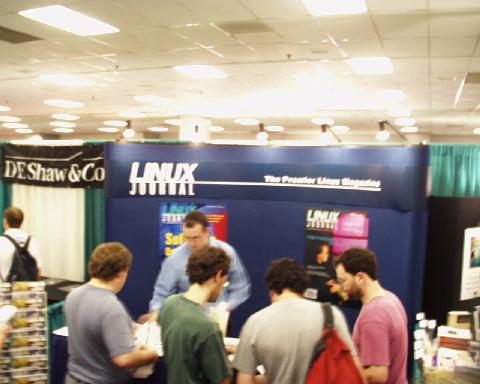
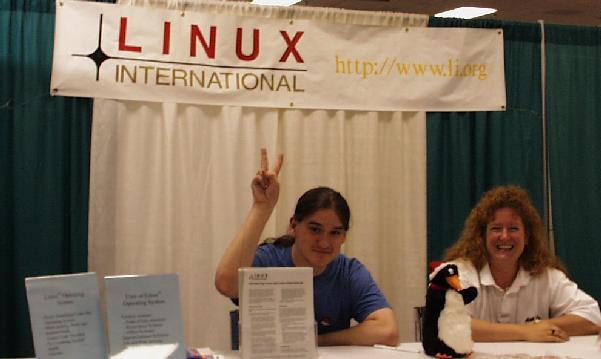
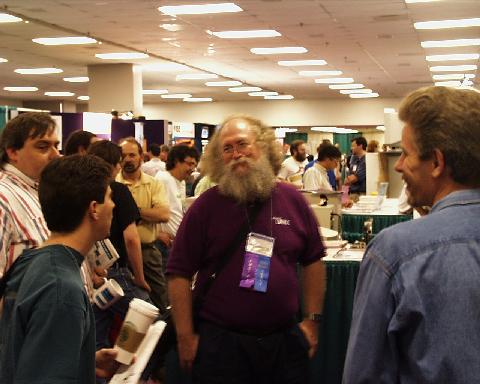
I found it refreshing to see a vendor exposition (albeit a small one) comprised completely of UNIX-friendly companies. O'Reilly was there, displaying all of their titles for sale at 20% off. Needless to say, this made it one of the most popular booths. Most of the faces were familiar: Red Hat, Linux International, InfoMagic, the three heads of BSD and others. Among the unexpected participants was the FBI, just a short distance from the Free Software Foundation. The whole atmosphere of the exposition was quite relaxed, without the hectic feel of COMDEX and other large industry trade shows.
Each evening offered several talks by different people on a wide range of subjects. I caught “The State of Linux” talk by Linus Torvalds on Thursday afternoon. He set Aug/Sep 98 as a hopeful release date for the 2.2 kernel. Another event that took place every evening was the “Birds of a Feather” (BOF) meetings, which were designed as a place for people with common interests to come together and discuss their ideas and goals. It was also a great place to rub shoulders with some of the “big names” in the UNIX community, such as Keith Bolstic, Eric Allman and Jon “maddog” Hall.
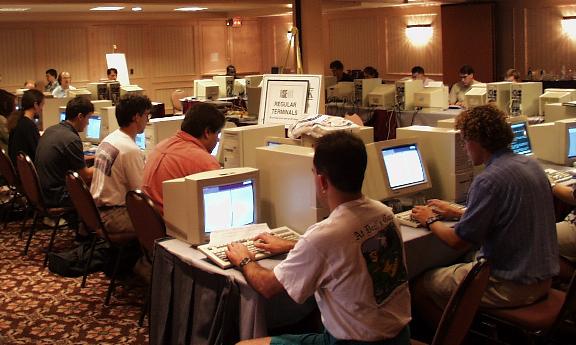
What UNIX conference would be complete without a terminal room? Luckily, Earthlink and openBSD donated machines and bandwidth and created a room with thirty or so machines running openBSD, connected to a T1.
If I were to do it all over again (and I most definitely want to), I would spend more time planning what I want to learn. I was a bit overwhelmed by the sheer number of talks/events, and therefore found it difficult to focus on exactly what I wanted to get from the experience—I was constantly spreading myself too thin. For any UNIX, Linux, BSD etc. lover, USENIX is a must at least once in a lifetime. It is a very friendly and co-operative environment and has definitely earned its reputation as one of the hubs of the computing community.