AcceleratedX CDE and Display Server for PC Unix
Manufacturer: Xi Graphics, Inc.
URL: http://www.xig.com/
E-mail: sales@xig.com
Price: AcceleratedX Display Server $99.95US AcceleratedX CDE with Display Server $274.95US
Reviewer: Bradley Willson
The “X inside inside X” logo flashed on the screen then quickly went away. What happened next gave me cause for celebration. My old NEC Multisync II flashed graphics faster than ever before. My 9FX Vision 330 card was among more than 449 other video cards that AcceleratedX reportedly supports. I also found a “closer” match to my ancient monitor's specs among the 100 plus list of supported monitors and generic settings. I had more control over colors and display than ever before. While talking to pre-sales tech support, I found there are more features available that my hardware does not support. High-end equipment can support the 8/24 bit display and gamma correction features.
Before testing the new server, I loaded a copy of xbench and ran it on my stock configuration of the X312_S3 server and FVWM95-2. I used the xbench default parameters that run each test three times for ten seconds per run. I performed the same test on AcceleratedX, then compared the results. Overall process times averaged thirty percent faster with the AcceleratedX server.
Next, I loaded the AcceleratedX Common Desktop Environment. My initial euphoria faded at that point, and I began to pack up the pointy hats and party favors. The act of installing CDE had clobbered the display server installation, and there was nothing in the documentation that warned me otherwise. A quick e-mail conversation with tech support confirmed the importance of sequence and included an assurance that they would add an addendum to their release notes to warn users of this requirement. I reinstalled the display server and resumed testing.
Further investigation revealed that the X Windows configuration was also modified. The X386 directory was copied to X386.old and then re-populated per CDE specifications. Other directories like fvwm95-2 were removed from the parent directory altogether. Another annoyance came from the way CDE bypasses loading /etc/profile. None of my scripts worked. /sbin, /usr/local/bin and /usr/local/sbin were no longer in the path. After making some symbolic links to the missing directories and editing path statements, the system was back up and running, mostly as it was before. A few more words need to be added to the release notes to help customers configure their systems for test-driving CDE.
Hindsight is a great tool, if only it could be applied in reverse. I wanted to retain my configuration while testing the new software. The philosophy behind CDE does not take that scenario into account. It is fully intended to be the primary X window manager on the system, with twm as the failsafe. When the opportunity presents itself again, I will load these packages after the kernel and before adding any other applications. That way the configuration will remain consistent throughout.
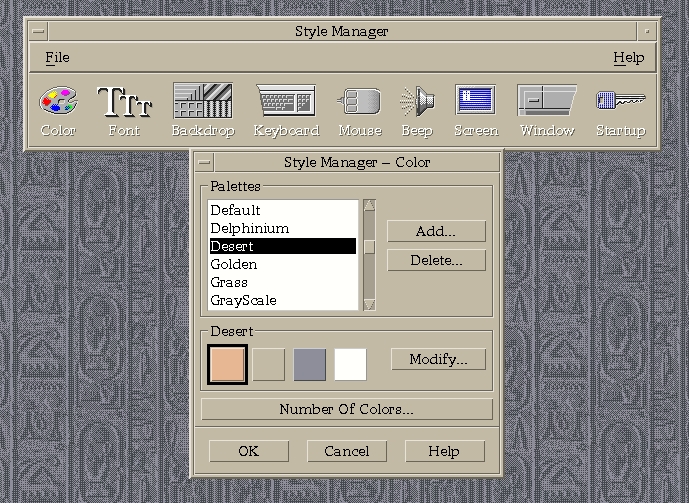
The CDE's front panel is impressive at first sight. Ten frequently used programs and utilities are placed for first priority use. Other, less-used programs are embedded within pop-up menus. The workspace manager is placed front and center, configured with four unique workspaces. An “LED” flashes to indicate a process is in work. A padlock icon launches a session display lock. The panel can be positioned anywhere on the desktop and be minimized or maximized with buttons on the panel ends. The package includes several backgrounds, screen-savers and desktop color schemes, making it easy to customize each workspace according to individual taste.
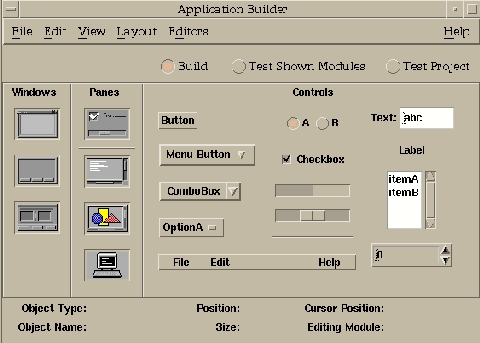
The CDE features several useful applications, including a multi-user planning calendar with drag and drop appointment scheduling and to-do items, a file manager similar to xfm, a simple text editor with spell checking, a MIME capable mail handler, a graphic printer manager, an application manager with numerous other utilities and the quintessential trash bin. There is even a Motif application builder for the programmer types. The multi-function calculator serves the financial, programmer and scientific users with the click of a button. Even the xterm is configurable on the fly.
To customize a control, one simply clicks on the icon with the right mouse button and then selects “Add Sub-panel” from the pop-up menu. The sub-panel is then ready to accept new application and utility items. Sub-panels and applications are removed in the same manner. The only drawback is additional controls have to be added by the system administrator by editing text files.
The installation process for both packages is simple and reasonably straightforward. The CDE installation consists of mounting the CD and running dtinstall. The script takes care of the file copy and administrative tasks in one step. The display server installation is explained in the user's manual. The process entailed changing to a specific directory, decompressing the package from two floppy disks and running two scripts.
Xi Graphics' technical support can be summed up in two words, quick and effective. Send your inquiry to support@xinside.com or support@xig.com. If you just need information, send a note to info@xig.com. You will receive an automated reply with a generous helping of information texts and FAQs that are available from their mail-server. You can also call their pre-sales tech support and sales line at 800-946-7433, full-service tech support at 303-298-7478 or fax your questions to 303-298-1406.
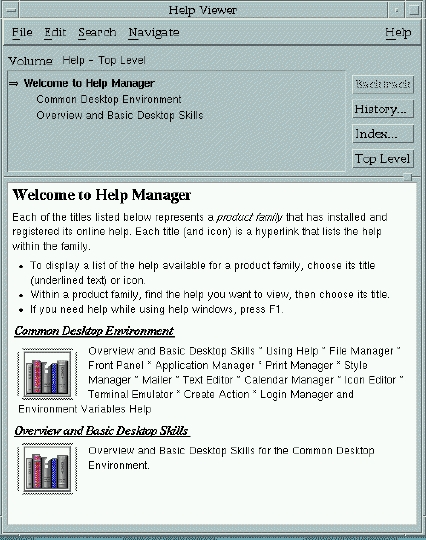
This is the first commercial X server I have had experience with, since I normally take the “free” route. When compared to XFree86, it shows definite signs of improvement. The wide variety of supported hardware makes this product a better choice in high-demand environments and with aging equipment. I found CDE to be easier to set up and administer in a networked environment than XFree86. The robust selection of built-in applications add value to any system. The printed manuals are laid out in a logical fashion, making it easy to find most of the answers. The on-line help is more graphical than xman, but the information is focused on helping the user, not the system administrator. In general, I liked AcceleratedX and the Common Desktop Environment. I certainly recommend it for mission-critical commercial applications and for the “serious” home user.
Xi Graphics, Inc. is located in Denver, Colorado, and employs a staff of around 20 talented individuals. Their web-site can be browsed at both http://www.xinside.com/ and http://www.xig.com/. XiG.com is the preferred address as they have recently changed their company name from X Inside to Xi Graphics.
Xi Graphics has a widely dispersed list of authorized resellers, located in Canada, USA, Europe, the Middle East, Africa, Australia and Japan. Either browse their web-site or send e-mail to sales@xig.com to find the dealer nearest you.
US West in Minnesota, University of Minnesota, University of Texas Austin and University of North Carolina are among notable users of AcceleratedX and the Common Desktop Environment.