
D-Link's Boxee Box
When it comes to software battles, the Open Source community has its fair share. KDE vs. GNOME, vi vs. Emacs, Firefox vs. Chromium—there seems to be countless rivalries. In my house, one of the biggest rivalries is between XBMC and Boxee. This month, I take a look at Boxee, specifically the Boxee Box from D-Link.
Although Boxee itself is a software package, competing with software like XBMC, Front Row, Plex, MythTV, GeeXboX and so on, the Boxee Box is a hardware device competing directly against things like the Roku, AppleTV and GoogleTV. When compared to the other hardware options out there, it really does shine.
The most noticeable physical feature of the Boxee Box is its odd melted-ice-cube shape (Figure 1). It looks like someone took a cube and put a corner of it on a hot surface to make it melt. I'm sure it's very artsy, and I've read that it efficiently manages the cables in the rear. But for me, it annoyingly doesn't stack anywhere in my entertainment center. I know creative-yet-impractical designs work well for some companies, but I'm of the opinion that square is good. I'm often called a square, and it works for me—but I digress. It's a design choice and really doesn't affect my opinion that much.
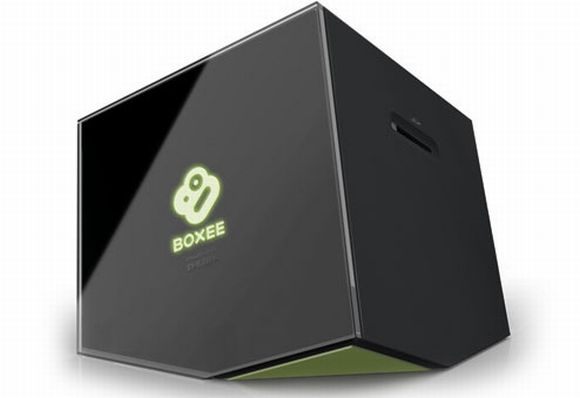
Figure 1. The Boxee Box is remarkably not boxy. It is shaped like a cube that someone modified with a belt sander.
In contrast to the Box's design, the remote control is a thing of beauty. It's like the mullet of remote controls—business on the front and party on the back. The top side has a very simplistic button design (much like an Apple remote to be honest). The flip side of the remote has a complete qwerty keyboard. It's not something you'd want to write the Great American Novel with, but it fares about as well as a cell-phone keyboard does (more on the keyboard later).
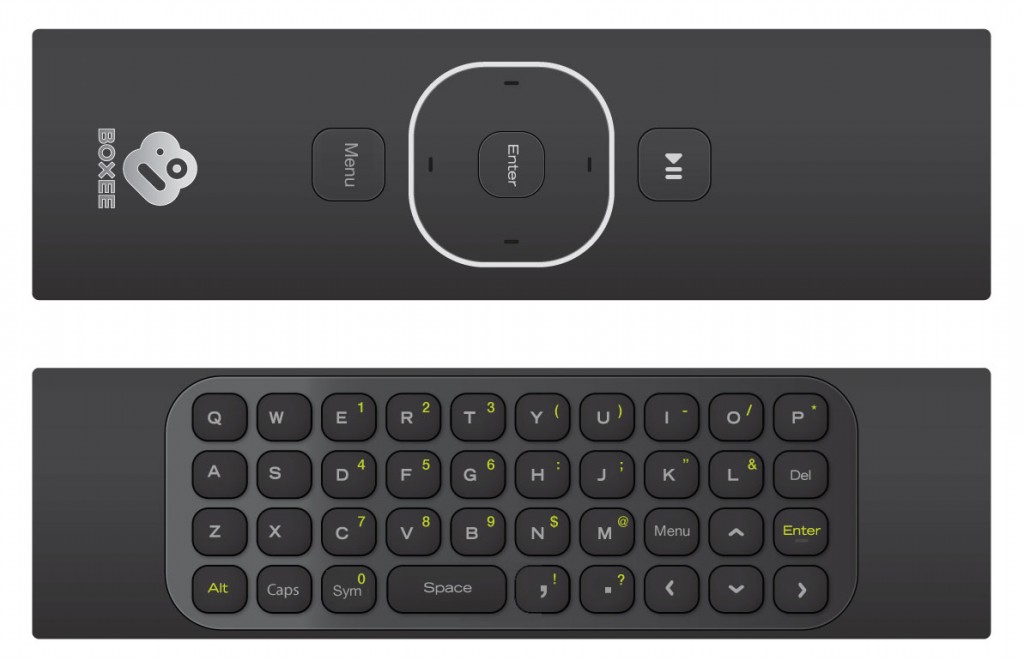
Figure 2. I love the idea of the double-sided remote. Apart from a few nagging issues, it's perfect.
As you can see on the back of the Boxee Box in Figure 3, this unit is designed for high-definition (HD) systems. The only video output option is HDMI. Thankfully, there are both optical and analog audio outputs to go along with the HDMI audio, but if you have a television without HDMI support, you'll need to be creative with adapters and such.
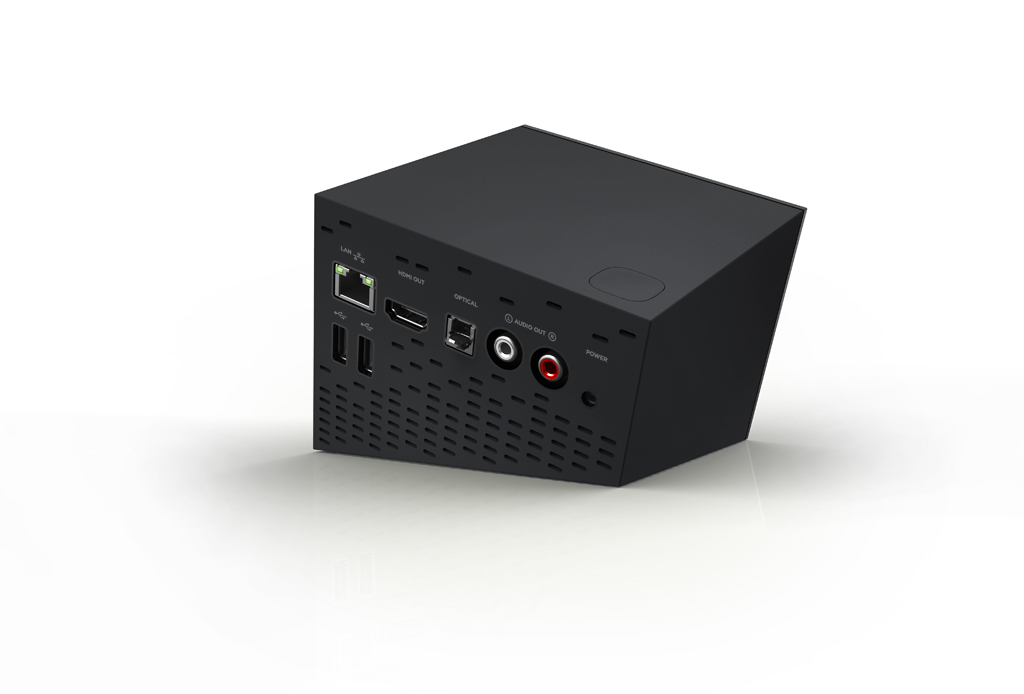
Figure 3. The ports are easily accessible in spite of the weird angle.
The unit also has some USB ports in the back and an SD card slot on the side—or perhaps the SD card slot is on the top. With the melted-ice-cube design, it's really hard to determine what's considered up. Add to that a wall-wart power supply, and you have the contents of the Boxee Box's Box.
Because the Boxee Box is an appliance, the internal hardware isn't really as important as what it does, but we're all geeks here, so this part is interesting if nothing else. Originally, the Boxee Box was going to use the NVIDIA Tegra2 for video playback. In a last-minute switch, however, the Boxee team went with the Intel CE 4100 and a PowerVR GPU. The Boxee team is confident with its decision, and as long as it performs well, the end user really doesn't interact with the guts anyway. The Box boasts:
Atom processor, at 1.2GHz.
PowerVR SGX535 graphics processor.
1GB of RAM.
1GB NAND Flash memory.
HDMI 1.3 (audio and video).
S/PDIF optical audio.
Composite (RCA) audio.
Two USB ports.
SDHC card slot.
100Mbps Ethernet port.
802.11n Wi-Fi.
Two-sided RF remote control.
The remote that comes with the Boxee Box is really a perfect addition to an entertainment device into which you occasionally need to type. Those of us who have typed on the Nintendo Wii's on-screen keyboards fully understand how frustrating it can be to “type” with nothing more than directional keys or a pointing device. Although the idea behind the two-sided remote is brilliant, it does have its flaws.
The simplicity of the top side makes for a simple browsing experience, but unfortunately, it's so simple (and symmetric), it's easy to grab upside down. When you grab the remote upside down, up becomes down, right becomes left, and because the remote uses RF instead of infrared, it doesn't matter if the remote is facing the wrong way. When you press a button, it registers. There is a raised logo on one side of the remote, but it's not really clear which end is up on the logo either, so you have to look closely to tell which is up and which is down. It's not a terrible problem, but it's annoying at times.
The keyboard is rather nice for something so small. It's not too bad to hold, and the keys give enough feedback that you can tell you're typing. The enter and arrow keys aren't in obvious positions, so you have to look when you're typing. That's not a big problem either, unless you happen to be in the dark. The keys don't have any backlight, so typing in the dark is just about impossible. Because typing isn't required for normal operation, that's not a showstopper, but I'd like to see future versions have some sort of illumination for the keyboard buttons.
Those familiar with the Boxee software will recognize the Boxee Box's interface right away. There are a few big changes, but for the most part, it is similar to the traditional Boxee experience. I'm currently using the firmware released in mid-December 2010, which makes some significant (and welcome) changes. The big difference in functionality (apart from Wi-Fi working, which it did not for me out of the box) was a change in how the Boxee Box displays media. Figure 4 shows the dialog box that appears on boot, asking how you prefer to view media. This question is a little confusing, as it doesn't explain what difference your choice will make, but simply put, if you choose Local Media, the Boxee Box defaults to showing you media stored locally as opposed to Web content. You're still able to watch Web content, and it's not difficult to do so, but by default, Boxee points to local media.
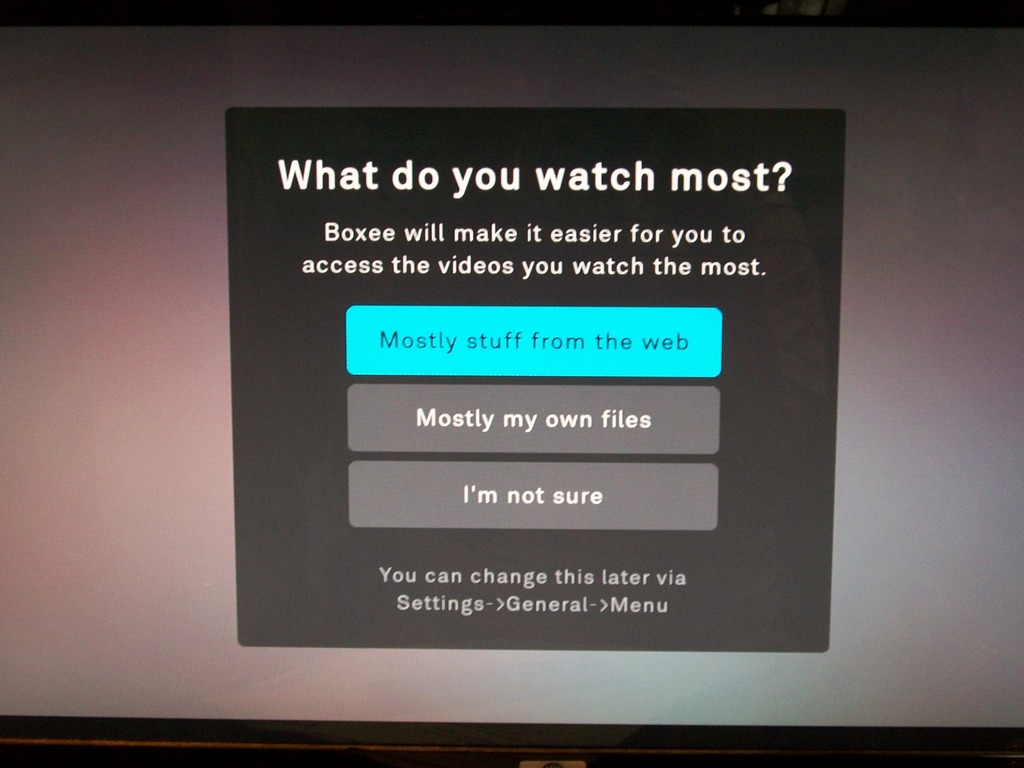
Figure 4. This dialog box just sets up the default media the Boxee Box plays back. It doesn't hinder your ability to watch on-line content.
The interface is functional, but it's not always intuitive or easy to navigate. For example, it takes a series of clicks to get back to the home screen, with no apparent shortcut to get there quickly. The menu button doubles as a back button, but it isn't labeled as such. Even with those frustrations, however, the menu system isn't difficult to figure out. I have read other reviews claiming the Boxee Box menus are sluggish, but I've noticed that only when identifying media or making significant system preference changes. Usually the remote and interface are quite responsive.
The video playback for local media is stellar. In my 5TB file server, I can't find a single file that won't play. Playback of 1080p MKV files is flawless, and even Web streams are clear and watchable. (That is likely due to my beefy Internet connection, but the Boxee renders the Web streams well, so kudos.)
Boxee, and in turn the Boxee Box, has the ability to use “applications” in order to access other on-line services. These are almost identical to the Roku's application system, if you are familiar with that. At the time of this writing, many applications exist that add value to the Boxee experience. Pandora Radio has a great interface, and many on-line sites, such as College Humor and Revision 3, have applications that will guide you through their catalogs. Netflix and Hulu are glaringly absent. By the time this goes to press, hopefully both on-line services will be available, but their absence makes the Boxee seem quite lacking, especially if you don't have an extensive library of local media.
Firmware updates certainly will improve the Boxee Box as time goes on, but the application framework is where the magic could really happen. Third-party applications turned the Roku from a Netflix-streaming device into a full-blown living-room entertainment unit. Because the Boxee does (or will do shortly) all the things the Roku can do, plus plays any local media you throw at it, it's really positioned to be the perfect set-top box.
The Boxee Box, like its software-only counterpart, Boxee, takes a different approach to media from XBMC. Where XBMC is fast, clean and elegant in its simplicity, Boxee does everything it can to immerse users into a multimedia universe. XBMC plays media, whereas Boxee is an entertainment system. Even after taking the Boxee Box through its paces, I'm not convinced one is better than the other. They're just different. At $199, the Boxee Box is an affordable way to get an extremely robust media center. Although I have XBMC on a $199 nettop device, and it runs fine, the integration of specialized hardware is hard to beat. I heartily recommend the Boxee Box for anyone considering an HD media center. Although the unit I reviewed didn't have Netflix, Hulu or even VUDU, by the time you read this, it should have access to all three, which really will make Boxee a tough box to beat when it comes to home entertainment.
My only recommendation before buying the Boxee Box is to download the Boxee software and see if you like its interface. Granted, the downloadable version is aesthetically different from the Box's interface, but it's a good way to see whether you are comfortable with the Boxee way of doing things. Some like it; some hate it. (See the Local Media, Boxee Style sidebar for a little more information.) It's free, so you can try it before you buy it. Check it out at www.boxee.tv.
Local Media, Boxee Style
Boxee always has handled local media in two ways. Users can access their filesystems directly and peruse their video collection folder by folder. Where Boxee really shines, however, is with its media library function. If files are named correctly (basically with the name of the movie and year), Boxee downloads genre information, cover art, ratings and other metadata. It's possible to browse your media collection like you'd look through movies at the rental store. Because Boxee downloads metadata, you even can sort your collection to find that perfect popcorn companion. Granted, the media scraper isn't perfect, but the Boxee Box gives you the ability to identify media it can't figure out automatically.

Boxee makes your media collection look beautiful. The initial scanning takes a long time, but the cover art and metadata are really nice.
Go to www.linuxjournal.com/video/review-boxee to see Shawn's video review of D-Link's Boxee Box.
Shawn Powers is the Associate Editor for Linux Journal. He's also the Gadget Guy for LinuxJournal.com, and he has an interesting collection of vintage Garfield coffee mugs. Don't let his silly hairdo fool you, he's a pretty ordinary guy and can be reached via e-mail at shawn@linuxjournal.com. Or, swing by the #linuxjournal IRC channel on Freenode.net.

